Access to Justice: Why Pakistan's Courts Are Buried in Backlog
Millions of cases sit pending across Pakistan's court system, with some taking years or even decades to resolve. What's driving the backlog, and what would meaningful reform look like?

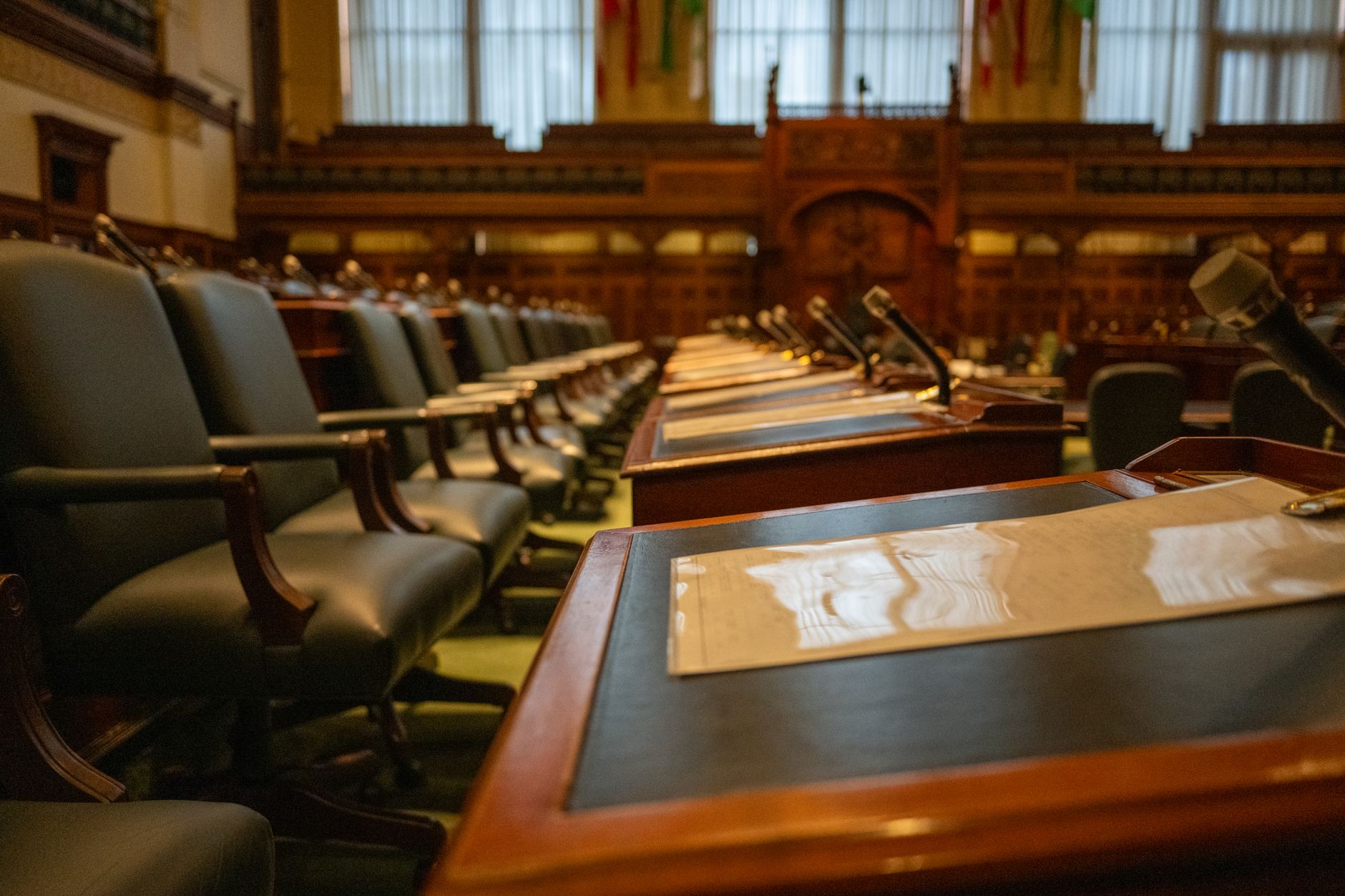
Photo by Katrin Bolovtsova / Pexels
For many Pakistanis, the phrase "justice delayed is justice denied" isn't an abstraction — it describes a lived reality. Case backlogs across the country's court system, from lower courts to the superior judiciary, have accumulated for years, leaving litigants waiting years — sometimes decades — for resolution.
The scale of the backlog
Judicial data compiled by court administrations and independent legal research organizations has consistently shown millions of cases pending across Pakistan's court system at any given time, spanning civil, criminal and family matters. As of recent 2025–2026 figures, the total stood at roughly 2.2 million pending cases nationally — about 1.86 million in the district judiciary (of which civil matters make up 64%), around 300,000 in the high courts, and nearly 56,000 in the Supreme Court. Lower courts, which handle the overwhelming majority of case volume, tend to carry the heaviest backlogs relative to their capacity.
What's driving the delays
Legal researchers and judicial reform advocates point to a combination of structural factors:
- Judge-to-case ratios. The number of judges relative to case filings remains low by international comparison, particularly at the district and sessions court level, meaning each judge manages a caseload far exceeding what allows for timely disposal.
- Procedural inefficiencies. Frequent adjournments, procedural delays and an appeals process that allows extended relitigation at multiple levels all contribute to cases stretching over many years.
- Under-resourced court administration. Many courts still rely heavily on manual case management and record-keeping, slowing processes that digital case management systems have streamlined elsewhere.
- Witness and evidence delays. Cases are frequently delayed by witnesses failing to appear, slow forensic and investigative processes, and inconsistent police cooperation with prosecutions.
The human cost of delay
Backlogs don't affect all litigants equally. Those able to afford sustained legal representation over years of proceedings are better positioned to weather delays than lower-income litigants, for whom prolonged cases mean accumulating legal costs, lost work time, and — in criminal cases — extended pre-trial detention that can, in some documented instances, exceed the sentence eventually imposed if convicted.
Reform efforts and their impact so far
Several reform measures have been piloted or partially implemented in recent years:
- Alternative dispute resolution (ADR) mechanisms, including mediation and arbitration centers, have shown success in diverting appropriate civil cases away from the formal court backlog where adopted.
- Case management and e-filing systems, piloted in some High Courts and district courts, have improved scheduling efficiency where fully implemented, though rollout remains incomplete nationally.
- Specialized and model courts for specific case categories (such as banking, anti-terrorism, or consumer protection matters) have, in some jurisdictions, demonstrated faster resolution times than general courts handling mixed caseloads.
- Increased judicial appointments, in provinces that have expanded court capacity, have shown measurable reductions in per-judge caseload, though filling and training new judicial positions takes time.
- The Supreme Court's Judicial Reform Action Plan, launched in November 2024, has reportedly driven a meaningful reduction in the apex court's own backlog by mid-2026 — a useful proof of concept, though the much larger backlog sits in the district judiciary and high courts, where similarly sustained reform efforts have been harder to implement nationally.
What sustained progress would require
Legal reform advocates generally argue that durable backlog reduction requires simultaneous progress on judicial capacity (more judges, better trained and supported), procedural reform (limiting unnecessary adjournments and streamlining appeals), and technology adoption (case management systems that give litigants and courts real visibility into case status) — implemented consistently across provinces rather than through isolated pilot programs.
Build Better Pakistan's Justice Desk tracks judicial reform and access-to-justice developments nationally.
This article is part of our Rights & Justice coverage — Access to justice, courts and civil rights.
Related Reading
Rights Group Tells UN Council Pakistan's Child Marriage Laws Are Only as Good as Their Enforcement
Human Rights Focus Pakistan told the UN Human Rights Council's 63rd session that roughly 19 million women and girls in Pakistan were married before 18, and that 54% of those marriages happened in provinces that already had a legal minimum age of 18 at the time — evidence, HRFP says, that new laws mean little without prosecutions behind them.
BBP Rights Desk · September 28, 2026 · 4 min
Balochistan CM Confirms 1,000 Residents to Be Relocated Ahead of Shor Parod Operation
Sarfraz Bugti told the Balochistan Assembly that around 1,000 people from the mountainous Shor Parod area of Mastung district will be temporarily relocated for a security operation, as Kalat's administration set a September 28 deadline to vacate and residents elsewhere reported similar orders.
BBP Balochistan Desk · September 28, 2026 · 3 min

Federal Constitutional Court Upholds Ban on Ahmadi Community's Core Religious Text
Pakistan's Federal Constitutional Court dismissed all petitions against a 2014 Punjab government ban on the 23-volume Rohani Khazayeen, the Ahmadiyya community's foundational religious writings, prompting UN and international rights groups to renew concern over the community's treatment.
BBP Rights Desk · September 28, 2026 · 4 min