Defence Minister Asif Says Pakistan Will Defend Saudi Arabia by 'Whatever Means' Against the Houthis
Days after army chiefs from Pakistan, Saudi Arabia and Turkiye met in Riyadh, Defence Minister Khawaja Asif said Pakistan's full military capability is available to Saudi Arabia under the Makkah pact, and declined to say whether Pakistani forces have already struck Houthi-linked targets.
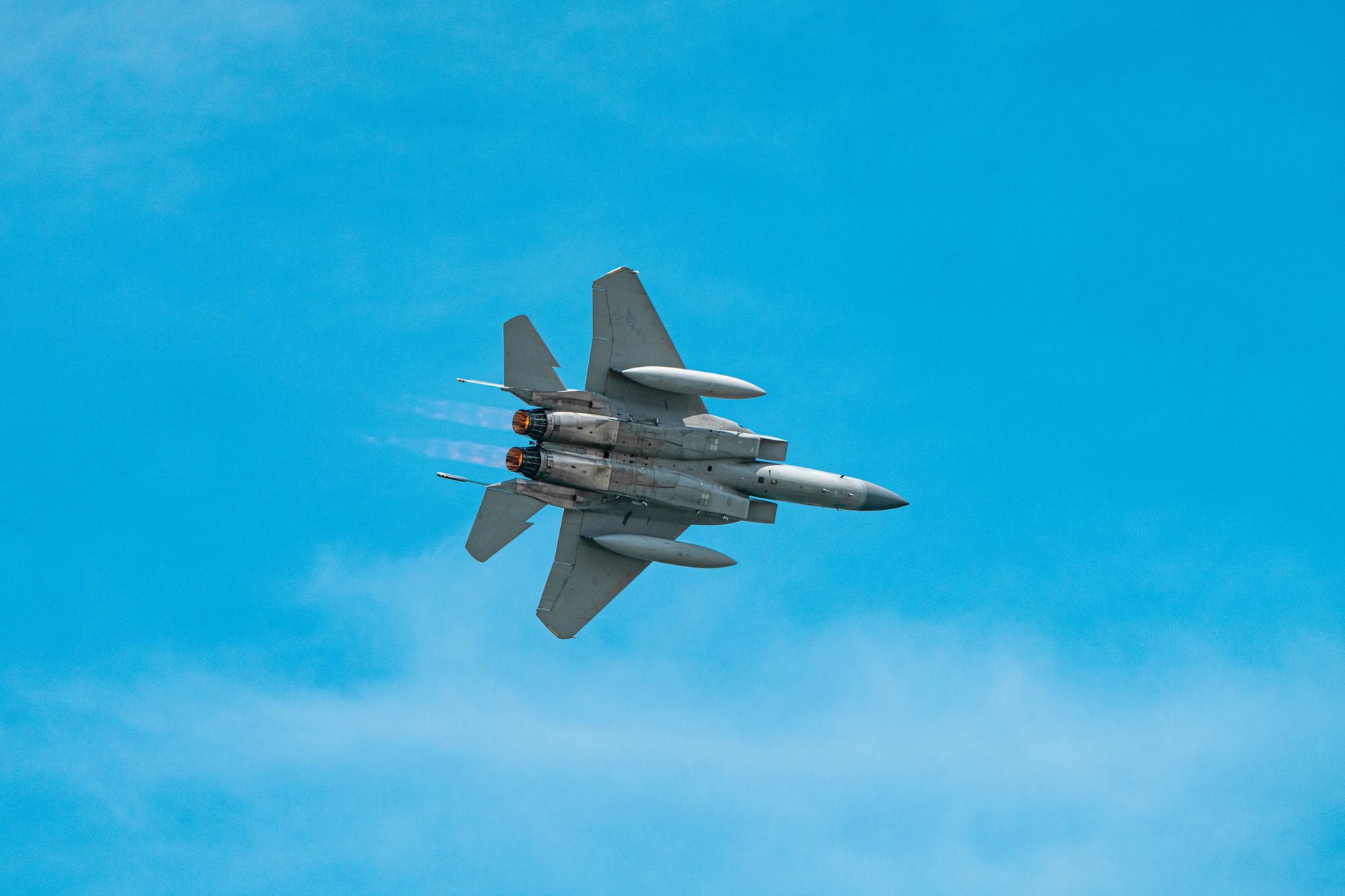
Photo by Alejandro Henriquez / Pexels
Pakistan's Defence Minister Khawaja Muhammad Asif said on September 29 that his country would use "whatever means are available at our disposal" to defend Saudi Arabia against Yemen's Houthi movement, the most direct language any Pakistani official has used since the three-country Makkah Joint Defence Agreement was signed in August. He made the remarks during a visit to Rome, and when pressed on whether Pakistani forces had already taken part in airstrikes against Houthi or Iranian-linked targets inside Yemen, he declined to say either way.
What Asif actually said
"I'm not going into detail, but obviously when I say that we are bound by this arrangement to defend Saudi Arabia, that means whatever means are available at our disposal, they'll be available to Saudi Arabia also," Asif told reporters. He described the Houthis as aggressors, said they had intensified missile and drone attacks on Saudi Arabia, and noted the group has expanded its control along Yemen's Red Sea coast. Pressed further on possible Pakistani involvement in strikes on Houthi or Iranian operators, he repeated that he would not confirm or deny it.
That is a deliberately ambiguous answer, and probably an intentional one: it commits Pakistan to nothing specific while leaving open the possibility that something has already happened.
From "no discussion" to "whatever means"
We reported five days earlier that Pakistan's Foreign Office was drawing a clear line — a chiefs-of-staff meeting to discuss options was happening, but "no military response is currently under discussion," and Islamabad would act "when time comes." That meeting took place in Riyadh on September 25: Field Marshal Asim Munir represented Pakistan alongside Turkiye's General Selcuk Bayraktaroglu and Saudi Arabia's General Fayyadh bin Hamed Al-Ruwaili. The three sides agreed to deepen military and intelligence cooperation and integrate their defensive capabilities under the pact.
Asif's comments four days later mark a shift in tone from that meeting's cautious framing toward something closer to an open-ended commitment, even without a specific announcement of troops, aircraft or a combat role.
The pact and why it is being tested now
The Makkah Joint Defence Agreement was signed on August 7 by Prime Minister Shehbaz Sharif, Saudi Crown Prince Mohammed bin Salman and Turkish President Recep Tayyip Erdogan, declaring that an armed attack on any one member is to be treated as an attack on all three. Since then the Houthis have seized the Yemeni port city of Mocha and much of the country's Red Sea coastline from Saudi-backed government forces, while stepping up missile and drone strikes on Saudi territory, including sites near Makkah itself. A Houthi political bureau member has separately warned that Pakistan and Turkiye would face an "iron fist" if they entered the war directly.
Pakistan's caution has historical roots: in 2015, Parliament voted to stay out of the Saudi-led coalition fighting in Yemen despite Riyadh's request for troops, a decision that strained the relationship for years. Turkiye's Parliament, meanwhile, has not yet ratified the Makkah pact itself, with its Speaker saying that will not happen before the assembly returns from recess on October 1.
The wider picture
Asif's statement lands as Pakistan is already managing an active military confrontation on a separate front — air and ground clashes along its border with Afghanistan — and as Islamabad negotiates its own side deals with Iran to keep LNG cargoes moving through the Strait of Hormuz even as the wider US-Iran war continues. Committing "whatever means are available" to a Gulf ally while trying to keep a working channel open to Tehran is not a contradiction Islamabad has had to explain in public yet — but the ambiguity in Asif's own answer suggests it may not be able to avoid that question much longer.
No timeline has been given for when, or whether, that ambiguity will be resolved. The Riyadh chiefs-of-staff talks were described as focused on logistics, intelligence-sharing and rules of engagement — the practical scaffolding for a decision that Pakistan's government has still not said it has made.
Build Better Pakistan's Security Desk is tracking Pakistan's role under the Makkah Joint Defence Agreement as the Houthi conflict escalates.
This article is part of our Security coverage — Public safety, policing and community trust.
Frequently Asked Questions
- What did Defence Minister Khawaja Asif say about defending Saudi Arabia?
- Speaking during a visit to Rome on September 29, Asif said Pakistan's commitment under the Makkah Joint Defence Agreement is unqualified: "whatever means are available at our disposal, they'll be available to Saudi Arabia also." Asked directly whether Pakistani forces had already taken part in airstrikes against Houthi or Iranian-linked targets in Yemen, he declined to answer, saying only, "I'm not going into detail."
- Has Pakistan actually deployed forces to fight the Houthis?
- There is no public confirmation of that. What has changed is the diplomatic posture: on September 25, Pakistan's Field Marshal Asim Munir met his Saudi and Turkish counterparts in Riyadh to discuss the pact's operational mechanics, and Asif's comments four days later went further than Islamabad's earlier line that no military response was "currently under discussion." Whether that translates into deployed personnel or aircraft remains unconfirmed either way.
Related Reading

Somali Pirates Killed Three Pakistani Sailors Before Puntland Forces Freed Their Hijacked Tanker
Puntland's Maritime Police Force recovered the MT Honour 25 on September 29, more than five months after Somali pirates seized it with 10 Pakistanis aboard. The pirates killed five crew members, including three Pakistanis, as the rescue operation closed in.
BBP Security Desk · September 30, 2026 · 4 min

11 Children Hurt as School Van's Brakes Fail, Catches Fire in Murree
A private school van went off Sign Road in Murree's Masiari area on September 29 after its brakes failed, then caught fire. Eleven children were injured, four critically, and police say the van was carrying no fire extinguisher. Punjab's chief minister has ordered vehicle fitness checks on rural school transport.
BBP Security Desk · September 29, 2026 · 3 min

Explosion Destroys Hotel on Mastung's National Highway Stretch
A blast levelled the Madina Hotel in Mastung's Khadkocha area late on September 28, shattering windows and destroying an adjoining shop and more than 250 solar panels. No one was inside, and police are treating it as a suspected IED attack in a district with a recent run of militant incidents.
BBP Security Desk · September 29, 2026 · 4 min