Gwadar Port Traffic Surges as Hormuz Disruption Reshapes CPEC's Second Decade
A decade into the China-Pakistan Economic Corridor, Gwadar is seeing a real volume surge — not from the original infrastructure vision, but from shippers routing around a disrupted Strait of Hormuz. CPEC's next phase looks different from its first.
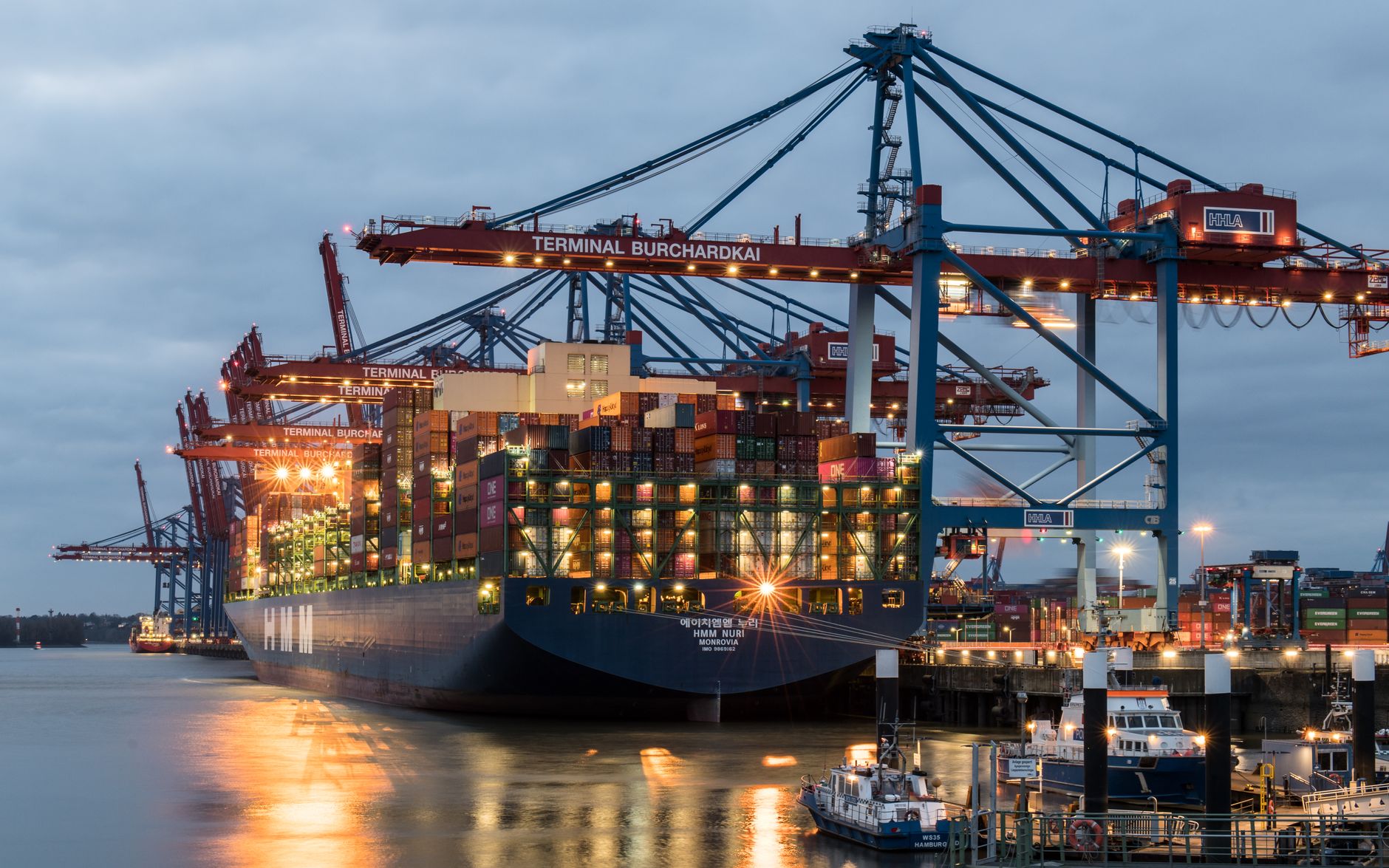
Photo by Wolfgang Weiser / Pexels
Ten years into the China-Pakistan Economic Corridor, Gwadar Port is finally seeing the kind of traffic increase its original planners envisioned — though not for the reason they expected.
An unplanned boost from a crisis next door
Gwadar processed approximately 11,000 containers in April 2026 alone, compared with roughly 8,300 for the entirety of 2025 — a dramatic jump in a single month relative to a prior full year. The driver isn't new CPEC investment or a long-awaited traffic ramp-up on its own terms; it's disruption to shipping through the Strait of Hormuz, caused by the ongoing US-Iran conflict, which we cover in detail separately. As shippers look for routes that avoid the risk premium and delays associated with the Hormuz corridor, Gwadar's position outside that chokepoint has become a genuine operational advantage rather than just a strategic talking point.
New trade routes taking shape
Beyond Gwadar itself, CPEC-linked trade infrastructure has shown concrete movement this year. More than 80 metric tons of dried chilies from Pakistan arrived at the Chengdu International Railway Port earlier this month, entering China through Qinzhou Port in Guangxi before moving inland via a sea-rail intermodal service operating under the broader New International Land-Sea Trade Corridor — a tangible, if modest, example of the kind of export diversification Pakistani officials have long said CPEC was meant to enable.
The diplomatic relationship remains steady
Chinese Ambassador to Pakistan Jiang Zaidong reaffirmed in recent remarks that Pakistan and China remain committed to strengthening what both governments describe as an "all-weather friendship," with expanded cooperation spanning modernization, economic development, and strategic ties. That framing has remained consistent even as CPEC itself has drawn more mixed assessments — some analysis describes the corridor a decade in as delivering real but uneven results: valuable for Pakistan's infrastructure base, but also a source of debt-servicing pressure that complicates the country's broader fiscal picture, which we've covered in our federal budget explainer.
A concrete example of CPEC's next phase
A $150 million assembly plant in Gharo, Sindh — under joint Chinese and Pakistani ownership — is expected to come online in late 2026, focused on electric vehicle assembly with a projected scalable capacity of up to 50,000 units annually. It's a useful marker of where CPEC's second decade is heading: less about the large-scale highway and power-plant construction that defined its first ten years, and more about manufacturing, industrial capacity, and trade-route diversification.
What this means for Pakistan
None of this resolves the debt-servicing questions that have shadowed CPEC's first decade, but it does suggest the corridor retains real economic relevance — accelerated, in Gwadar's case, by a Middle East conflict that had nothing to do with China-Pakistan relations to begin with. Infrastructure built for one purpose is proving useful for another, which is often how large infrastructure investments eventually pay off, if they do at all.
Build Better Pakistan's Foreign Desk covers China-Pakistan economic relations as part of our ongoing foreign policy coverage.
This article is part of our Economy coverage — Inflation, growth, trade and the everyday cost of living across Pakistan.
Frequently Asked Questions
- Why has Gwadar Port traffic increased in 2026?
- Disruption to shipping through the Strait of Hormuz, caused by the ongoing US-Iran conflict, has pushed some shippers to route through Gwadar instead — the port processed roughly 11,000 containers in April 2026 alone, compared to about 8,300 for the whole of 2025.
- What is CPEC moving toward in its second decade?
- Beyond the original transport and energy infrastructure focus, CPEC's newer projects lean toward industrialization and trade facilitation — including new rail-linked trade corridors to Chengdu and a joint Chinese-Pakistani electric vehicle assembly plant in Sindh expected online in late 2026.
Related Reading

Aurangzeb Opens Islamabad Round of IMF Talks, With $1.2 Billion Riding on It
Finance Minister Muhammad Aurangzeb held a virtual kick-off meeting with IMF mission chief Iva Petrova on September 30 to formally open the policy-level round of Pakistan's fourth EFF and third RSF reviews, with roughly $1.2 billion in combined financing on the table if the talks succeed.
BBP Economy Desk · September 30, 2026 · 4 min

Shehbaz Becomes First Pakistani PM to Open London Stock Exchange Trading
Shehbaz Sharif opened a trading session at the London Stock Exchange on September 29 and met executives from JPMorgan, Barclays, Citi, BlackRock and Rothschild & Co, pitching Pakistan as a destination for foreign capital weeks after its $3 billion Eurobond drew almost $6 billion in orders.
BBP Economy Desk · September 29, 2026 · 4 min

10,000 Civil Servants Must Declare Assets by October 30 Under New IMF Benchmark
As the IMF mission opened fourth EFF and third RSF review talks on September 29, Islamabad confirmed that roughly 10,000 federal civil servants must digitally file asset declarations by October 30, with selected details made public by December 31 — but not the full picture.
BBP Economy Desk · September 29, 2026 · 4 min