Pakistan and China Launch CPEC Phase II, With Beijing Financing 85% of the Karakoram Highway Rebuild
At the 14th Joint Cooperation Committee meeting in Beijing, Pakistan and China formally launched CPEC's second phase, with China agreeing to fund 85% of the $2 billion Karakoram Highway realignment while the $7 billion ML-1 railway shifts to multilateral financing instead.
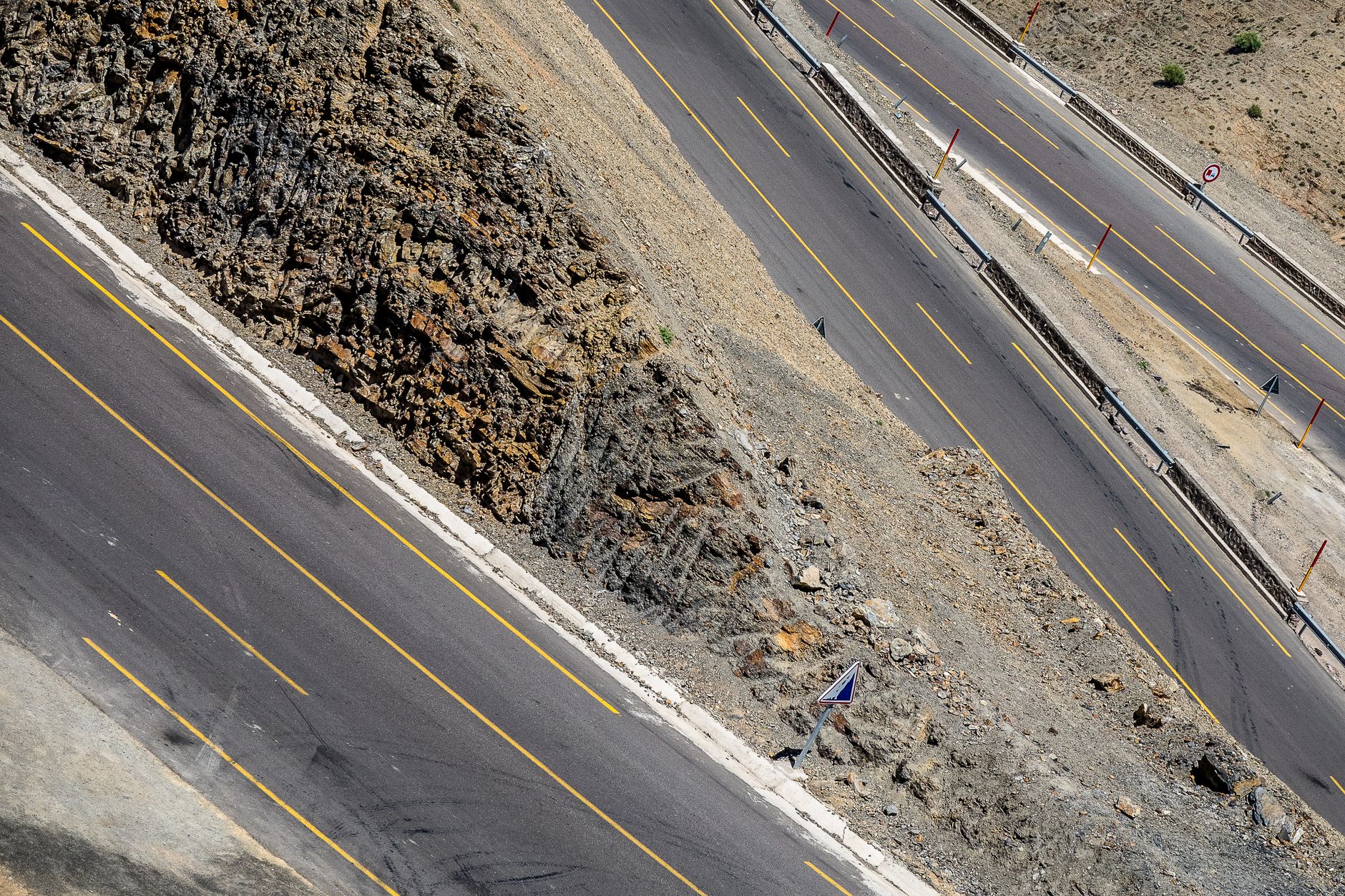
Photo by Mike van Schoonderwalt / Pexels
Pakistan and China used the 14th Joint Cooperation Committee (JCC) meeting in Beijing on September 26, 2026, to formally launch the second phase of the China-Pakistan Economic Corridor, shifting the project's stated focus from the roads, ports and power plants that defined its first decade toward industrialisation, technology and business-to-business investment.
What the meeting decided
The session was co-chaired by Federal Minister for Planning, Development and Special Initiatives Ahsan Iqbal and Zhou Haibing, Vice Chairman of China's National Development and Reform Commission. Both sides agreed to publish an updated CPEC Long Term Plan within 90 days, aligning Pakistan's own development priorities with what officials described as the "Five Corridors" of CPEC's second phase. Iqbal also proposed holding the 15th JCC meeting in Islamabad, timed to coincide with the 75th anniversary of Pakistan-China diplomatic relations, and pushed for more frequent working-group meetings between the full JCC sessions to keep individual projects moving.
Two flagship projects, two different financing paths
The meeting produced a concrete decision on the Karakoram Highway: China agreed to finance 85% of the realignment of its Thakot-Raikot section, a 241-kilometre stretch estimated to cost $2 billion in total. Pakistan will begin phased bidding on the project, starting with an 82-kilometre segment affected by the Diamer-Basha Dam. That single-project financing commitment stands in contrast to how the meeting treated the ML-1 railway upgrade — at $7 billion, the larger of the two projects. Rather than direct Chinese bilateral financing, ML-1 will now be funded through multilateral development banks, including the Asian Development Bank and the Asian Infrastructure Investment Bank. The split signals a more selective Chinese approach to CPEC financing than the corridor's first decade, when large infrastructure projects were more uniformly backed by Chinese state financing.
Gwadar's quieter milestone
Away from the headline financing numbers, the JCC meeting also noted that Gwadar Port has now been fully integrated into Pakistan's national power grid — a step officials framed as important to operationalising the port as a functioning logistics and trade gateway rather than a facility still reliant on standalone generation. That milestone follows a year in which Gwadar has already seen a real increase in shipping traffic, though for a different reason than CPEC's original design intended: shippers have been rerouting cargo through Gwadar to avoid a disrupted Strait of Hormuz, giving the port unplanned volume even before its planned infrastructure is complete.
The shift to business-to-business
Officials from both sides also emphasised a change in how they want CPEC's second phase to run day to day: instead of the government-to-government negotiations that shaped most first-phase projects, the two countries said around 600 Chinese firms and 400 Pakistani firms are now exploring investment opportunities directly, extending CPEC's scope into agriculture, mining and social development sectors beyond the original infrastructure and energy focus.
Why the financing split matters
The decision to route ML-1 through multilateral lenders rather than bilateral Chinese loans is a meaningful data point for how Pakistan's largest single infrastructure creditor relationship is evolving. Pakistan's broader external financing position remains under close scrutiny as part of its ongoing arrangement with the IMF, and shifting a $7 billion project onto multilateral balance sheets — rather than adding it to bilateral Chinese debt — changes how that project shows up in Pakistan's debt profile and repayment terms. Whether that pattern extends to future CPEC Phase II projects, or whether the Karakoram Highway's 85% Chinese financing remains the exception rather than the new norm, will become clearer as individual projects move from committee announcements to signed financing agreements.
What to watch
The 90-day deadline for the updated CPEC Long Term Plan gives both governments a concrete near-term marker: if that document slips, it will be an early signal that the "new era" language from Beijing has outpaced the administrative work needed to back it up. The Karakoram Highway's phased bidding process, starting with the Diamer-Basha-affected segment, is the first test of whether the 85% financing commitment translates into an actual construction timeline.
Build Better Pakistan's Foreign Desk covers China-Pakistan relations and will follow CPEC Phase II as individual projects move toward financing agreements.
This article is part of our Economy coverage — Inflation, growth, trade and the everyday cost of living across Pakistan.
Frequently Asked Questions
- What was decided at the 14th CPEC Joint Cooperation Committee meeting?
- Pakistan and China formally launched CPEC's second phase at the meeting in Beijing on September 26, 2026, co-chaired by Planning Minister Ahsan Iqbal and NDRC Vice Chairman Zhou Haibing. The two sides agreed China will finance 85% of the Karakoram Highway realignment, agreed to publish an updated CPEC Long Term Plan within 90 days, and proposed holding the 15th JCC meeting in Islamabad in 2026 to mark 75 years of Pakistan-China diplomatic relations.
- Why is the ML-1 railway project not being financed by China directly?
- While China agreed to fund the Karakoram Highway realignment as a special case, the $7 billion ML-1 railway upgrade will instead be funded through multilateral development banks, including the Asian Development Bank and the Asian Infrastructure Investment Bank, rather than through bilateral Chinese financing.
Related Reading
Aurangzeb Opens Islamabad Round of IMF Talks, With $1.2 Billion Riding on It
Finance Minister Muhammad Aurangzeb held a virtual kick-off meeting with IMF mission chief Iva Petrova on September 30 to formally open the policy-level round of Pakistan's fourth EFF and third RSF reviews, with roughly $1.2 billion in combined financing on the table if the talks succeed.
BBP Economy Desk · September 30, 2026 · 4 min

Shehbaz Becomes First Pakistani PM to Open London Stock Exchange Trading
Shehbaz Sharif opened a trading session at the London Stock Exchange on September 29 and met executives from JPMorgan, Barclays, Citi, BlackRock and Rothschild & Co, pitching Pakistan as a destination for foreign capital weeks after its $3 billion Eurobond drew almost $6 billion in orders.
BBP Economy Desk · September 29, 2026 · 4 min

10,000 Civil Servants Must Declare Assets by October 30 Under New IMF Benchmark
As the IMF mission opened fourth EFF and third RSF review talks on September 29, Islamabad confirmed that roughly 10,000 federal civil servants must digitally file asset declarations by October 30, with selected details made public by December 31 — but not the full picture.
BBP Economy Desk · September 29, 2026 · 4 min