22 Million and Counting: Confronting Pakistan's Out-of-School Children Crisis
Pakistan has one of the largest out-of-school child populations in the world. The barriers are well understood — the challenge has always been sustained implementation.
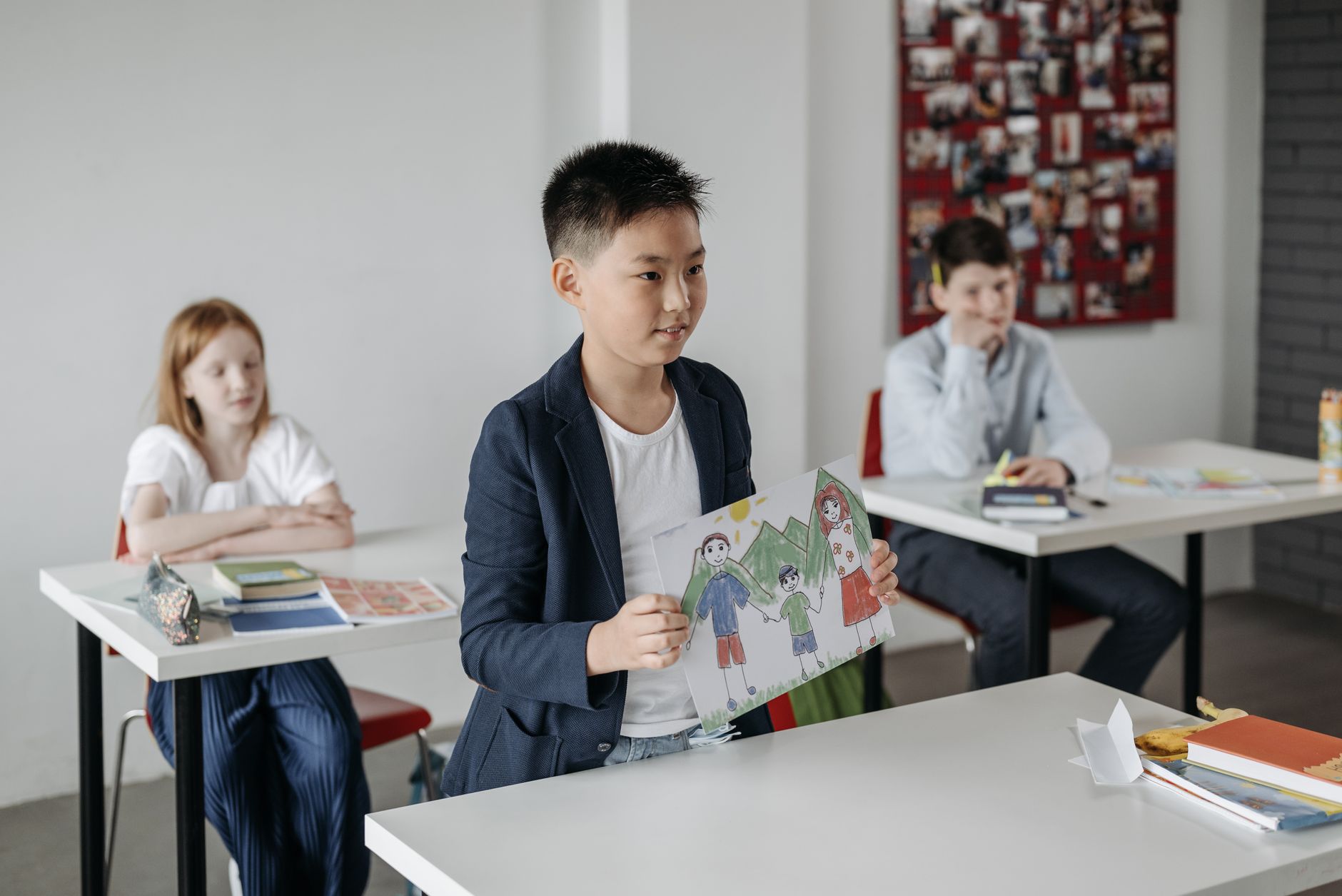
Photo by Pavel Danilyuk / Pexels
Estimates from various national and international assessments have long put Pakistan's out-of-school children population in the tens of millions — commonly cited figures put the number between roughly 20 million and 26 million, depending on the survey, age range, and methodology used — making it one of the largest such populations anywhere in the world. Behind that aggregate figure is a set of overlapping, well-documented barriers that education researchers have mapped in detail.
The rate is falling, even if the raw number stays large
It's worth being precise about a genuinely positive, recent trend: Pakistan's official out-of-school rate dropped from 38% in 2023 to 28% in 2025, per the Pakistan Economic Survey released in June 2026 — with out-of-school boys falling from 35% to 25% and out-of-school girls from 42% to 31% over the same period. That's real progress on the share of children affected, even though continued population growth means the absolute headcount remains stubbornly large, and different surveys (using different age brackets and sampling methods) continue to produce figures anywhere from about 5 million to 26 million depending on exactly what's being measured. Both things are true at once: the trend is improving, and the scale of the remaining problem is still enormous.
The main barriers to enrollment and retention
- Economic pressure. For many low-income households, the opportunity cost of schooling — lost income from a child's labor, or the direct costs of uniforms, books and transport — remains a significant barrier, particularly at the secondary level.
- Gender gaps. Girls make up a disproportionate share of out-of-school children in many regions, driven by a mix of cultural norms, safety concerns around travel to distant schools, and early marriage in some communities.
- School availability and quality. In rural and remote areas, the nearest functioning school — particularly for girls, or for education beyond the primary level — may be too far to reasonably access. Where schools do exist, shortages of teachers, functional classrooms and basic facilities like toilets and drinking water undermine both enrollment and retention.
- Disability and inclusion gaps. Children with disabilities face additional structural barriers, with limited infrastructure or trained staff to support inclusive education in most public schools.
- Displacement and disruption. Natural disasters, including the recurring flood events covered elsewhere on this site, and conflict-related displacement in some regions periodically interrupt schooling for large numbers of children, with many never fully returning to the classroom afterward.
Why the problem persists despite policy attention
Out-of-school children have been a stated policy priority across successive governments, and provincial education departments have launched numerous enrollment drives, stipend programs and school construction initiatives over the years. Yet progress has been inconsistent, for reasons education policy researchers point to repeatedly:
- Fragmented implementation across federal, provincial and district levels, with accountability often unclear.
- Underfunded recurring costs. New school construction is often easier to finance (and more visible politically) than the recurring costs of teacher salaries, training and materials needed to keep schools functioning well over time.
- Data gaps. Inconsistent and outdated enrollment data makes it difficult to target interventions precisely or measure progress reliably.
What's shown promise
Some interventions have demonstrated measurable success, at least at a pilot or regional scale:
- Conditional cash transfer and stipend programs, particularly targeted at girls' secondary education, which have shown positive enrollment effects in several provinces.
- Community and low-cost private schools filling gaps in areas underserved by the public system, though quality and sustainability vary significantly.
- Non-formal and accelerated learning programs, designed to help older out-of-school children catch up and reintegrate into the formal system.
- Mobile and digital learning pilots, particularly relevant for remote and displaced populations, though scale remains limited by connectivity and device access.
What sustained progress would require
Closing the gap at scale, rather than through isolated pilots, would likely require sustained increases in education financing as a share of the national budget, stronger data systems to track enrollment and dropout in real time, and continuity of programs across changes in government — an area where education policy has historically struggled.
Build Better Pakistan's Education Desk tracks enrollment policy and program outcomes across provinces.
This article is part of our Education coverage — Access, quality and the out-of-school children crisis.
Related Reading
HEC Warns Students: Unapproved Foreign Degree Partnerships Won't Be Recognised
The Higher Education Commission issued a public alert on September 27 telling students to verify that any foreign degree offered through a local Pakistani institution appears on HEC's approved Transnational Education partner list before enrolling or paying fees.
BBP Education Desk · September 27, 2026 · 4 min
37,708 Students Qualified for MBBS in Punjab's MDCAT 2026 — Public Colleges Have Room for a Fraction
The University of Health Sciences Lahore declared MDCAT 2026 results on September 24: 37,708 candidates qualified for MBBS out of 47,475 who sat the test, against roughly 3,376 public-sector MBBS seats in the province.
BBP Education Desk · September 25, 2026 · 3 min
Punjab Approves New School Curriculum, Cuts Textbook Load by 25%
Punjab Chief Minister Maryam Nawaz Sharif approved a revised curriculum on September 24 that trims textbook volume by 25 percent and adds QR-coded video lessons, starting with Early Childhood Education through Grade 5 for the academic session beginning April 2027.
BBP Education Desk · September 24, 2026 · 3 min