Pakistan and China Activate a Boundary Commission India Says Has No Legal Basis
Pakistan and China held the first meeting of a new Boundary Joint Commission in Islamabad on September 16-17, operationalising a 2013 border agreement over the Shaksgam Valley. India rejects the commission outright, saying it covers territory that is legally part of Jammu and Kashmir.
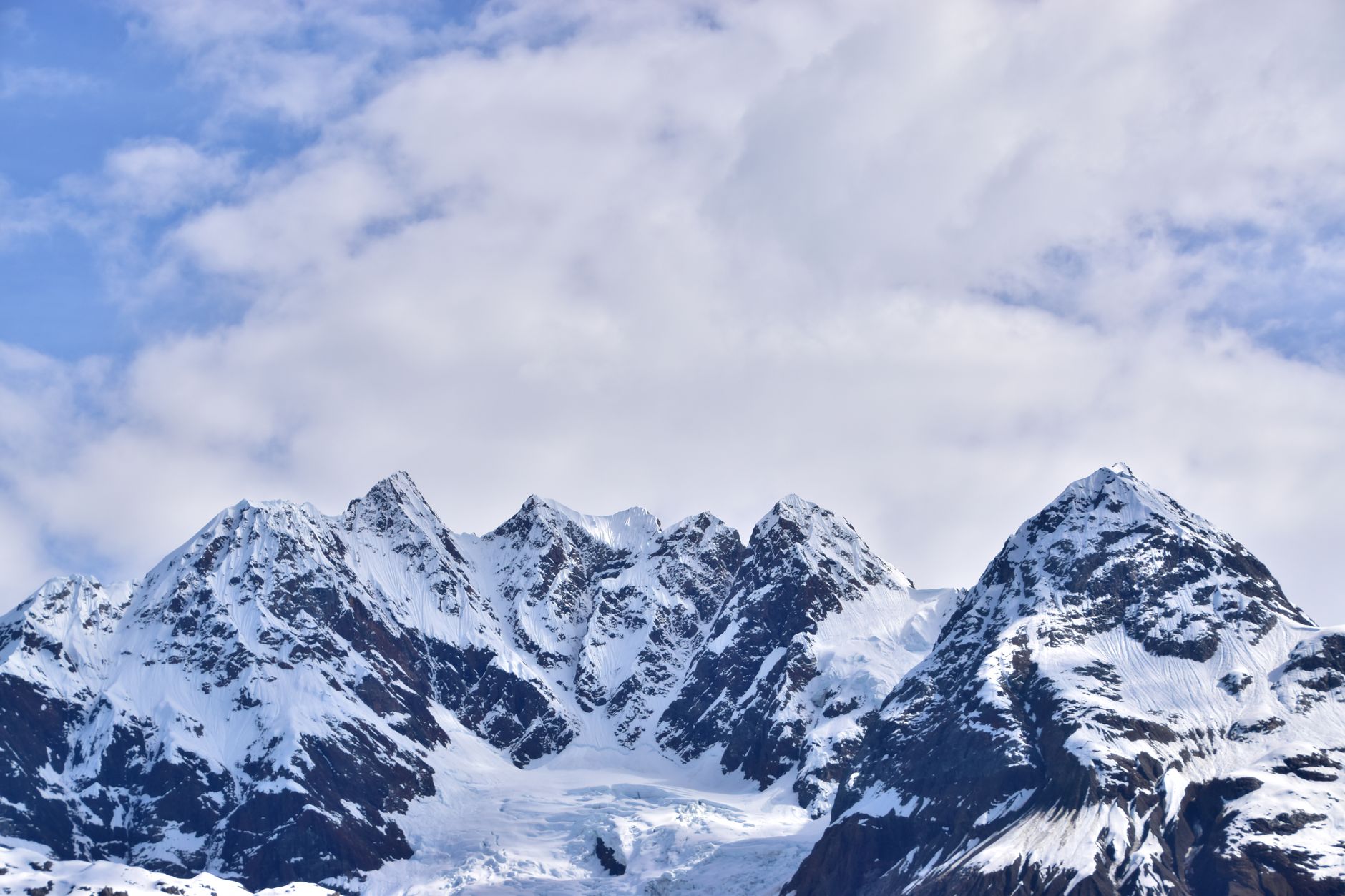
Photo by Edgar Jiménez / Pexels
Pakistan and China held the first meeting of a newly activated Boundary Joint Commission in Islamabad on September 16-17, 2026 — a low-profile technical session that has drawn a sharp rejection from India, which says the commission has no legal standing over the territory it covers.
What was agreed, and by whom
The Pakistani delegation was led by Bilal Mahmood Chaudhary, Director General (China) at the Ministry of Foreign Affairs, while China's side was headed by Li Ya, Deputy Director General of the Department of Boundary and Ocean Affairs at China's Ministry of Foreign Affairs. Over two days, the two sides discussed cross-border coordination, joint border surveys, the movement of goods and people across the frontier, and expanded people-to-people contact — the practical mechanics of managing a shared boundary rather than any new territorial arrangement.
The commission operationalises a bilateral border agreement the two countries signed in 2013, which itself rests on the 1963 China-Pakistan Boundary Agreement. Under that older agreement, Pakistan transferred control of the Shaksgam Valley — roughly 5,180 square kilometres of the Karakoram range — to China. Article 6 of the 1963 agreement explicitly described the arrangement as provisional, subject to renegotiation once India and Pakistan reach a final settlement on Kashmir. That settlement has never happened, which is precisely why the valley remains contested more than six decades later.
Why India says the commission has no standing
India's response was direct: it does not recognise the 1963 agreement as valid, and it maintains that no legally recognised Pakistan-China boundary exists in the territory the commission is meant to manage, since India considers the Shaksgam Valley part of Jammu and Kashmir and Ladakh. From New Delhi's perspective, Pakistan ceded land it had no legal right to give away, and any commission built on that transfer inherits the same defect.
The timing has added to India's unease. The commission's inaugural meeting came roughly four days after a BRICS summit at which Indian Prime Minister Narendra Modi and Chinese President Xi Jinping had discussed stabilising their own disputed border along the Line of Actual Control — talks India read as a sign of a cautious thaw. Pakistan and China activating a separate boundary mechanism, in territory India disputes, so soon afterward reads in New Delhi as a reminder that Islamabad and Beijing continue to coordinate closely regardless of the state of India-China relations.
Why the valley matters beyond the map
The Shaksgam Valley is not just a symbolic dispute. China has reportedly extended road infrastructure into the area, development Indian officials view as strengthening Beijing's capacity to move military assets quickly through the region. For China, the valley also sits close to the northern reaches of the China-Pakistan Economic Corridor, the infrastructure and trade route that gives China its only direct land access to the Arabian Sea — one more reason Beijing has an interest in formalising stable border management with Islamabad, whatever India's objections.
Pakistan, for its part, has shown no sign of stepping back from the relationship. On September 26, Prime Minister Shehbaz Sharif reaffirmed Pakistan's "complete support" for China's Global Development Initiative, one more marker of a bilateral relationship both governments continue to describe in the language of an "iron brotherhood" even as it generates friction with India on other fronts — friction that has already surfaced this year in a naval collision in the Arabian Sea and a public exchange of rights of reply at the UN General Assembly.
The through-line
None of this changes the map. The commission does not settle the underlying Kashmir dispute, and India's rejection does not undo the fact that China administers the Shaksgam Valley in practice and has for decades. What the September meeting does confirm is that Pakistan and China intend to keep building the practical machinery of a shared border — surveys, crossings, cooperation — around a territorial arrangement that a third country, India, still refuses to accept as legitimate. That gap between practice and recognition is unlikely to close soon, and it remains one of the more durable irritants in an already crowded India-Pakistan-China triangle.
Build Better Pakistan's Foreign Desk covers Pakistan's regional diplomacy and will update this piece if India, Pakistan or China issue further statements on the boundary commission.
This article is part of our Politics & Governance coverage — Institutions, local government and how power actually gets exercised.
Frequently Asked Questions
- What did Pakistan and China actually agree to in September 2026?
- They held the inaugural meeting of a Pakistan-China Boundary Joint Commission in Islamabad on September 16-17, 2026, operationalising a 2013 bilateral border agreement built on the 1963 China-Pakistan Boundary Agreement. The commission is meant to institutionalise cooperation on border management, joint surveys, and the movement of people and goods across the frontier.
- Why does India object to this commission?
- India rejects the commission's legal basis entirely. It does not recognise the 1963 China-Pakistan Boundary Agreement, under which Pakistan ceded the roughly 5,180-square-kilometre Shaksgam Valley to China, because India considers that territory part of Jammu and Kashmir and Ladakh — land it says Pakistan had no legal authority to hand over in the first place.
Related Reading

PTI Plans Prolonged Swabi Stay for Oct 4 March as Its Own Leader Warns of Emergency Rule
PTI has settled on Peshawar-to-Swabi as its October 4 route, with plans to camp for several days around founder Imran Khan's October 5 birthday. But KP leader Shaukat Yousafzai is publicly urging a further postponement, warning the government could use an Afghanistan-linked pretext to impose emergency rule.
BBP Politics Desk · September 29, 2026 · 3 min
PML-N Keeps Bahawalpur Seat as Channar Wins NA-168 By-Election, PTI and JI Sit Out
Malik Munir Iqbal Channar won the NA-168 Bahawalpur-V by-election on September 27 with 79,306 votes, a 36,683-vote margin over independent runner-up Wali Dad Cheema, after PPP withdrew in his favour and PTI and Jamaat-i-Islami boycotted the contest.
BBP Politics Desk · September 28, 2026 · 4 min
KP CM Sohail Afridi Says He's Ready to Leave, as PTI's Own MPAs Move Against Him
PTI leader Sher Afzal Marwat says 35 KP MPAs are ready to back a no-confidence motion against Chief Minister Sohail Afridi, and that Imran Khan relayed a message through his lawyer that Afridi should step down. Afridi says he'd rather leave the CM House than compromise on ideology, while Governor Faisal Karim Kundi says no resignation has reached him through official channels.
BBP Politics Desk · September 28, 2026 · 4 min