KSE-100 Falls 339 Points as Trump's Hormuz Rejection Sends Oil Higher
The Pakistan Stock Exchange's KSE-100 index closed at 170,425.62 on September 28, down 339.60 points, after Brent crude climbed above $106 a barrel on the news that Trump had rejected Iran's proposal to reopen the Strait of Hormuz — a reminder of how directly the war overseas now moves Pakistani markets.
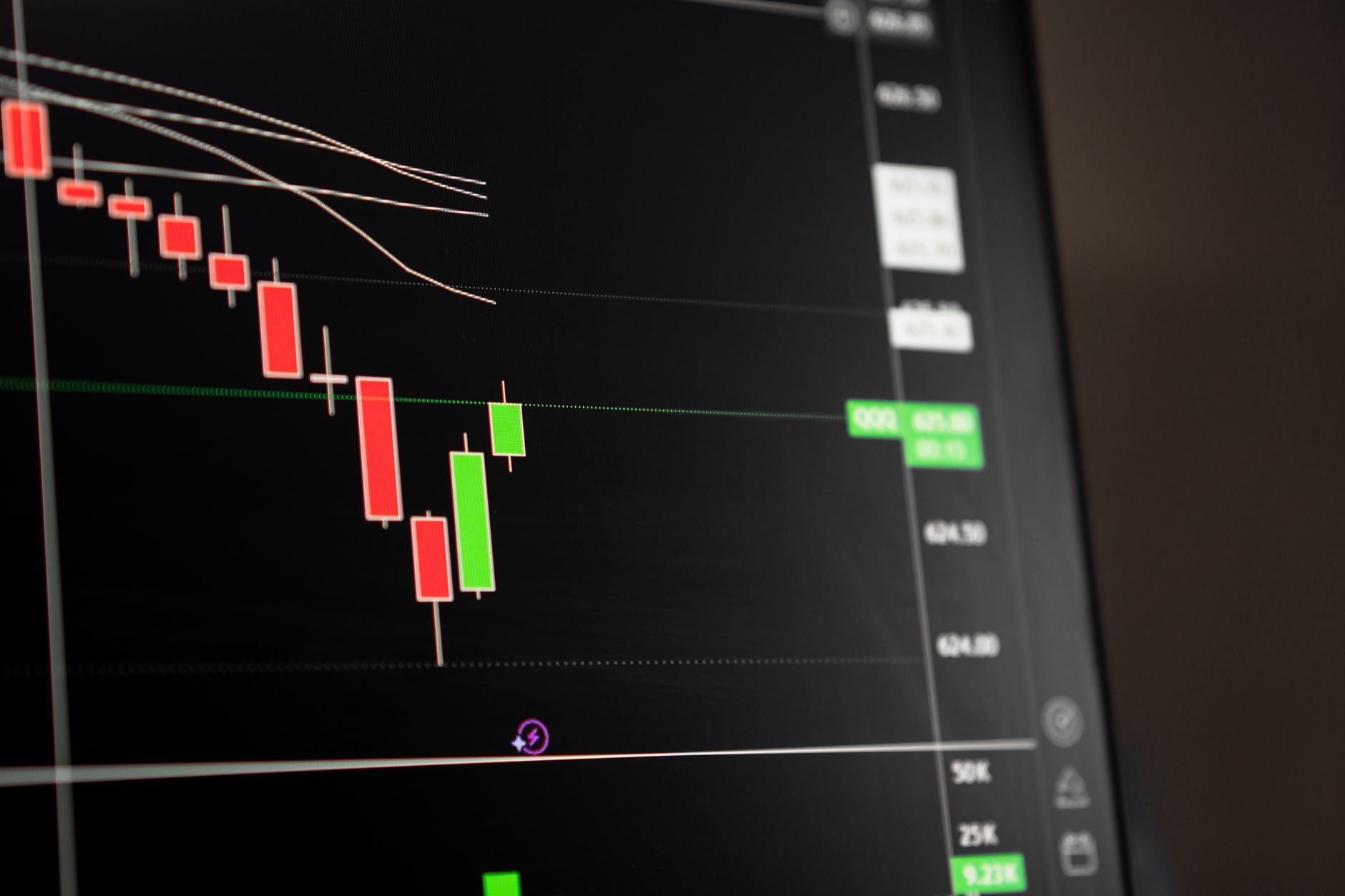
Photo by Alex Luna / Pexels
The Pakistan Stock Exchange's benchmark KSE-100 index closed at 170,425.62 on September 28, down 339.60 points, or 0.20 percent, from the previous session's close of 170,765.22, as a fresh spike in international oil prices pulled sentiment lower across the board.
How the session played out
Trading was volatile through the day. The index touched an intraday high of 171,126.52 before sliding to a low of 170,120.49 — a swing of more than 1,000 points — before settling near the bottom of that range at the close. The move erased the ground gained earlier this month, when the KSE-100 was riding a bullish run that carried it past 171,600 points on September 22. Monday's close leaves the index roughly 1,200 points below that mark.
What pushed oil prices up
The trigger was overseas, not domestic. Brent crude climbed above $106 a barrel on September 28 — up sharply on the session and roughly 18 percent higher over the past month — after President Trump confirmed over the weekend that he had rejected an Iranian proposal to reopen the Strait of Hormuz within seven days in exchange for the United States lifting its blockade of Iranian ports. Iran had floated the offer through mediators on the sidelines of the UN General Assembly session in New York, and Trump's rejection reduced expectations that the chokepoint — through which roughly a fifth of the world's oil trade passes — would reopen to normal shipping any time soon. Markets read that as a signal the seven-month US-Iran war has further to run, not less.
Why a Washington decision moves a Karachi trading floor
Pakistan imports the bulk of its crude oil and refined fuel from Gulf suppliers whose tankers pass through Hormuz, so a jump in the international price of that oil raises the cost of the country's single largest import almost immediately. That link runs directly into the near-daily fuel-pricing mechanism Pakistan adopted this year specifically because of how unpredictable the war has made oil markets — a mechanism that saw the government revise petrol and diesel rates twice within the same week in late September. Investors on the PSX price that same import-cost pressure into everything from refiners and fertiliser makers, which depend on imported feedstock, to the broader import bill and its effect on the rupee. A rise in Brent tends to weigh on Pakistani equities for that reason, even when nothing has changed in the domestic economy on a given day.
The bigger picture
Monday's fall does not undo 2026's broader rally — the KSE-100 remains well above where it started the year — but it is a reminder of how exposed Pakistani markets stay to a conflict thousands of kilometres away. Prime Minister Shehbaz Sharif made a version of this same point at the UN General Assembly the previous week, telling delegates that the Strait of Hormuz and Yemen's Bab al-Mandab strait were "arteries of the global economy" that needed to stay open, and warning that a worsening US-Iran conflict could hit Pakistan's economy directly. Monday's session was a small, concrete illustration of exactly that mechanism at work.
What to watch next
With Trump reportedly telling aides he expects to resume bombing Iran only after November's US midterm elections, traders are likely to keep treating Hormuz-related headlines as a recurring input rather than a one-off shock. Whether the KSE-100 recovers the ground it lost on Monday will depend less on anything happening in Islamabad or Karachi than on how the next round of US-Iran diplomacy, or the lack of it, plays out in the weeks ahead.
Build Better Pakistan's Economy Desk tracks the PSX and the oil-price channel connecting Pakistani markets to the US-Iran war.
This article is part of our Economy coverage — Inflation, growth, trade and the everyday cost of living across Pakistan.
Frequently Asked Questions
- Why did the KSE-100 fall on September 28, 2026?
- The index closed at 170,425.62, down 339.60 points (0.20%) from the previous session's 170,765.22, after swinging between an intraday high of 171,126.52 and a low of 170,120.49. The sell-off tracked a jump in international oil prices after President Trump said over the weekend that he had rejected Iran's proposal to reopen the Strait of Hormuz, which reduced hopes of an early end to disruption on the route.
- Why does the Strait of Hormuz matter to Pakistan's stock market?
- Pakistan imports most of its crude and refined fuel from Gulf suppliers that ship through the Strait of Hormuz, so a rise in the price of oil moving through that chokepoint feeds directly into Pakistan's import bill, its fuel-pricing mechanism and, in turn, investor sentiment on the PSX. Brent crude climbed above $106 a barrel on September 28, its highest level in weeks, after Trump's rejection of Iran's offer signalled the seven-month war was not close to a resolution that would guarantee the strait stays open.
Related Reading

Aurangzeb Opens Islamabad Round of IMF Talks, With $1.2 Billion Riding on It
Finance Minister Muhammad Aurangzeb held a virtual kick-off meeting with IMF mission chief Iva Petrova on September 30 to formally open the policy-level round of Pakistan's fourth EFF and third RSF reviews, with roughly $1.2 billion in combined financing on the table if the talks succeed.
BBP Economy Desk · September 30, 2026 · 4 min

Shehbaz Becomes First Pakistani PM to Open London Stock Exchange Trading
Shehbaz Sharif opened a trading session at the London Stock Exchange on September 29 and met executives from JPMorgan, Barclays, Citi, BlackRock and Rothschild & Co, pitching Pakistan as a destination for foreign capital weeks after its $3 billion Eurobond drew almost $6 billion in orders.
BBP Economy Desk · September 29, 2026 · 4 min

10,000 Civil Servants Must Declare Assets by October 30 Under New IMF Benchmark
As the IMF mission opened fourth EFF and third RSF review talks on September 29, Islamabad confirmed that roughly 10,000 federal civil servants must digitally file asset declarations by October 30, with selected details made public by December 31 — but not the full picture.
BBP Economy Desk · September 29, 2026 · 4 min