Trump Rejects Iran's Hormuz Reopening Offer, Signals Bombing Will Resume After US Midterms
President Trump has rejected an Iranian proposal to reopen the Strait of Hormuz within seven days in exchange for an end to the US blockade of Iranian ports, with the Wall Street Journal reporting he expects to resume bombing after November's midterm elections — a setback for the diplomatic opening Pakistan had been counting on.
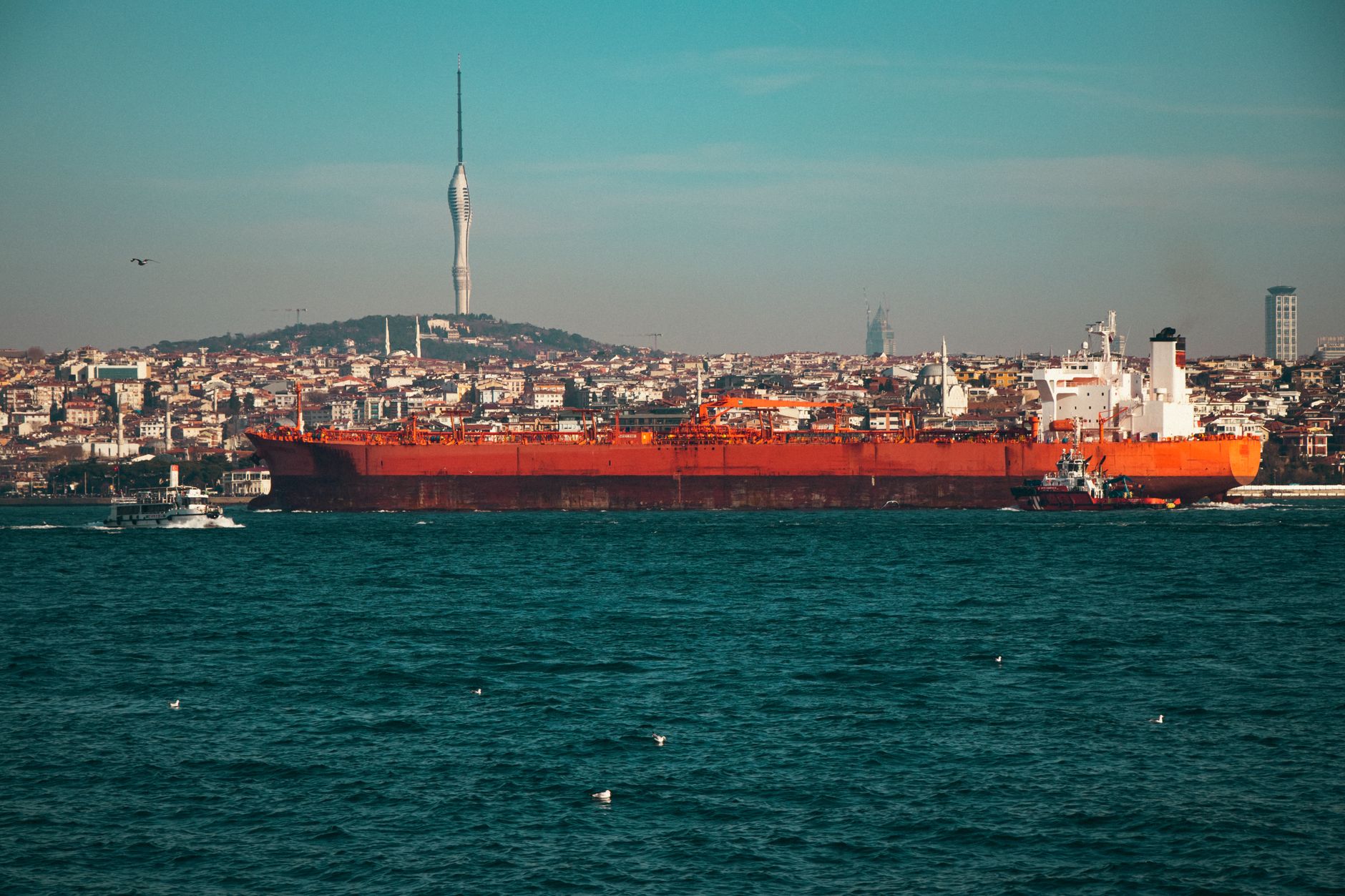
Photo by Burak Başgöze / Pexels
President Donald Trump has rejected Iran's latest proposal to reopen the Strait of Hormuz, with the Wall Street Journal reporting on September 26 that he privately told aides he expects to resume bombing Iran after November's US midterm elections — a signal that the seven-month war is set to escalate again just as Pakistan's diplomatic efforts appeared to be gaining traction.
What Iran offered, and what Trump said
Iran's proposal, submitted through mediators on the sidelines of this week's UN General Assembly session in New York, called for a seven-day path to reopening Hormuz — the chokepoint through which roughly a fifth of the world's oil trade passes — in exchange for the United States lifting its blockade of Iranian ports and resuming nuclear talks. Trump confirmed he had turned it down, telling reporters "they want to make a deal where they open the Strait immediately because they're losing so badly." According to the Journal's sourcing, the president is skeptical Iran would actually follow through, and is weighing renewed strikes once the November midterms are behind him — an account that puts electoral timing explicitly alongside military calculation in how the White House is sequencing the conflict.
Where this leaves the diplomatic track
The rejection lands only two days after a notable opening: Iranian President Masoud Pezeshkian told PM Shehbaz Sharif in a September 24 UNGA sideline meeting that the Islamabad MoU Pakistan brokered in June remains "fully acceptable" to Tehran and that Iran was ready to take it forward. Trump's response suggests Washington does not currently share that read. Iranian Foreign Minister Abbas Araghchi said Tehran had seen only an "initial reaction" from Trump and was still waiting on mediators to convey a definitive US position, leaving the proposal formally unresolved even as Trump's public remarks made his own view plain.
Shehbaz's warning at the UN
Addressing the General Assembly the same week, Shehbaz described the Strait of Hormuz and Yemen's Bab al-Mandab strait as "arteries of the global economy" that must remain open, and pressed the case that Pakistan's own mediation — including hosting the talks that produced the Islamabad MoU — had kept a channel open between Washington and Tehran even as the broader settlement it anchored fell apart by August. He separately voiced concern that a worsening US-Iran conflict could hit Pakistan's economy directly, a warning that reads differently now that Trump has signaled he intends to keep fighting rather than settle.
Why Hormuz keeps showing up in Pakistani pocketbooks
Pakistan imports the bulk of its crude and refined fuel from Gulf suppliers that ship through Hormuz, and switched this year from a fortnightly to a daily fuel-pricing mechanism specifically because of how volatile the war has made international oil prices — a shift explained in detail in our fuel-pricing explainer. Every round of strait disruption or reopening speculation moves the landed cost of fuel that OGRA passes through to pump prices within days, which is one reason the broader attrition pattern of the war has been tracked on this site as an economic story as much as a military one. A resumption of US bombing, should it materialize after the midterms, would extend that uncertainty rather than resolve it.
What to watch next
Trump's remarks do not amount to a formal declaration that strikes will resume — the Journal's reporting characterizes it as his expectation and private position, conveyed to aides, rather than an announced military order. Iran, for its part, has not withdrawn its proposal, and Araghchi's comments suggest Tehran is still waiting to see whether Washington's public rejection is the final word. Both the UN General Assembly session and the parallel Pakistan-IMF review talks underway in Islamabad this week give Pakistani officials further opportunities to press the mediation track, though neither venue gives them any control over Washington's decision.
Build Better Pakistan's Foreign Desk tracks how the US-Iran conflict and Pakistan's diplomatic and economic exposure to it are evolving.
This article is part of our Security coverage — Public safety, policing and community trust.
Frequently Asked Questions
- What did Iran offer, and why did Trump reject it?
- Iran's proposal, submitted through mediators on the sidelines of the UN General Assembly, offered to reopen the Strait of Hormuz to commercial shipping within seven days in exchange for the United States ending its blockade of Iranian ports and resuming nuclear talks. The Wall Street Journal reported that Trump is skeptical Iran can honor its side of the deal and told aides he expects to resume bombing after the November midterm elections, with the election itself described as a factor in his timing.
- Why does this matter for Pakistan specifically?
- Pakistan has positioned itself as a mediator in the conflict, brokering the Islamabad MoU that briefly paused the fighting in June before it collapsed. Continued closure or disruption of the Strait of Hormuz, through which roughly a fifth of the world's oil trade passes, feeds directly into the daily fuel-pricing mechanism Pakistan adopted this year, and PM Shehbaz Sharif has publicly warned that a worsening conflict threatens the broader Pakistani economy.
Related Reading
11 Children Hurt as School Van's Brakes Fail, Catches Fire in Murree
A private school van went off Sign Road in Murree's Masiari area on September 29 after its brakes failed, then caught fire. Eleven children were injured, four critically, and police say the van was carrying no fire extinguisher. Punjab's chief minister has ordered vehicle fitness checks on rural school transport.
BBP Security Desk · September 29, 2026 · 3 min

Explosion Destroys Hotel on Mastung's National Highway Stretch
A blast levelled the Madina Hotel in Mastung's Khadkocha area late on September 28, shattering windows and destroying an adjoining shop and more than 250 solar panels. No one was inside, and police are treating it as a suspected IED attack in a district with a recent run of militant incidents.
BBP Security Desk · September 29, 2026 · 4 min
Gunmen Kill Three Traffic Police in Tank, Snatch Then Abandon Their Vehicle
Motorcycle-borne attackers opened fire on a traffic police van in Tank's Wazirabad Bazaar on September 28, killing three officers and wounding two bystanders before fleeing with the vehicle, which police recovered nearby. No group has claimed the attack, but investigators suspect the Tehrik-e-Taliban Pakistan.
BBP Security Desk · September 28, 2026 · 3 min