BYD's $150 Million Gharo EV Plant Misses Its Launch Date Again, and Hubco's Stake Slips Into Loss
The Chinese automaker's local assembly plant in Sindh — a flagship of CPEC's push into electric-vehicle manufacturing — has slipped to a second-half 2026 launch, while Hub Power's equity stake in the venture posted a Rs 33 million loss last quarter after four straight profitable ones.
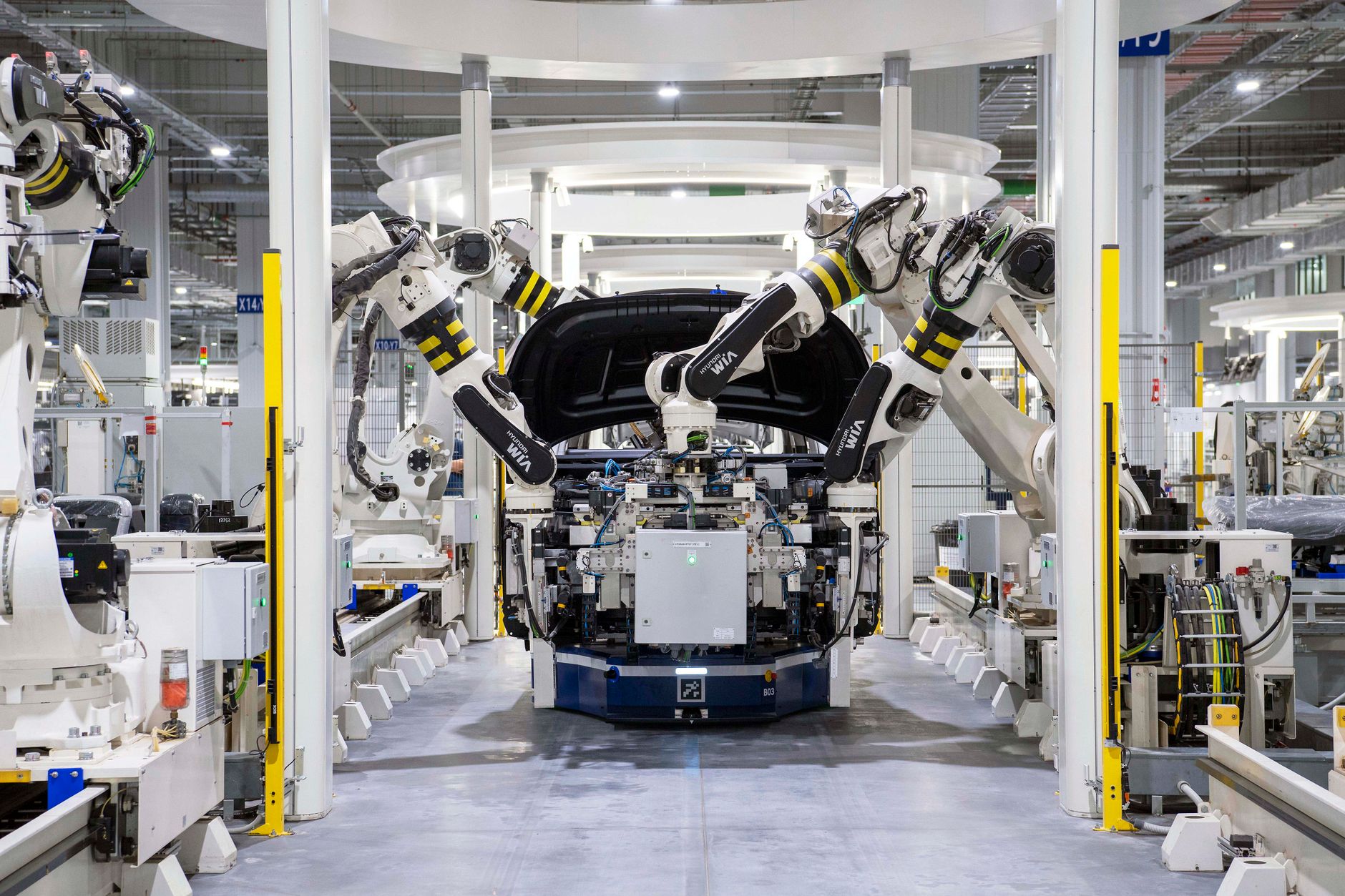
Photo by Hyundai Motor Group / Pexels
A flagship project of Pakistan's push into Chinese-backed electric-vehicle manufacturing has missed its local production launch date for a second time, and the Hub Power Company (Hubco) equity stake behind it has swung to a loss just as the delay became public.
What the plant was supposed to do
Mega Motor Company (Private) Limited — a joint venture in which Hubco holds a 50 percent stake alongside China's BYD Auto Industry Company — is building a $150 million New Energy Vehicle assembly plant in Gharo, Sindh, with roughly $90 million of that financed through project debt. The plant is designed to assemble BYD vehicles locally from completely knocked-down (CKD) kits rather than importing them fully built, with an initial annual capacity of 25,000 units that the venture says is scalable to 50,000. It is one of several Chinese-backed CKD plants now under construction in Pakistan as automakers chase the tax incentives built into the country's New Energy Vehicle Policy 2025–30.
A second missed deadline
Local assembly was originally targeted to begin within the first half of the current fiscal year. That date has now slipped again, with the operational launch pushed to the second half of calendar 2026 — roughly the fourth quarter, on the timeline Hubco's own management has cited. Reporters seeking comment on the delay have come up empty: Mega Motor did not respond to queries about why the timeline moved, what its localization roadmap looks like, how many BYD vehicles it has imported fully built while assembly was pending, or what it expects to produce in its first year once the line does start.
The venture's finances turned negative the same month
The delay became public within weeks of Hubco disclosing that its equity share of the Mega Motor venture recorded a loss of about Rs 33 million in the quarter ended June 2026 — the current fiscal year's second quarter — compared with a marginal profit of roughly Rs 0.5 million the quarter before. Analysts attributed the swing mainly to higher marketing and administrative spending. It breaks a run of four consecutive profitable quarters for the investment going back to March 2025, when it earned Rs 222 million; the venture then posted Rs 114 million in September 2025 and Rs 54 million in December 2025 before the slide began. Taken together, that is roughly a 99.8 percent collapse in the investment's earnings over twelve months. Hubco's cumulative investment in the project now stands at about Rs 6.6 billion, or roughly $23 million.
Why the numbers don't fully add up — and why that matters
The loss at Hubco's level sits oddly against Mega Motor's own underlying business: credit rating agency PACRA reported the company generated Rs 36.9 billion in revenue over the nine months to March 2026, with an operating profit of Rs 2.1 billion and a net profit of Rs 384 million — figures that reflect Mega Motor's existing business importing and selling built-up BYD vehicles, not the assembly plant that has yet to open. The gap between an operationally profitable importer and a loss-making equity stake points to accounting treatment and pre-launch costs at the joint-venture level rather than a struggling core business, but it is exactly the kind of gap that a company declining to explain its delay leaves unresolved.
The bigger picture
The Gharo plant is one of the more concrete pieces of the industrial cooperation Pakistani and Chinese officials have framed as CPEC's "second decade," a shift from the corridor's original ports-and-power-plants phase toward manufacturing and technology transfer — the same shift visible in Gwadar's role absorbing shipping traffic rerouted around a disrupted Strait of Hormuz. It is also arriving at a moment when foreign investors more broadly have told the IMF that Pakistan's net FDI fell 32 percent last fiscal year despite macroeconomic stabilisation, citing the same kind of execution and coordination friction a twice-delayed flagship plant tends to advertise. How Mega Motor performs once — or if — the Gharo line finally starts running will be read as a test case for the CKD-manufacturing bet underpinning Pakistan's broader electric-vehicle and renewable-energy transition plans.
Build Better Pakistan's Economy Desk is tracking Mega Motor's Gharo plant and will report when local assembly actually begins.
This article is part of our Economy coverage — Inflation, growth, trade and the everyday cost of living across Pakistan.
Frequently Asked Questions
- Why has BYD's Gharo plant not started producing cars yet?
- The $150 million plant, built by Mega Motor Company (Private) Limited — a joint venture in which Hub Power Company (Hubco) holds a 50 percent stake — was originally targeted to start local assembly earlier in the 2026 fiscal year. That date has now slipped to the second half of calendar 2026. Mega Motor did not respond to press queries about the reason for the delay, its localization plan, or its first-year assembly target.
- How much money has Hubco lost on its BYD investment?
- Hubco's equity share of the venture posted a loss of roughly Rs 33 million in the quarter ended June 2026, driven mainly by higher marketing and administrative costs, reversing four consecutive profitable quarters going back to March 2025 — a swing analysts have described as a 99.8 percent collapse in the investment's earnings over one year. Hubco's total investment in the project stands at about Rs 6.6 billion (roughly $23 million).
Related Reading
Aurangzeb Opens Islamabad Round of IMF Talks, With $1.2 Billion Riding on It
Finance Minister Muhammad Aurangzeb held a virtual kick-off meeting with IMF mission chief Iva Petrova on September 30 to formally open the policy-level round of Pakistan's fourth EFF and third RSF reviews, with roughly $1.2 billion in combined financing on the table if the talks succeed.
BBP Economy Desk · September 30, 2026 · 4 min
Shehbaz Becomes First Pakistani PM to Open London Stock Exchange Trading
Shehbaz Sharif opened a trading session at the London Stock Exchange on September 29 and met executives from JPMorgan, Barclays, Citi, BlackRock and Rothschild & Co, pitching Pakistan as a destination for foreign capital weeks after its $3 billion Eurobond drew almost $6 billion in orders.
BBP Economy Desk · September 29, 2026 · 4 min

10,000 Civil Servants Must Declare Assets by October 30 Under New IMF Benchmark
As the IMF mission opened fourth EFF and third RSF review talks on September 29, Islamabad confirmed that roughly 10,000 federal civil servants must digitally file asset declarations by October 30, with selected details made public by December 31 — but not the full picture.
BBP Economy Desk · September 29, 2026 · 4 min