Barrick Says Reko Diq Needs 'Security Improvement' Before Full Construction Begins
Barrick CEO Mark Hill told investors on September 29 that Pakistan's flagship $7 billion Reko Diq copper-gold project remains a long-term option rather than an active build-out, extending a security review first announced in February through mid-2027.
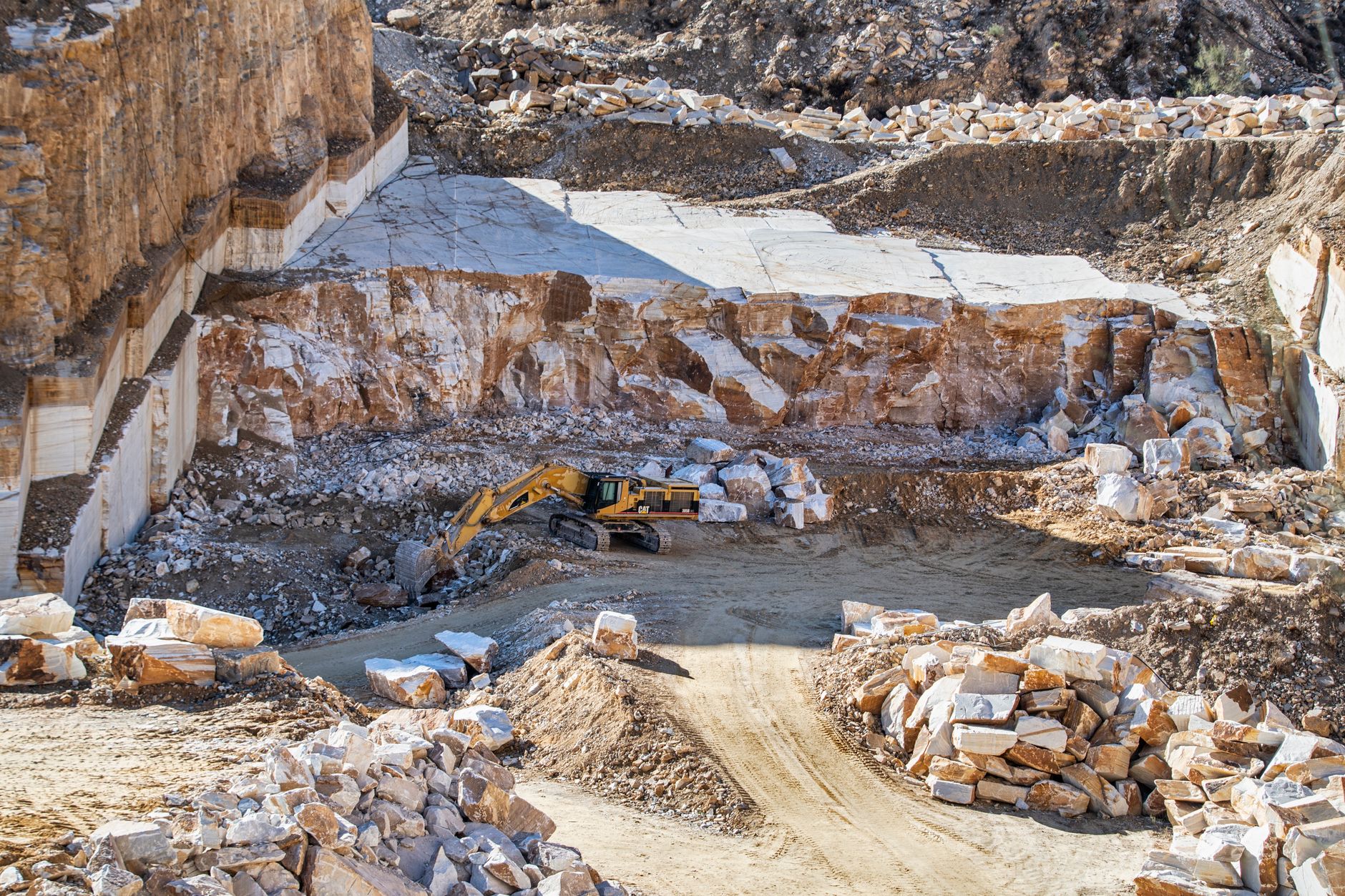
Photo by Enrique / Pexels
Barrick Mining Corporation's chief executive told investors on September 29 that Reko Diq, Pakistan's flagship copper-gold project in Balochistan, remains "a long-term strategic option" rather than a project under active construction — the clearest sign yet that a security review the company opened in February has not been resolved, and won't be for some time.
What Barrick actually said
Speaking at the Mining Forum Americas in Colorado Springs, CEO Mark Hill told the room: "We are revisiting it because we need some sort of security improvement before we would embark on a full construction schedule at Reko Diq." Hill did not offer a new construction timeline or put a number on the financial impact of the slowdown. The company's own framing, repeated in filings and on the earnings call, is that engineering, procurement and construction planning is being reviewed rather than abandoned — development has slowed, not stopped.
That statement confirms what Barrick first signaled in February, when it opened a security review in response to an escalation in militant activity across Balochistan, and reinforced in April, when it said that review would extend a further twelve months, through roughly mid-2027. First production at Reko Diq, previously targeted for late 2028, is now realistically looking at 2029 or later.
Why Balochistan's security situation is the variable
Reko Diq sits in one of the areas of Pakistan hit hardest by militant violence this year. Pakistan's security forces have run more than 40,000 intelligence-based operations nationwide in 2026, over 31,000 of them in Balochistan alone — a scale of activity we've covered in detail in our reporting on the 96-hour operations that killed 71 militants across the province. The Baloch Liberation Army and other groups have repeatedly targeted infrastructure and personnel tied to resource extraction specifically, which is precisely the risk Barrick's review is meant to price in before it commits billions more in capital.
For Barrick, the calculation is straightforward even if it's uncomfortable to say publicly: a mining company does not pour $5.6 billion into a first-phase build in a province where the roads leading to the site can be cut off by a single coordinated raid. For Pakistan, the calculation is more painful, because Reko Diq was supposed to be one of the clearest answers to a different problem we've tracked all year — the decline in foreign direct investment flagged by OICCI and the IMF. A flagship project stalling for security reasons is close to the worst possible advertisement for a country trying to attract the kind of long-horizon capital that mining requires.
How Islamabad is responding
Pakistan's position, delivered through Petroleum Minister Ali Pervaiz Malik, has been to keep publicly characterizing Reko Diq as "a flagship national project" central to the country's mineral-sector ambitions, while working with Barrick on the security arrangements the company says it needs. Barrick Executive Chairman John L. Thornton has made more than one trip to Islamabad this year specifically to discuss procurement strategy and security upgrades with federal officials, and the two sides have repeatedly reaffirmed the partnership in joint statements even as the underlying construction timeline keeps slipping.
What's notable is what hasn't happened: neither side has walked away. Pakistan continues to hold its 25% federal stake alongside Balochistan's own 25%, and Barrick continues to call the deposit — one of the largest untapped copper-gold reserves in the world — a long-term asset worth protecting rather than one worth writing off. That mutual reluctance to exit is itself a signal of how much economic upside both sides believe is still on the table, security conditions permitting.
The through-line
Reko Diq is a case study in how Pakistan's two biggest economic stories of 2026 — the search for foreign investment and the unresolved security situation in Balochistan — are not separate narratives but the same one. Every month the security review extends is a month of delayed royalties, delayed export revenue, and delayed proof that Pakistan's mineral sector can attract the kind of capital it needs at the scale the IMF program assumes. Mark Hill's comments did not change the trajectory of that story. They confirmed it.
Build Better Pakistan's Economy Desk is tracking the Reko Diq security review and Pakistan's broader foreign-investment pipeline.
This article is part of our Economy coverage — Inflation, growth, trade and the everyday cost of living across Pakistan.
Frequently Asked Questions
- Why has Barrick delayed full construction at Reko Diq?
- Barrick first announced a security review of the project in February 2026, citing an escalation of militant activity in Balochistan, and in April said it would slow development and extend that review through mid-2027. On September 29, 2026, CEO Mark Hill told investors at the Mining Forum Americas that the company still needs 'some sort of security improvement' before committing to a full construction schedule.
- Who owns the Reko Diq project, and how big is the investment?
- Barrick holds a 50% stake, with the Balochistan government holding 25% and Pakistani federal state-owned enterprises holding the remaining 25%. The first phase of development was revised up to roughly $5.6 billion, with total investment across both phases of the project projected at about $7 billion.
Related Reading

Pakistan's Public Debt Hit Rs86.7 Trillion in FY26 — Up 76% in Four Years
The finance ministry's new Annual Borrowing Plan for FY27 shows total public debt reached Rs86.7 trillion by end-June 2026, up from Rs49.3 trillion four years earlier. The growth rate was the slowest in two decades, and the debt-to-GDP ratio kept falling — but the government still plans to borrow Rs6.86 trillion more this year.
BBP Economy Desk · October 5, 2026 · 4 min
Markets Start Pricing a Rate Hike as Analysts Say SBP Will Miss Its FY27 Inflation Target
Economists say the State Bank's 5-7% medium-term inflation target for FY27 is now out of reach after September's reading came in at 10.3%, with one-year T-bill yields climbing toward 12.49% ahead of the October 26 policy meeting — a sign markets are betting on a hike, not another hold.
BBP Economy Desk · October 4, 2026 · 4 min
Pakistan's Exports Jump 17.6% in September, But the Trade Gap Still Widens
Pakistan Bureau of Statistics data released this week put September exports at $2.94 billion, up 17.6% year-on-year, but a faster rise in imports pushed the monthly trade deficit to $3.56 billion — 6.2% wider than a year earlier.
BBP Economy Desk · October 3, 2026 · 3 min