KP Police Are Stringing Fishing Nets Over Checkposts to Stop TTP Drone Attacks
Police in Hangu and other Khyber Pakhtunkhwa districts have strung ordinary fishing nets several metres above their checkposts, a roughly $1,435-per-post fix against the quadcopter bombs Tehreek-e-Taliban Pakistan has used in hundreds of attacks on security personnel. No attack has gotten through a netted post since Hangu installed the first one two months ago — though experts say that is not the same as proof it works.

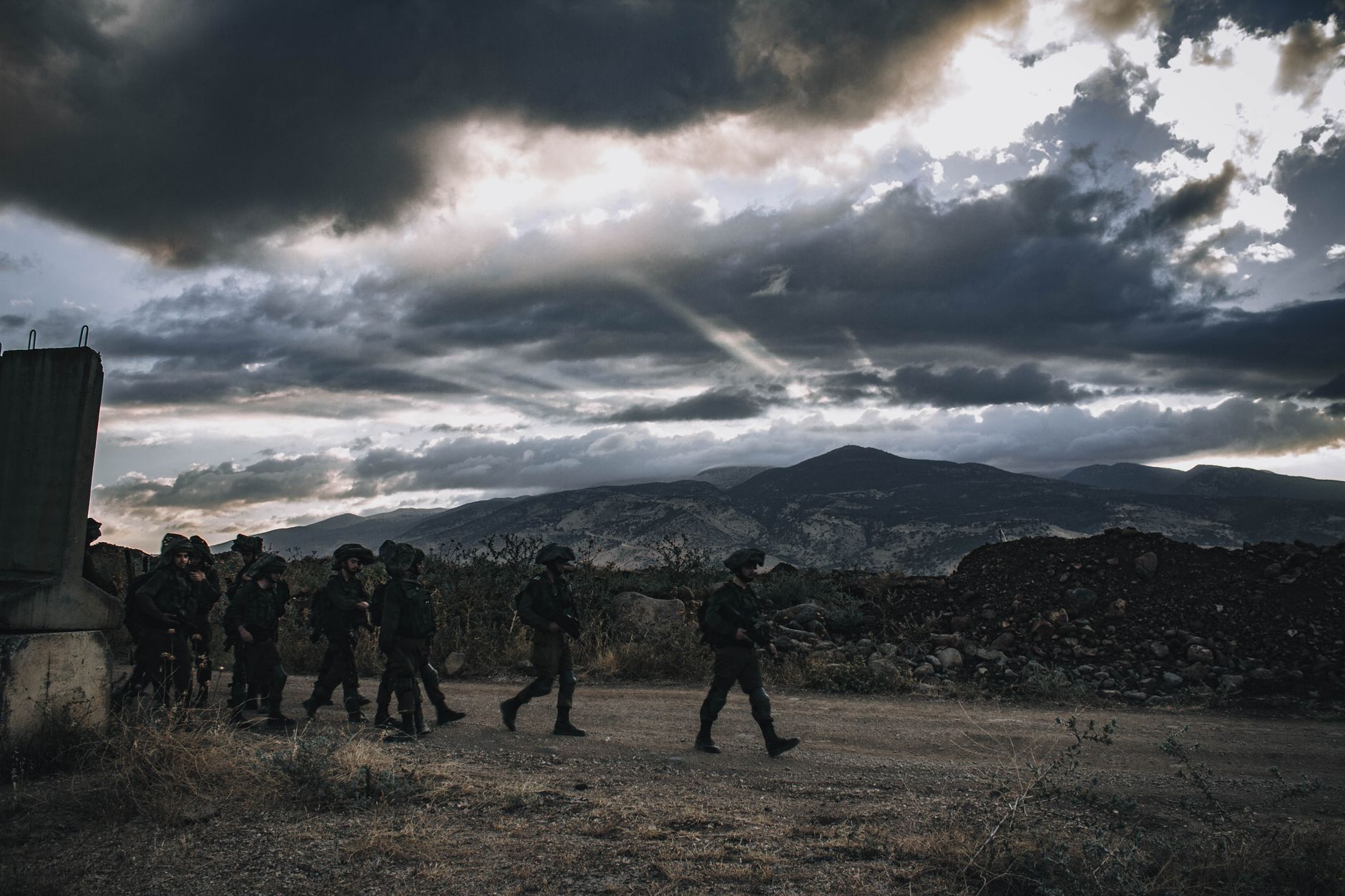
Photo by Mike van Schoonderwalt / Pexels
Police checkposts across several Khyber Pakhtunkhwa districts now sit under a canopy of ordinary fishing net, strung several metres overhead as a low-cost defence against the quadcopter bombs Tehreek-e-Taliban Pakistan has turned into one of its signature weapons against security personnel in the province.
A fisherman's net against a militant's drone
The approach started in Hangu, where police said the first net went up roughly two months before early October, after a wave of TTP-claimed quadcopter strikes on checkposts and, in one case, the targeted killing of a police officer. The logic is mechanical rather than technological: a drone carrying an explosive charge that flies into the netting can get physically snagged before it can be detonated or dropped on the personnel below. Even where a drone explodes above the net rather than being caught outright, officers say the netting is expected to disperse most of the blast's shrapnel outward and upward, sparing the post the kind of direct, concentrated damage a drone strike delivers in the open.
The appeal is cost. At roughly $1,435 per checkpost, the fishing-net fix is a fraction of what any radar-based or jamming counter-drone system would run, and it can be installed by local tradesmen with no specialised equipment. Since Hangu's install, the same netting has spread to checkposts in multiple other KP districts as police departments look for something, anything, that doesn't require waiting on federal procurement of proper counter-drone hardware.
A threat that outgrew denial
The nets are a response to a problem Pakistan's own security establishment was slow to acknowledge publicly. KP police recorded 246 drone attacks on security personnel in 2025, with 215 of those concentrated in Bannu district alone, according to a department report. It was not until December 2025 that the Pakistan Army's own spokesperson, then-Lieutenant General Ahmed Sharif Chaudhry, publicly confirmed TTP's use of weaponised drones for the first time — putting the military's own count at 405 attacks for the year, higher than the police figure. In January 2026 alone, Bannu police logged 20 further quadcopter attacks that killed nine civilians and injured 19 police officers, a pace that has continued through the year, including the targeted killing of a Hangu police officer and strikes on checkposts in Tank.
That escalation sits inside a broader security deterioration CRSS, a respected Islamabad think tank, has already quantified: violence-linked deaths in Pakistan surged 83% in the third quarter of 2026 compared with the previous quarter, with KP and Balochistan absorbing the bulk of it. Quadcopters are a comparatively small, cheap part of that picture next to the operations that have killed eight terrorists in Dera Ismail Khan or eleven militants across Mashkel and South Waziristan this month alone, but drones are the threat that reaches police sitting still at a fixed post, which is exactly what makes a defensive fix like netting attractive regardless of its unproven ceiling.
The limits nobody is pretending don't exist
Security analysts who track the insurgency are blunt that two months without an incident at a handful of netted posts is a thin evidence base. TTP has adapted tactics before — Pakistan's military has separately reported shooting down eight drones launched from Afghan territory in a single stretch, suggesting the group can vary altitude, approach angle and payload faster than a fixed net can be redesigned. A net strung to catch a drone flying a predictable low approach does nothing against one released to drop a charge from above, or one timed to detonate well short of the netting. What the nets buy, realistically, is a marginal reduction in casualties at fixed positions for the cost of a few thousand rupees — not a solution to a drone threat that has grown from a novelty to a quantified, four-figure annual tally in under two years.
What to watch
The real test will come once TTP, which monitors these countermeasures as closely as anyone, adjusts its own tactics in response — something the group's track record suggests it will attempt rather than concede the point to a few metres of mesh. Whether KP's police departments get the federal funding for a proper counter-drone system before that adjustment arrives, or keep relying on fishing nets because that funding hasn't materialised, says as much about the state of Pakistan's domestic counterterrorism budget as it does about the threat itself.
Build Better Pakistan's Security Desk tracks militant activity and the security response across Khyber Pakhtunkhwa and Balochistan.
This article is part of our Security coverage — Public safety, policing and community trust.
Frequently Asked Questions
- How do fishing nets protect a police checkpost from drone attacks?
- KP police string ordinary fishing nets several metres above a checkpost's roof. The idea is twofold: a quadcopter carrying an explosive charge can get physically tangled in the netting before it reaches the personnel below, and even if it detonates above the net rather than being stopped outright, the netting is expected to disperse most of the blast's shrapnel and fragments outward and upward rather than letting them fall directly onto the post. Each installation costs roughly $1,435, far cheaper than radar-based counter-drone systems.
- Has the fishing-net defence actually worked, and how big is the drone threat it's responding to?
- Police in Hangu, where the first net went up roughly two months before early October 2026, say no drone attack has gotten through since. But security analysts caution that the absence of an attack on a handful of netted posts over a couple of months isn't proof the nets work against a determined, explosive-laden drone — it may equally reflect TTP shifting targets elsewhere. The threat itself is well documented: KP police recorded 246 drone attacks in 2025, with 215 of them in Bannu alone, while the Pakistan Army's own count for the year, disclosed publicly for the first time in December 2025, was 405.
Related Reading

Pakistan's Houthi Ambiguity Ends: Cargo Planes to Aden, and a Saudi Offensive Taking Shape
Weeks after Defence Minister Khawaja Asif declined to confirm or deny a Pakistani role against the Houthis, Reuters reports Pakistan sent four cargo planes of weapons to Yemen's Saudi-backed government in September — as Saudi Arabia now plans an offensive to break the Houthis' grip on the Bab el-Mandeb strait.
BBP Security Desk · October 4, 2026 · 4 min
Eight Terrorists, Including Three Commanders, Killed in Dera Ismail Khan Operation
Security forces killed eight terrorists, among them three commanders, in an intelligence-based operation in Dera Ismail Khan announced October 4. ISPR says those killed were linked to attacks on security forces and civilians.
BBP Security Desk · October 4, 2026 · 3 min

US Sends a Third Carrier Toward Iran as Trump Signals Strikes After the Midterms
The USS Theodore Roosevelt strike group and roughly 2,000 additional Marines left San Diego this week, a buildup that could put three US carrier strike groups off Iran at once. Oil prices moved on the news — the same mechanism that sets Pakistan's pump prices within a day.
BBP Foreign Desk · October 3, 2026 · 4 min