Pakistan's Houthi Ambiguity Ends: Cargo Planes to Aden, and a Saudi Offensive Taking Shape
Weeks after Defence Minister Khawaja Asif declined to confirm or deny a Pakistani role against the Houthis, Reuters reports Pakistan sent four cargo planes of weapons to Yemen's Saudi-backed government in September — as Saudi Arabia now plans an offensive to break the Houthis' grip on the Bab el-Mandeb strait.
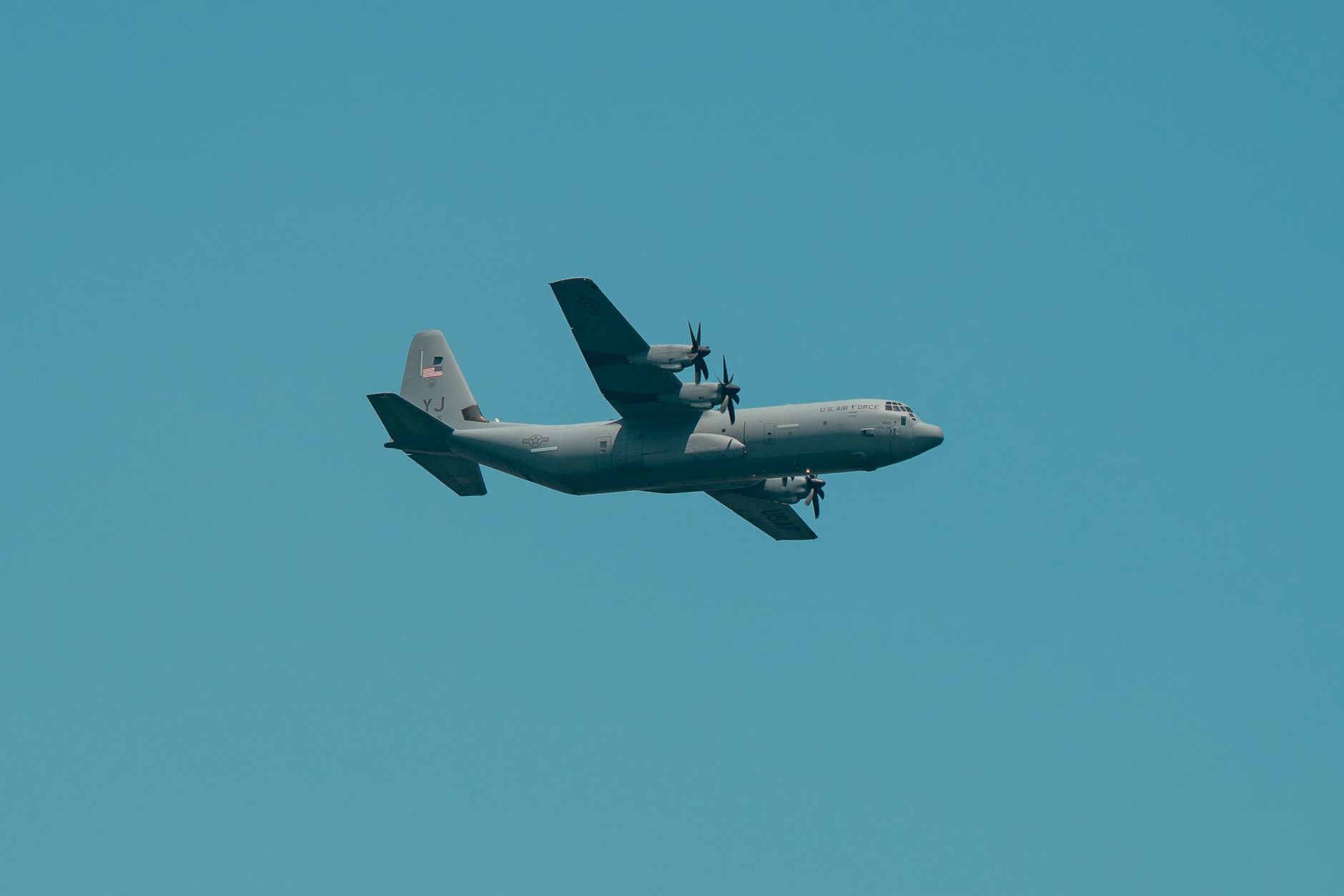
Photo by Iban Lopez Luna / Pexels
For weeks, Pakistan's government answered the question of whether it would actually fight the Houthis with careful ambiguity. That ambiguity has a harder edge now: Reuters reported on October 2 that Pakistan sent four cargo planes of weapons to Yemen's Saudi-backed government in September, as Saudi Arabia prepares an offensive to break the Houthis' hold on one of the world's most important shipping chokepoints.
How the Houthis got the chokepoint
The backdrop is a rapid Houthi advance along Yemen's Red Sea coast in September. The Iran-aligned group seized the port city of Mokha around September 10-11, then pushed on to capture Mayyun Island — also called Perim, sitting in the middle of the Bab el-Mandeb strait — along with the town of Dhubab and the coastal village of Murad. By mid-September, Houthi forces controlled the entirety of Yemen's Red Sea coastline and, with it, the strait itself, their positions reportedly coming within 20 kilometres of the African coast.
The strait's significance is not abstract. Bab el-Mandeb carries an estimated 12% of global trade, including roughly 11% of the world's seaborne oil and 8% of its LNG. Combined with Iran's separate blockade effort in the Strait of Hormuz — the subject of a war of attrition we've covered in detail — that puts close to a third of the world's maritime trade sitting under some form of hostile control at once.
What Pakistan has reportedly sent
Reuters, citing sources with knowledge of Saudi preparations, reported that Pakistan sent four cargo planes carrying air defence systems, light artillery, drones and anti-drone equipment to Aden in September — the seat of Yemen's internationally recognised, Saudi-backed government. Pakistani military advisers are reported to be on the ground as well, working alongside Saudi counterparts to support Yemeni government forces. Turkiye has reportedly supplied equipment of its own under the same arrangement.
Islamabad has not confirmed these specifics publicly. As we reported on September 30, Defence Minister Khawaja Asif said only that Pakistan's "full military capability" is available to Saudi Arabia under the Makkah Joint Defence Agreement, and declined repeated questions on whether Pakistani forces had already struck Houthi-linked targets. The Reuters reporting doesn't resolve that ambiguity so much as narrow it: a confirmed shipment of hardware and advisers is a different, more concrete category of involvement than the open-ended rhetorical commitment Asif offered five days after Pakistan's, Saudi Arabia's and Turkiye's army chiefs met in Riyadh to work out the pact's operational details.
The offensive Saudi Arabia is now weighing
According to the same Reuters report, Saudi Arabia is considering two options to reverse the Houthis' gains: a narrower assault focused on retaking Bab el-Mandeb itself, or a broader offensive opening multiple fronts in the governorates of Al-Bayda, Marib, Taiz and Al-Jawf. The larger option could involve mobilising more than 100,000 Yemeni troops. The six sources Reuters spoke with gave no fixed launch date, with estimates ranging from within a week to sometime after the US midterm elections in early November — a wide enough window that the operation's scale and timing both remain genuinely unsettled.
Why this still matters for Pakistan specifically
Pakistan signed the Makkah Joint Defence Agreement with Saudi Arabia and Turkiye in August 2026, a pact declaring an attack on one signatory an attack on all three. We've covered the pact and its first Secretary General as the three governments built out the institutional machinery behind it. What the Reuters reporting suggests is that the machinery is now moving material, not just statements — and that Pakistan is underwriting a Saudi military campaign whose scale and timing are still being decided in Riyadh, not Islamabad. Pakistan's parliament voted unanimously in 2015 to stay neutral in Yemen rather than send troops Riyadh had requested; whether today's arrangement, built on equipment and advisers rather than a parliamentary deployment vote, ends up tested the same way domestically is still an open question.
Build Better Pakistan's Security Desk is tracking Pakistan's role under the Makkah Joint Defence Agreement as the Saudi-Houthi conflict moves toward a larger confrontation.
This article is part of our Security coverage — Public safety, policing and community trust.
Frequently Asked Questions
- What has Pakistan actually sent to support Saudi Arabia's side in Yemen?
- According to Reuters, Pakistan sent four cargo planes of weapons in September 2026 to Aden, the seat of Yemen's Saudi-backed government — including air defence systems, light artillery, drones and anti-drone equipment. Pakistani military advisers are also reported to be on the ground working alongside Saudi counterparts. Pakistan's government has not itself confirmed these specifics; Defence Minister Khawaja Asif said on September 30 only that Pakistan's "full military capability" is available to Saudi Arabia, declining to say whether Pakistani forces had already acted.
- Why is Saudi Arabia planning a new offensive now?
- The Houthis swept down Yemen's Red Sea coast in September, seizing the port of Mokha and then Mayyun (Perim) Island inside the Bab el-Mandeb strait itself, giving them control of a chokepoint that carries roughly 12% of global trade, including 11% of seaborne oil and 8% of LNG. Reuters reported on October 2 that Saudi Arabia is weighing either a narrow assault to retake the strait or a broader multi-front offensive, potentially mobilising more than 100,000 Yemeni troops, with timing estimated at anywhere from within a week to after the US midterm elections in November.
Related Reading
Eight Terrorists, Including Three Commanders, Killed in Dera Ismail Khan Operation
Security forces killed eight terrorists, among them three commanders, in an intelligence-based operation in Dera Ismail Khan announced October 4. ISPR says those killed were linked to attacks on security forces and civilians.
BBP Security Desk · October 4, 2026 · 3 min
US Sends a Third Carrier Toward Iran as Trump Signals Strikes After the Midterms
The USS Theodore Roosevelt strike group and roughly 2,000 additional Marines left San Diego this week, a buildup that could put three US carrier strike groups off Iran at once. Oil prices moved on the news — the same mechanism that sets Pakistan's pump prices within a day.
BBP Foreign Desk · October 3, 2026 · 4 min
Pakistan Summons Indian Diplomat After BSF Firing Kills Two Civilians Near Kasur
Pakistan's Foreign Office summoned India's chargé d'affaires on October 3 over the killing of Azmat Rasool and Mohsin Jutt, shot by India's Border Security Force in the Bedian sector near Kasur on October 2. India says the men were foiling an infiltration attempt; Pakistan says they were unarmed civilians who never crossed the fence.
BBP Foreign Desk · October 3, 2026 · 4 min