Islamabad High Court Strikes Down Rule Letting Agencies Block Citizens From Flying
The IHC has declared a Passport Rules provision unconstitutional after a Pakistani man with a valid passport, visa and ticket was offloaded at Islamabad airport with no explanation — because an agency had quietly placed him on the exit list.
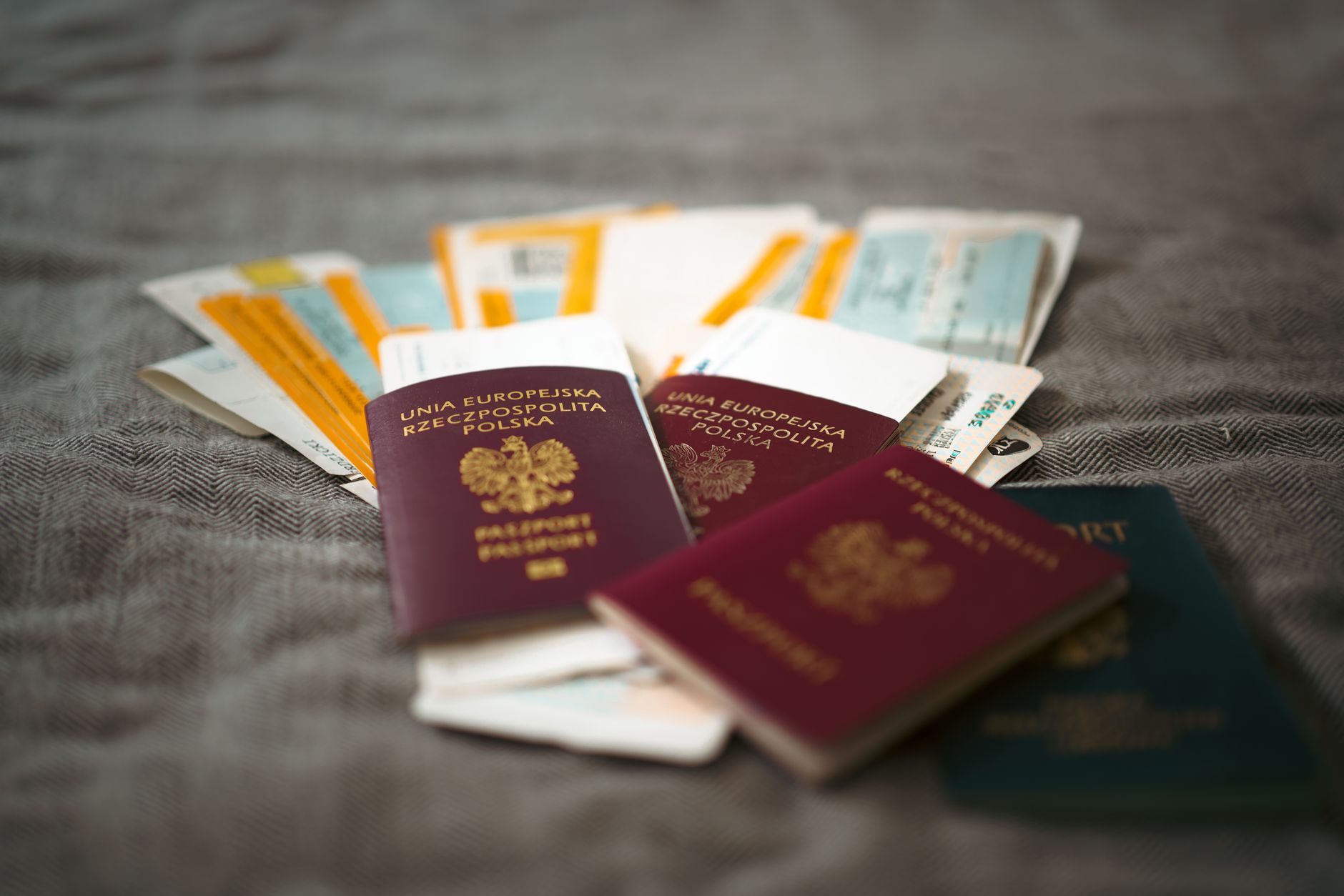
Photo by Jakub Zerdzicki / Pexels
A Pakistani citizen with a valid passport, a valid visa and a confirmed air ticket was stopped from boarding his flight to Saudi Arabia with no explanation given. The reason surfaced only in court: an intelligence or law-enforcement agency had recommended his name for the Passport Control List more than a year earlier, and no rule required anyone to tell him, justify it, or even name who was responsible for the decision. This week, the Islamabad High Court ruled that the provision allowing exactly that is unconstitutional.
What the court struck down
In a detailed judgement, Justice Raja Inaam Ameen Minhas declared the second limb of Rule 22(2)(b) of the Passport Rules, 2021, ultra vires the Passports Act, 1974, and Articles 4, 9, 10A and 15 of the Constitution — meaning it has no legal effect. The court's reasoning turned on an asymmetry within the rule itself: Rule 22(2)(a) names the additional secretary of the relevant division as the competent authority responsible for placing and removing a citizen's name from Category A of the PCL. Clause (b), by contrast, let "agencies or departments" simply recommend a placement with no equivalent competent authority identified, and no clear mechanism for the affected person to know or challenge the decision.
The court held that neither the FIA's Directorate General nor NCB-INTERPOL — the bodies involved in the case before it — had the legal authority to place the petitioner's name on the PCL under the circumstances presented.
The case that got there
The petitioner, Moinuddin, was offloaded at Islamabad International Airport on December 18, 2025, while travelling to Saudi Arabia for Umrah. He held a valid Pakistani passport, a valid Saudi visa and a confirmed air ticket. No reason was communicated to him at the time. Litigation later established that his name had been placed on the PCL in December 2024 on an agency's recommendation, without any competent authority on record as having made that call. The court set aside a subsequent January 26, 2026, order on the matter and directed that his name be removed from the list within 15 days.
Why this rule mattered beyond one traveller
Exit-control mechanisms in Pakistan — the Exit Control List (ECL) and the Passport Control List that operates alongside it — have long drawn criticism for being used against journalists, activists, opposition politicians and ordinary citizens with little transparency about who orders a name added or on what basis. Our coverage of Imran Khan's sisters being detained under the Maintenance of Public Order ordinance sits in the same broader pattern: state powers that restrict a citizen's movement or liberty, exercised with minimal procedural safeguards and challenged only after the fact, in court, by the person affected. This ruling doesn't touch the ECL itself, but it closes off one specific route — Rule 22(2)(b) — by which an agency could get a name onto a travel-restriction list without anyone having to put their name to the decision.
A pattern of courts filling a procedural gap
This judgement adds to a run of 2026 rulings in which Pakistani courts have stepped in to require clearer legal authority and due process where administrative or agency practice had outpaced the law — echoing, in a different area, the Supreme Court's ruling that haq mahr is a wife's unconditional right rather than something that can be bargained away in practice. Legal observers point to the same underlying problem in both cases: rules and informal practices that survived for years because no one with standing had challenged them, until an individual case forced the question. Given how slowly relief on such matters typically travels through Pakistan's court system — a backlog problem we've covered in detail separately — the fact that this case reached a substantive constitutional ruling at all is notable.
What changes now
The immediate effect is narrow: Moinuddin's name must come off the PCL within 15 days, and Rule 22(2)(b)'s second limb can no longer be used to place a citizen on the list without a named competent authority behind the decision. It does not abolish the PCL or the ECL, and it doesn't address Category B or other placement routes that weren't before the court. Whether the federal government amends the Passport Rules to close the gap with a compliant procedure, or whether the ruling is appealed, will determine how much practical difference it makes for the next traveller who finds themselves unexpectedly stopped at the gate.
Build Better Pakistan's Justice Desk tracks court rulings that affect citizens' rights and due process.
This article is part of our Rights & Justice coverage — Access to justice, courts and civil rights.
Frequently Asked Questions
- What did the Islamabad High Court actually strike down?
- The IHC declared the second limb of Rule 22(2)(b) of the Passport Rules, 2021, ultra vires the Passports Act, 1974, and Articles 4, 9, 10A and 15 of the Constitution. That clause let government agencies or departments recommend placing a citizen's name on the Passport Control List (PCL) without naming any competent authority responsible for the decision or giving the person a chance to contest it.
- What happened to the person who brought the case?
- Moinuddin was offloaded at Islamabad International Airport on December 18, 2025, while travelling to Saudi Arabia for Umrah, despite holding a valid passport, a valid Saudi visa and a confirmed ticket. No one told him why. It emerged during litigation that his name had been placed on the PCL in December 2024 on an agency's recommendation, with no competent authority ever named as responsible for that decision.
Related Reading

Rights Group Tells UN Council Pakistan's Child Marriage Laws Are Only as Good as Their Enforcement
Human Rights Focus Pakistan told the UN Human Rights Council's 63rd session that roughly 19 million women and girls in Pakistan were married before 18, and that 54% of those marriages happened in provinces that already had a legal minimum age of 18 at the time — evidence, HRFP says, that new laws mean little without prosecutions behind them.
BBP Rights Desk · September 28, 2026 · 4 min

Balochistan CM Confirms 1,000 Residents to Be Relocated Ahead of Shor Parod Operation
Sarfraz Bugti told the Balochistan Assembly that around 1,000 people from the mountainous Shor Parod area of Mastung district will be temporarily relocated for a security operation, as Kalat's administration set a September 28 deadline to vacate and residents elsewhere reported similar orders.
BBP Balochistan Desk · September 28, 2026 · 3 min

Federal Constitutional Court Upholds Ban on Ahmadi Community's Core Religious Text
Pakistan's Federal Constitutional Court dismissed all petitions against a 2014 Punjab government ban on the 23-volume Rohani Khazayeen, the Ahmadiyya community's foundational religious writings, prompting UN and international rights groups to renew concern over the community's treatment.
BBP Rights Desk · September 28, 2026 · 4 min