Afridi Says He Was Asked to Back a New Military Operation in Exchange for Help on Imran Khan. He Refused.
Addressing long march participants in Khyber district on October 7, KP Chief Minister Sohail Afridi said he would not endorse another military operation in the province and claimed he'd been offered assurances on Imran Khan's treatment in return for doing so — while pledging his own counterterrorism policy could restore peace within 100 days.
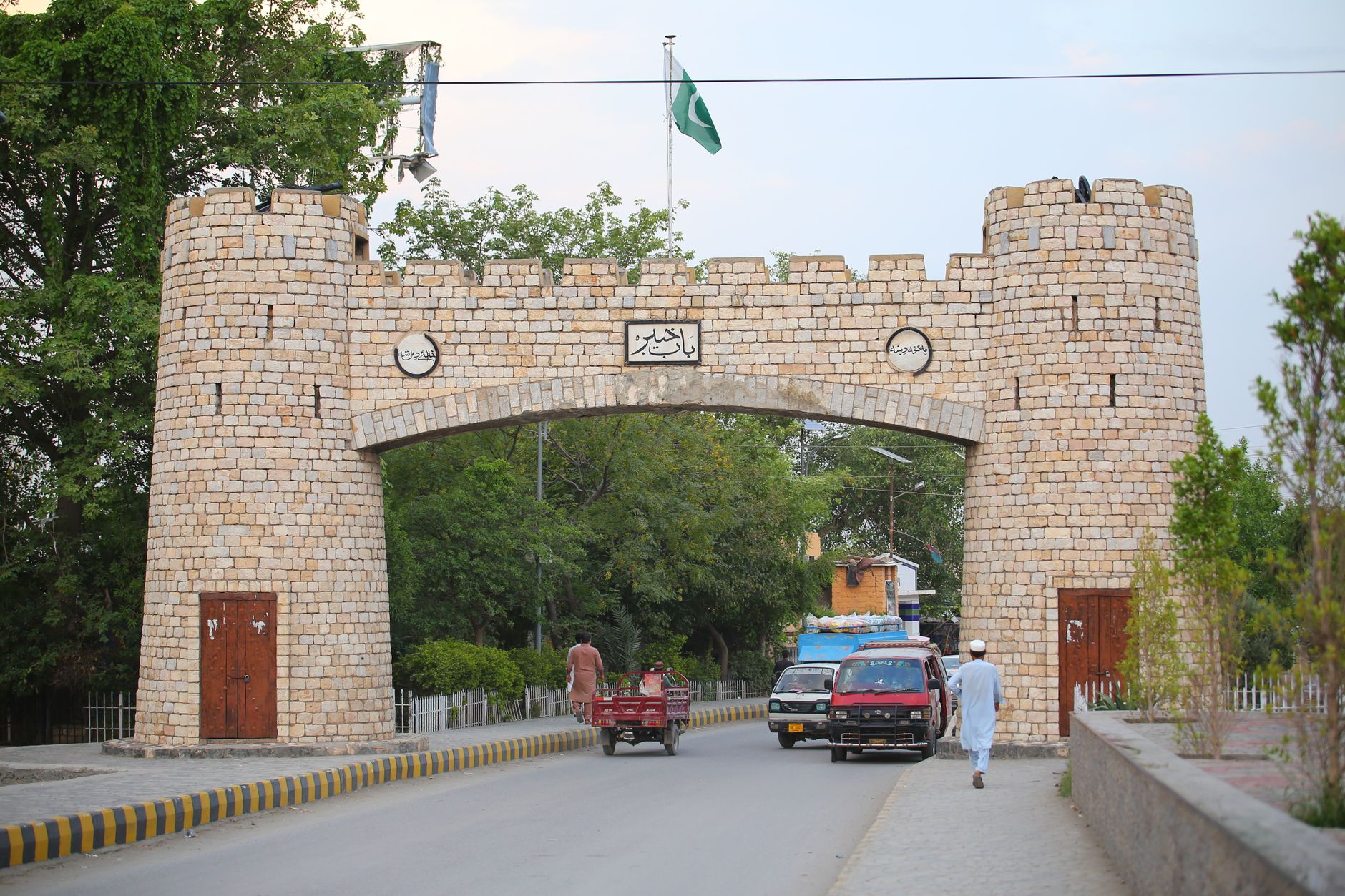
Photo by Zeeshan Khan / Pexels
Khyber Pakhtunkhwa Chief Minister Sohail Afridi told PTI long march participants gathered in Khyber district on October 7 that he had rejected an offer to endorse a new military operation in the province in exchange for assurances on Imran Khan's medical treatment — and used the moment to pledge that his own counterterrorism policy could restore peace in KP within 100 days.
The claim at the center of it
Afridi said he had been approached to sign off on another military operation in Khyber Pakhtunkhwa, with assurances about Khan's health and jail access offered in return. He said he refused, framing it as a closed-room decision he would not let the federal government make without the provincial government's consent. He went further than a simple no: he warned that if any harm came to Khan in custody, those responsible for his care — jail officials and the government officials overseeing them — would be held accountable.
Why Tirah is the reference point
Afridi's refusal carries a specific, recent memory behind it. Tens of thousands of residents fled Khyber district's Tirah Valley starting in December 2025 after mosque loudspeakers and a December 20 agreement between tribal elders and security officials set a mid-January deadline for households to vacate ahead of a military operation against militants in the area — even as the federal Information Ministry publicly denied any order for what residents and KP officials called a "depopulation." Compensation promises that followed — a one-time Rs250,000 per displaced family plus Rs50,000 a month, with larger payouts for destroyed homes — have drawn complaints from displaced families that the money and promised returns home haven't fully materialized. That history is the backdrop Afridi is pointing to when he says KP won't sign on to another operation on trust alone.
The 100-day pitch
Afridi's counter-offer is a provincial counterterrorism policy he says could deliver lasting peace within 100 days, which he's framed as a break from an approach that's run for 22 years without working. His central argument is that the problem isn't resourcing — "merely providing resources will not solve the problem," as he put it — but strategy, including his public opposition to continued drone strikes, which he argues have failed to eliminate militancy despite years of use. He has not published the policy's specifics, and the federal government had not formally responded to it as of October 7.
Where this sits inside the bigger standoff
This isn't a freestanding dispute. The second round of government-PTI talks collapsed on October 3 over exactly this fault line — KP's refusal to commit to joint federal-provincial counterterrorism operations without its own input — and Islamabad's threat to impose governor's rule in Khyber Pakhtunkhwa remains on the table as a result. Prime Minister Shehbaz's own offer to resume talks, made on October 6, was conditioned on PTI first ending the long march — a sequencing PTI has already dismissed as "merely symbolic." Afridi's Khyber district remarks add a third, more specific sticking point to that same standoff: not just whether talks resume, but whether KP's provincial government gets a say in military operations on its own soil before they happen.
What it means for the march itself
Afridi delivered the claim from inside the long march's detour through Khyber district, the same stop this desk covered on October 6 as part of the march's "slow-burn" shift in pace. Tying a security-policy fight to the march's own route gives Afridi a second grievance to carry toward Islamabad alongside Khan's release and medical access — and makes any future military operation in KP, not just the march's endpoint, a live question the federal government now has to answer in public rather than behind closed doors.
Build Better Pakistan's Politics Desk is tracking the long march's route and will report on any federal response to Afridi's counterterrorism proposal.
This article is part of our Politics & Governance coverage — Institutions, local government and how power actually gets exercised.
Frequently Asked Questions
- What did Sohail Afridi say he was offered, and why did he refuse it?
- Addressing PTI long march participants in Khyber district on October 7, KP Chief Minister Sohail Afridi said he had been asked to endorse a new military operation in the province in exchange for assurances about Imran Khan's health, medical treatment and access to his family and lawyers in Adiala jail. He refused, saying he would not allow another military operation in Khyber Pakhtunkhwa and would not let the decision be made in a closed room without the provincial government's input. He tied his objection to the displacement of tens of thousands of Tirah Valley residents during the operation that began in December 2025.
- What is Afridi's alternative, and is the federal government responding to it?
- Afridi says his own counterterrorism policy could restore lasting peace in Khyber Pakhtunkhwa within 100 days, calling it an alternative to an approach he says has failed for 22 years, and argued that simply providing more money or equipment to security forces would not solve the problem on its own. As of October 7, the federal government had not formally responded to his proposed plan. The dispute sits inside a broader standoff: the same counterterrorism cooperation disagreement sank a second round of government-PTI talks on October 3, and Islamabad has separately floated imposing governor's rule in the province.
Related Reading

PTI Authorises Fazlur Rehman to Mediate With the Government — But He Hasn't Said Yes Yet
PTI's KP president Junaid Akbar says his party has authorised JUI-F chief Maulana Fazlur Rehman to mediate its deadlock with the government, after a government delegation briefed him on the stalled talks. Fazl has laid down five conditions and not yet accepted the role.
BBP Politics Desk · October 9, 2026 · 3 min

Shehbaz Offers PTI Talks Again, But Only After the Long March Stops
Prime Minister Shehbaz Sharif renewed his offer of dialogue with PTI on October 7, but conditioned it on the party ending its long march and sit-ins first, while warning the protest could hurt exports, manufacturing and a recovering economy.
BBP Politics Desk · October 7, 2026 · 4 min
PTI's Long March Skips Peshawar for Khyber, and Afridi Calls It a 'Slow-Burn' Strategy
Instead of pushing straight for Peshawar as its published schedule promised, PTI's long march diverted into Khyber district on October 6 — and KP Chief Minister Sohail Afridi openly reframed the march as a prolonged campaign, not a rush toward Islamabad.
BBP Politics Desk · October 6, 2026 · 3 min