PSX Opened Higher on the IMF Deal. It Closed Down 1,138 Points on Oil.
The KSE-100 rose nearly 400 points at Thursday's open on optimism over Pakistan's IMF staff-level agreement, then reversed to close down 1,138.50 points as a record spike in Strait of Hormuz tanker attacks pushed Brent crude sharply higher.
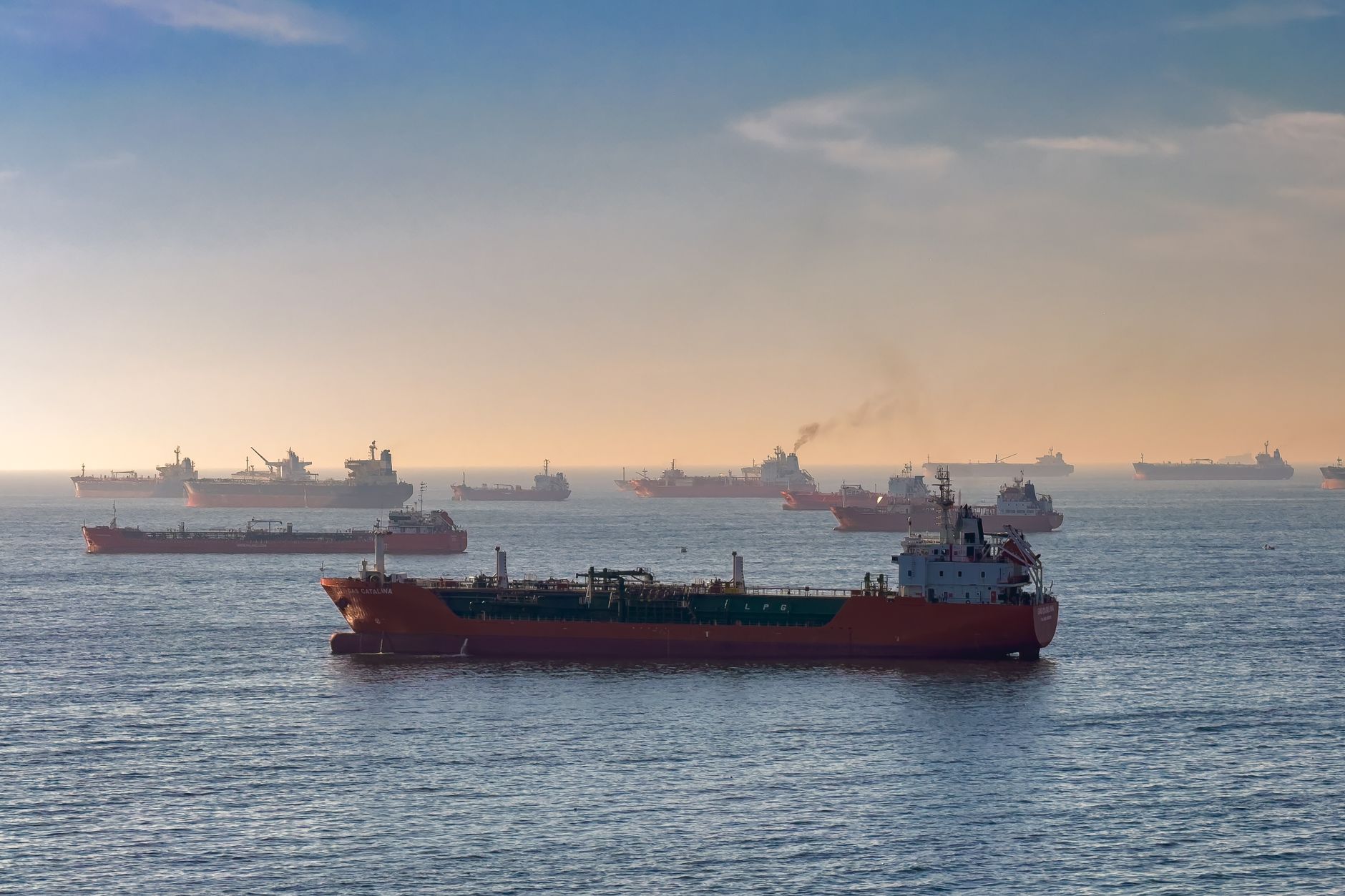
Photo by İrfan Simsar / Pexels
Pakistan's benchmark KSE-100 index spent Thursday, October 8, telling two different stories. It opened the session up 397.96 points at 168,978.36, lifted by buying in oil, gas and refinery stocks on optimism over the staff-level agreement Pakistan had just reached with the IMF a day earlier. By the close, all of that was gone and more: the index settled 1,138.50 points lower, down 0.68%, at 167,441.91.
What actually moved the market
The reversal tracks back to the Strait of Hormuz, not Islamabad. Attacks on oil tankers transiting the strait have hit their highest weekly pace of the conflict: at least 11 vessels were attacked in the week since the preceding Monday, with four of those strikes landing in the final two days before Thursday's close, and a separate tracking count put 10 tankers hit between September 28 and October 4 alone — well above the prior weekly high of six. The latest reported incident involved a tanker roughly 51 nautical miles off Qatar's northern coast, struck by multiple projectiles according to the UK Maritime Trade Operations agency, with casualties reported and details still limited as of this writing.
Traffic through the strait is thinning as a result. Only seven tankers transited on October 6, less than half the seven-day average — though US Central Command has pushed back on Iranian claims that the waterway is closed, saying commercial and energy shipping is continuing. A separate supply shock compounded the pressure: a hurricane forced the suspension of more than 510,000 barrels per day of US Gulf of Mexico crude output, adding to a reported 3.2-million-barrel weekly drawdown in US inventories. Brent crude rose as much as 5% during Thursday's session on the combined news, a sharper and faster move than the oil-driven selloffs this desk has tracked through most of 2026.
Why the IMF deal wasn't enough to hold the floor
The agreement that lifted the market at the open is real and significant — as we've covered separately, Pakistan and the IMF reached a staff-level deal on October 7 covering the fourth EFF review and third RSF review, worth roughly $1.21 billion once the Fund's Executive Board signs off. That kind of news has reliably moved the KSE-100 higher on its own this year. What Thursday showed is that it isn't enough to hold the index up against a sharp, same-day move in oil prices, which flow through to Pakistan's import bill, its refining and fertiliser sector margins, and its fuel-pricing mechanism far faster than a loan tranche that hasn't even reached the Fund's board yet.
The pattern this desk keeps tracking
This is not a new mechanism for Pakistani readers who have followed this conflict since February — it is the same one, moving faster. Oil-market volatility out of the Strait of Hormuz has been the single most consistent driver of both pump-price changes and PSX swings for most of 2026, and Thursday's session is a clean illustration: a positive domestic policy story and a negative external supply-shock story landing on the same trading day, with the external story winning. The next test is whether Brent's move holds through Friday's session or eases once markets digest how much of the current attack wave Gulf shippers are actually diverting around, which will matter more for where the KSE-100 opens next than any single IMF headline.
Build Better Pakistan's Markets Desk tracks PSX trading sessions and the oil-market and policy news that moves them.
This article is part of our Economy coverage — Inflation, growth, trade and the everyday cost of living across Pakistan.
Frequently Asked Questions
- Why did the KSE-100 fall on October 8 if Pakistan had just reached a deal with the IMF?
- The index actually opened higher, up 397.96 points to 168,978.36, on buying in oil, gas and refinery stocks after the October 7 IMF staff-level agreement. It reversed through the session and closed down 1,138.50 points, or 0.68%, at 167,441.91, as a spike in attacks on oil tankers in the Strait of Hormuz pushed Brent crude sharply higher and renewed regional-tension selling overwhelmed the earlier IMF-driven optimism.
- How bad is the current wave of tanker attacks in the Strait of Hormuz?
- At least 11 tankers were attacked in and around the Strait of Hormuz in the week since the preceding Monday, with four of those attacks in the final two days alone, according to tracking cited by international wire reports. A separate count put 10 vessels struck between September 28 and October 4 — above the previous weekly high of six. Tanker traffic through the strait on October 6 fell to seven vessels, less than half the seven-day average, though US Central Command says commercial and energy traffic continues and disputes Iranian claims that the strait is closed.
Related Reading

Pakistan and the IMF Finally Reach a Staff-Level Deal — $1.21 Billion Still Needs the Board's Sign-Off
After a mission that ran from September 23 to October 7 in Karachi and Islamabad, the IMF and Pakistan reached a staff-level agreement on the fourth EFF review and third RSF review, clearing the way for roughly $1.21 billion once the Fund's Executive Board approves it — the deal this desk watched take shape through the MEFP draft handed over on October 6.
BBP Economy Desk · October 8, 2026 · 4 min

Pakistan and Bahrain Target $1 Billion in Trade, Admit They're Behind Schedule
Pakistan and Bahrain held the third session of their Joint Ministerial Commission in Islamabad on October 8, agreeing to a new trade and investment working group while acknowledging their $1 billion trade target is running late.
BBP Economy Desk · October 8, 2026 · 3 min

Nearly 40% of Faisalabad's Power Looms Have Shut Down, Leaving 100,000 Jobless
Industry figures put the toll of Pakistan's power-loom crisis at nearly 40% of units in Faisalabad and adjoining towns shut and more than 100,000 workers out of work, as owners blame cheaper under-invoiced Chinese yarn and grey cloth alongside rising utility costs.
BBP Economy Desk · October 7, 2026 · 4 min