Pakistan Tests an Extended-Range Fatah-4, Widening Its Cruise Missile Reach
ISPR says the Army Rocket Force Command successfully test-fired an extended-range version of the Fatah-4 cruise missile on October 6 — a bigger airframe with folding wings, an undisclosed range, and the latest step in a six-year-old indigenous missile programme.
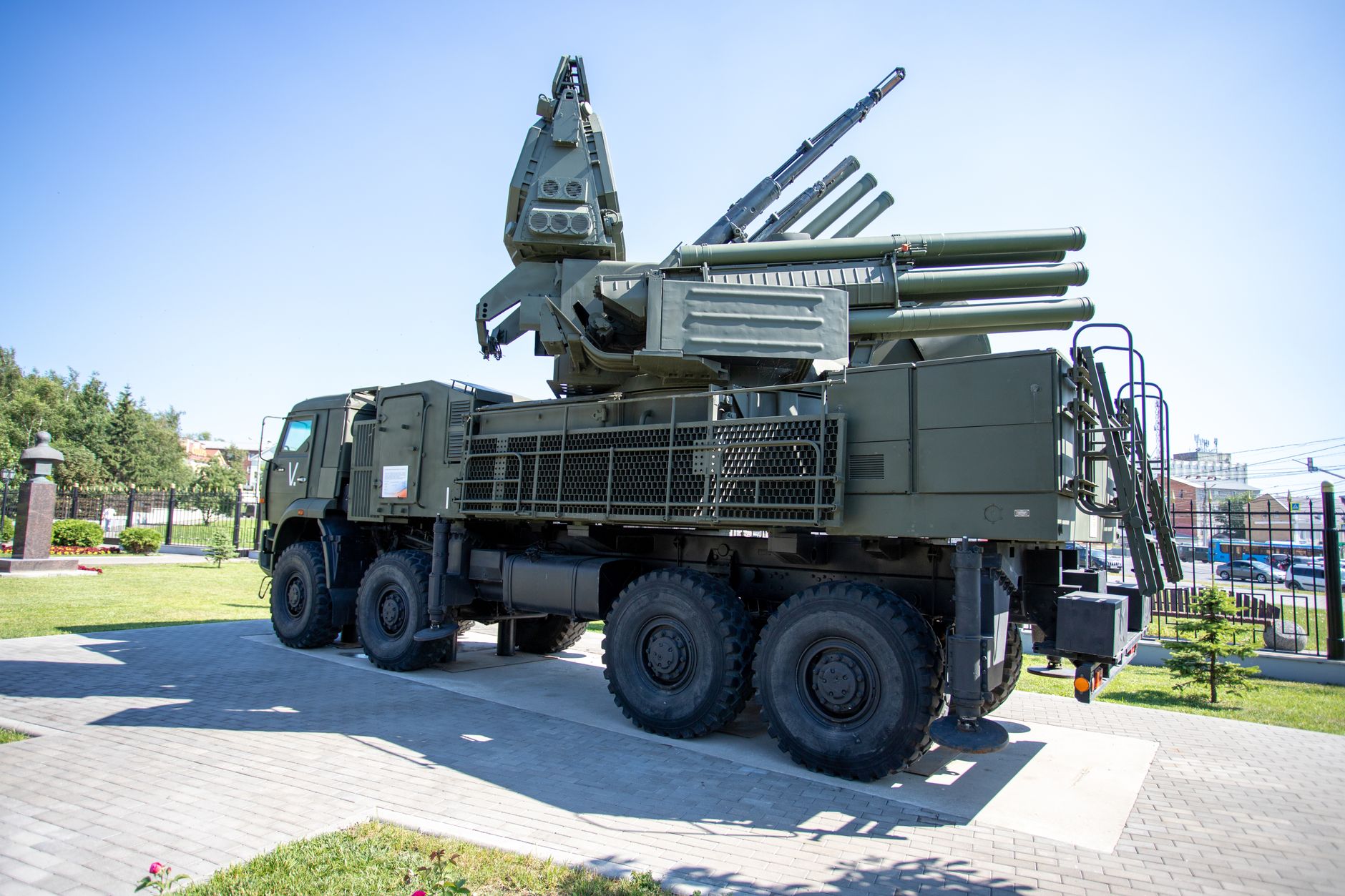
Photo by Михаил Крамор / Pexels
Pakistan's Army Rocket Force Command successfully test-fired an extended-range version of its Fatah-4 ground-launched cruise missile on October 6, 2026, according to the military's media wing, ISPR — the latest and apparently longest-reaching member yet of a missile family Pakistan has built up almost entirely at home over the past five years.
What was actually tested
ISPR described the weapon as equipped with "advanced avionics and state-of-the-art navigational aids" capable of engaging extended-range targets "with high precision and lethality," and said the test validated technical parameters across the missile's sub-systems for improved accuracy and survivability. Notably, ISPR did not disclose the missile's range — a departure from its practice with the original Fatah-4, whose 750-kilometre range was stated publicly when it was first tested in May 2026. Footage released alongside the announcement shows a visibly larger airframe fitted with external folding wings, which defence analysts have read as consistent with a longer-range design than the May variant, under the informal designation Fatah-4-ER.
President Asif Ali Zardari, Prime Minister Shehbaz Sharif, and Chief of Army Staff and Chief of Defence Forces Field Marshal Syed Asim Munir all issued statements commending the test, the standard pattern for ISPR-announced missile milestones.
Where the Fatah-4 sits in a six-year build-out
The Fatah family is Pakistan's push to reduce reliance on imported precision-strike weapons, developed by the state-owned Global Industrial Defence Solutions and fielded by the Army Rocket Force Command. The programme has grown in range and sophistication roughly once every year or two since ISPR first unveiled the Fatah-1 — a guided multiple rocket system with a 140-kilometre range — in January 2021. Pakistan inducted the longer-range, quasi-ballistic Fatah-2 in 2024, followed by the supersonic Fatah-3, before the Fatah-4 arrived as a subsonic cruise missile designed to fly a terrain-hugging flight profile that reduces its radar visibility — the same low-altitude approach cruise missiles like the Babur, from which the Fatah-4 is derived, are built around.
Why the range matters more than the test itself
A single successful test launch is, by itself, a routine entry in ISPR's calendar — Pakistan has run several such tests this year alone, including the Fatah-IV's initial 750km test in May, and more recently a wave of security operations against militant groups in Khyber Pakhtunkhwa and Balochistan this month. What makes the October 6 test notable is the range question it raises rather than answers. At 750 kilometres, the original Fatah-4 already gave Pakistan's land forces the ability to strike targets deep inside Indian territory without crossing into Indian airspace or depending on aircraft or naval platforms. An extended-range successor pushes that envelope further, at a moment when the two countries' underlying tensions over the Indus Waters Treaty and cross-border incidents remain unresolved — tensions this desk has covered in the context of a border-firing episode near Kasur and Pakistan's water-rights arguments at the UN.
What's unverified, and what comes next
Because ISPR withheld the range figure, independent assessments of exactly how much further the Fatah-4-ER reaches than its predecessor rely on reading the airframe in released footage rather than an official number — a gap Pakistan's military has left open before with other systems, typically filling it in only once a weapon enters formal service. Whether that figure is disclosed at induction, and how India's own missile-development programme responds in turn, will shape the next stage of what has become a steadily escalating conventional precision-strike competition in South Asia.
Build Better Pakistan's Security Desk tracks Pakistan's missile and defence-programme announcements and verifies claims against ISPR statements and independent defence analysis.
This article is part of our Security coverage — Public safety, policing and community trust.
Frequently Asked Questions
- What did Pakistan test on October 6, 2026, and how is it different from the Fatah-4 tested in May?
- Pakistan's Army Rocket Force Command test-fired an extended-range variant of the Fatah-4 ground-launched cruise missile, referred to as the Fatah-4-ER. The original Fatah-4, tested in May 2026, has a declared range of 750 kilometres. ISPR withheld the new variant's range, but released footage showing a larger airframe with external folding wings, indicating a longer-range design than the May version.
- Who oversees Pakistan's Fatah missile programme, and what came before the Fatah-4?
- The Fatah family is developed domestically under Global Industrial Defence Solutions (GIDS) and fielded by the Army Rocket Force Command. It began with the Fatah-1 guided rocket system (140 km range, unveiled 2021), followed by the quasi-ballistic Fatah-2 (400 km, inducted 2024) and the supersonic Fatah-3, before the subsonic cruise missile Fatah-4 arrived as the family's longest-range member.
Related Reading

Pakistan and Turkiye Agree to 'Rapid Deployment' of Troops to Saudi Arabia
An emergency meeting of the Makkah Alliance for Defence in Riyadh on October 5 moved Pakistan and Turkiye from statements of solidarity to a decision on actually sending forces to Saudi Arabia, after Houthi drones targeted Madina and attempted to reach Makkah.
BBP Security Desk · October 6, 2026 · 4 min

Pakistan and the Taliban Couldn't Even Agree on a Joint Statement at Moscow's Afghanistan Talks
The eighth round of the Moscow Format Consultations on Afghanistan collapsed without a joint statement on October 5, after Pakistan's special representative and Taliban foreign minister Amir Khan Muttaqi clashed over cross-border terrorism and Pakistani airstrikes, with Russia publicly expressing regret over the impasse.
BBP Security Desk · October 5, 2026 · 4 min

KP Police Are Stringing Fishing Nets Over Checkposts to Stop TTP Drone Attacks
Police in Hangu and other Khyber Pakhtunkhwa districts have strung ordinary fishing nets several metres above their checkposts, a roughly $1,435-per-post fix against the quadcopter bombs Tehreek-e-Taliban Pakistan has used in hundreds of attacks on security personnel. No attack has gotten through a netted post since Hangu installed the first one two months ago — though experts say that is not the same as proof it works.
BBP Security Desk · October 5, 2026 · 4 min