Pakistan and Turkiye Agree to 'Rapid Deployment' of Troops to Saudi Arabia
An emergency meeting of the Makkah Alliance for Defence in Riyadh on October 5 moved Pakistan and Turkiye from statements of solidarity to a decision on actually sending forces to Saudi Arabia, after Houthi drones targeted Madina and attempted to reach Makkah.
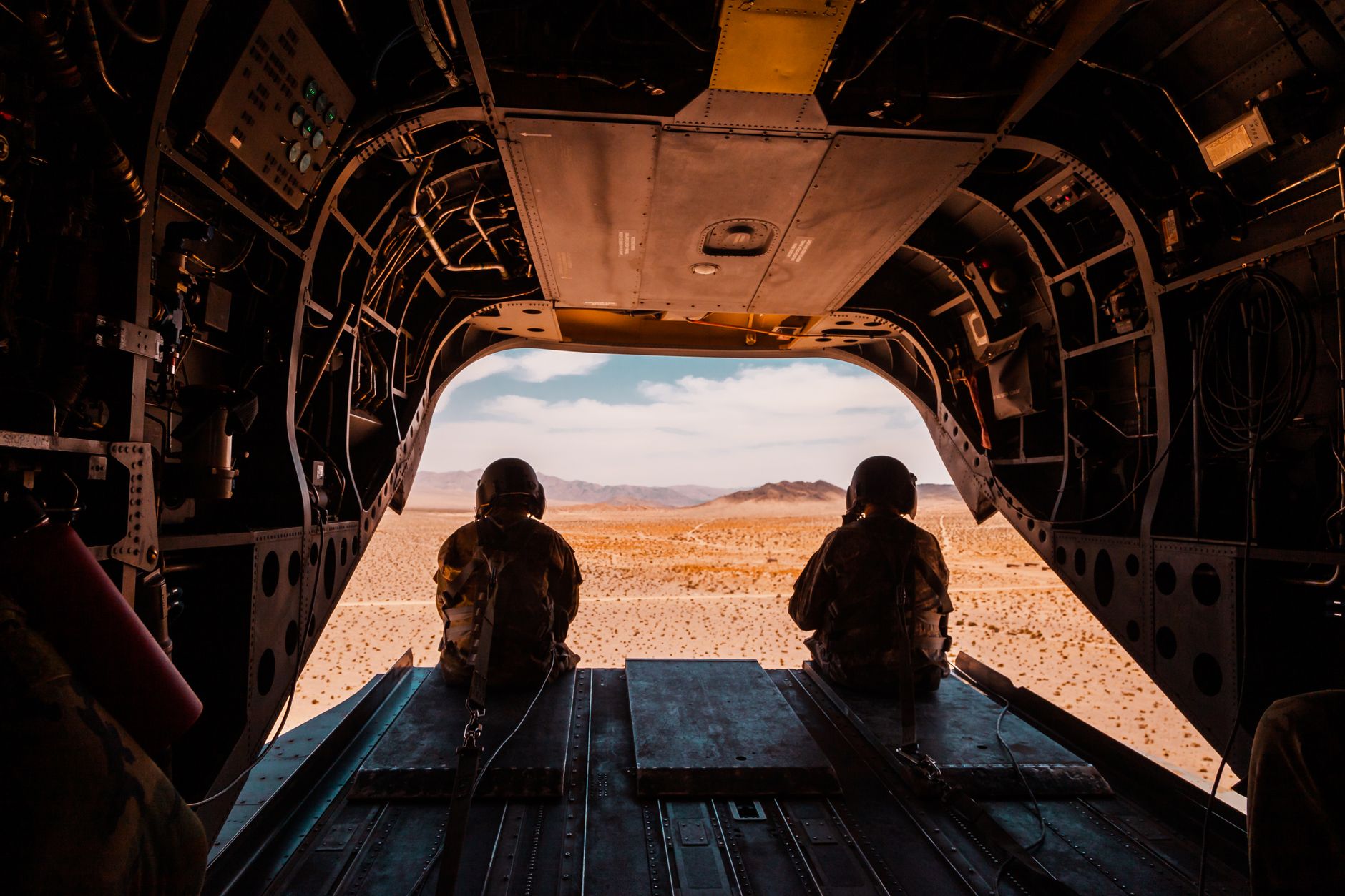
Photo by Art Guzman / Pexels
For weeks, Pakistan's response to Houthi attacks on Saudi Arabia was carefully worded solidarity rather than a commitment to act. That changed on October 5, 2026, when an emergency meeting in Riyadh produced a joint decision to actually move troops into the kingdom.
What was agreed in Riyadh
Pakistan's Foreign Ministry titled its statement plainly: a joint communique from "the Emergency Meeting of the Strategic Political and Defense Committee of the Makkah Alliance for Defense," held in Riyadh on October 5. The Pakistani delegation was led by Deputy Prime Minister and Foreign Minister Ishaq Dar, Defence Minister Khawaja Asif and Chief of Army Staff Field Marshal Asim Munir — a lineup that paired the country's top diplomat, its defence minister and its senior military officer, signalling that this was a decision made at the top rather than delegated downward.
The committee "condemned in the strongest terms" what it called the attempted targeting of Makkah and Madinah, along with continuing attacks on Saudi cities and civilian and economic facilities. It then went further than previous statements by deciding to "move immediately to the practical implementation of the collective defence commitments," including providing the "agreed military forces and capabilities" and ensuring their "rapid deployment" inside Saudi Arabia. The statement left out specifics — no troop numbers, no timeline, no description of what Pakistani or Turkish forces would actually do once they arrived — saying only that implementation would proceed under "approved arrangements" and the national laws of each of the three countries.
What triggered the escalation
The meeting came after two incidents that Saudi authorities treated as crossing a line that previous Houthi attacks on border and industrial sites had not. A drone strike disabled a transformer at the Taibah power station supplying electricity around Madina's Prophet's Mosque. Separately, Saudi air defences shot down a drone headed toward Makkah before it entered the city's restricted airspace. We covered the Madina strike and Pakistan's initial condemnation of it as a "grave provocation" in detail. The Houthis have denied responsibility for both, with the group's military spokesman, Yahya Saree, saying its operations "target its oil facilities and military bases, and are far from the holy sites" — a denial Saudi investigators rejected after examining drone wreckage from the Madina attack.
A pact moving from paper to practice
Pakistan, Saudi Arabia and Turkiye signed the Makkah Joint Defence Agreement on August 7, 2026, committing each signatory to treat an attack on any one of them as an attack on all three. We tracked the pact's early build-out, including the appointment of its first Secretary General, and the September 24 agreement by the three countries' foreign ministers to convene their military chiefs of staff as the Houthi threat grew. October 5's decision is the clearest sign yet that the pact is moving past diplomatic coordination: Reuters had already reported on October 2 that Pakistan sent four cargo planes of weapons and military advisers to Yemen's Saudi-backed government in Aden during September, a development we reported alongside Saudi Arabia's own planning for a wider offensive against Houthi positions. A rapid-deployment decision for forces inside Saudi Arabia itself is a further, more direct step than arming a third party's government.
The open questions
What the joint statement does not say matters as much as what it does. There is no public figure for how many Pakistani or Turkish personnel are involved, no stated mission — air defence, logistics, advisory roles and direct combat all remain plausible readings of "military forces and capabilities" — and no firm date by which deployment must happen. Pakistan's parliament voted unanimously in 2015 to keep the country out of the Saudi-led coalition then fighting in Yemen, a decision that cooled relations with Riyadh for years. Whether this deployment requires, or receives, a similar parliamentary vote is a question Islamabad has not yet answered, and one that will shape how this commitment is understood at home even as it reassures Riyadh abroad.
Build Better Pakistan's Security Desk is tracking the Makkah Joint Defence Agreement as it moves from signed commitment to active deployment.
This article is part of our Security coverage — Public safety, policing and community trust.
Frequently Asked Questions
- What did Pakistan, Saudi Arabia and Turkiye actually decide on October 5?
- At an emergency meeting of the Strategic Political and Defence Committee of the Makkah Alliance for Defence in Riyadh, the three countries agreed to move immediately to practical implementation of their collective defence commitments, including providing agreed military forces and capabilities and ensuring their rapid deployment inside Saudi Arabia. The joint statement did not specify troop numbers or what duties Pakistani and Turkish forces would carry out once deployed, saying only that implementation would follow 'approved arrangements' and each country's national laws.
- Why now, and who represented Pakistan?
- The meeting followed a Houthi drone strike on a power station supplying Madina's Prophet's Mosque and a separate drone intercepted before it could reach Makkah's restricted airspace. Pakistan's delegation was led by Deputy Prime Minister and Foreign Minister Ishaq Dar, Defence Minister Khawaja Asif and Chief of Army Staff Field Marshal Asim Munir, underlining that this was a decision taken at the highest political and military level, not a working-level consultation.
Related Reading

Pakistan and the Taliban Couldn't Even Agree on a Joint Statement at Moscow's Afghanistan Talks
The eighth round of the Moscow Format Consultations on Afghanistan collapsed without a joint statement on October 5, after Pakistan's special representative and Taliban foreign minister Amir Khan Muttaqi clashed over cross-border terrorism and Pakistani airstrikes, with Russia publicly expressing regret over the impasse.
BBP Security Desk · October 5, 2026 · 4 min

KP Police Are Stringing Fishing Nets Over Checkposts to Stop TTP Drone Attacks
Police in Hangu and other Khyber Pakhtunkhwa districts have strung ordinary fishing nets several metres above their checkposts, a roughly $1,435-per-post fix against the quadcopter bombs Tehreek-e-Taliban Pakistan has used in hundreds of attacks on security personnel. No attack has gotten through a netted post since Hangu installed the first one two months ago — though experts say that is not the same as proof it works.
BBP Security Desk · October 5, 2026 · 4 min
Pakistan's Houthi Ambiguity Ends: Cargo Planes to Aden, and a Saudi Offensive Taking Shape
Weeks after Defence Minister Khawaja Asif declined to confirm or deny a Pakistani role against the Houthis, Reuters reports Pakistan sent four cargo planes of weapons to Yemen's Saudi-backed government in September — as Saudi Arabia now plans an offensive to break the Houthis' grip on the Bab el-Mandeb strait.
BBP Security Desk · October 4, 2026 · 4 min