Textile Exporters Warn of 'Unprecedented' Export Decline This Quarter
The Pakistan Textile Exporters Association has warned of what it calls an unprecedented decline in exports for the October-December quarter, citing weaker Western demand, sea freight costs that have more than doubled, and a promised financing-rate cut that has not been implemented.
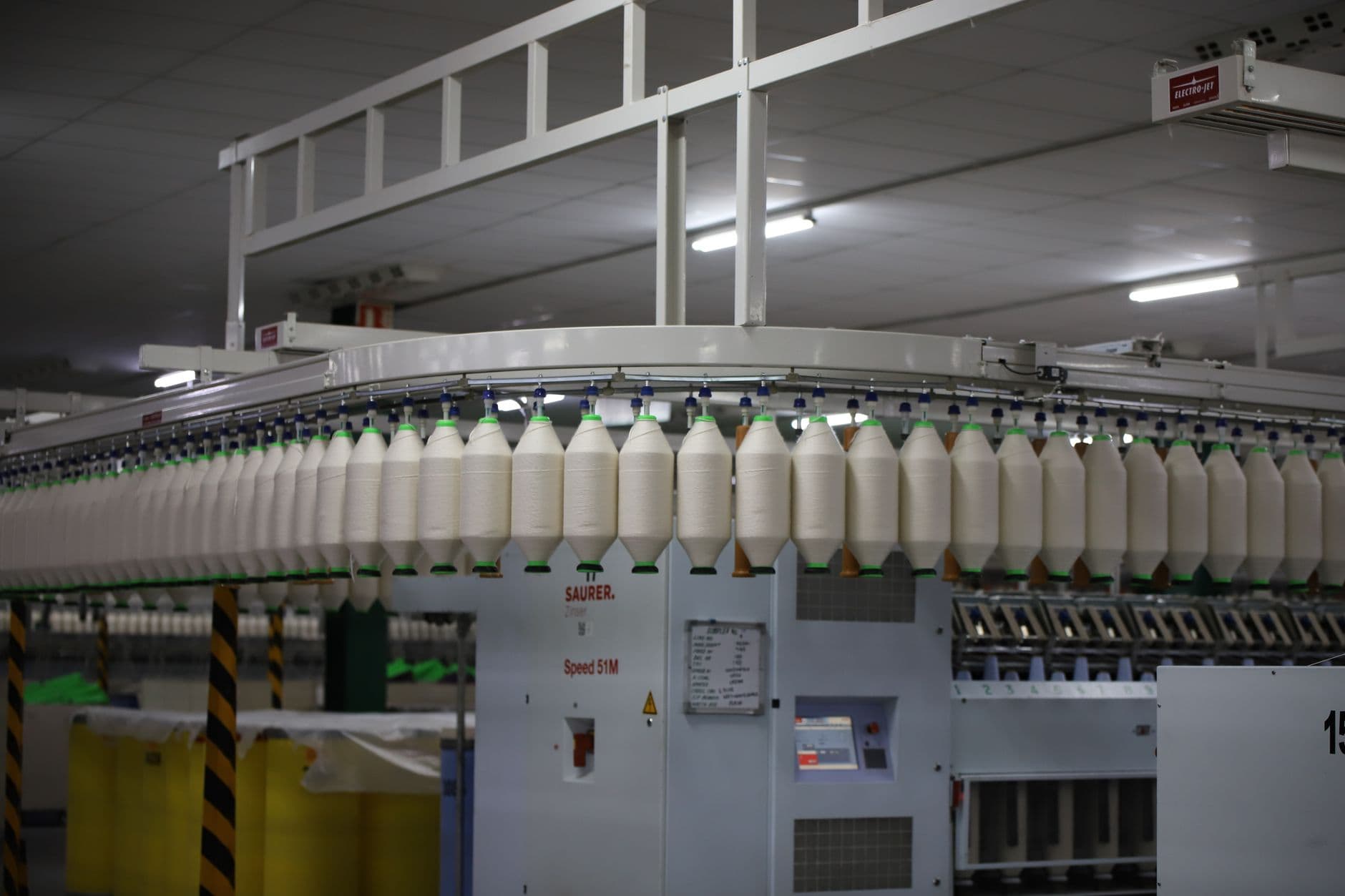
Photo by Rajesh Kumar Verma / Pexels
Pakistan's textile exporters are warning of a steep, "unprecedented" decline in shipments for the October-December quarter, with the Pakistan Textile Exporters Association (PTEA) telling the government in a statement issued Sunday that the sector's competitiveness and market share are both under pressure.
What PTEA says is driving the decline
PTEA Patron-in-Chief Khurram Mukhtar pointed to inflation in Western markets weakening demand from international buyers, sea freight charges that have risen 1.5 to 2.5 times, and rising input and logistics costs that are eroding already thin margins. Weak domestic demand amid high inflation is adding further strain, he said, and the slowdown is hitting the whole value chain — ginning, spinning, weaving, processing and knitting — not just finished-goods exporters. "Historically, we have been reactive," Mukhtar said. "The current situation demands a proactive approach."
A financing scheme that hasn't delivered what it promised
Much of PTEA's statement focused on the Export Finance Scheme (EFS), the subsidised lending facility exporters rely on for working capital. The FY27 Finance Bill announced a fixed 4.5 percent financing rate under the scheme, but Mukhtar said it has not been implemented: banks are charging at least 5.5 percent, and some as much as 8.5 percent. He also challenged how the scheme's funds have been allocated, saying roughly Rs200 billion went to yarn exporters despite yarn sitting on the scheme's negative list, and questioning financing extended to sugar exporters. Meanwhile, he said, exporters who hit five to six times the scheme's mandatory export-performance threshold of twice the loan amount were turned down for financing. A separate Rs300 billion allocation for small and medium exporters would require Rs600 billion in matching export performance that, Mukhtar said, "does not currently exist" in the sector, and an earlier Rs100 billion SME allocation lapsed entirely unused.
Who the relief would actually reach
Mukhtar argued EFS funds should be distributed in proportion to each segment's share of exports, noting that the sector's top 100 exporters alone account for up to 60 percent of total export volume — a reminder that how a subsidised lending scheme is allocated matters as much as its size.
The industry's own ask: a Rs140bn modernisation push
Beyond financing-rate relief, PTEA is pressing for a temporary Duty Drawback of Local Taxes and Levies (DLTL) at 6 to 8 percent, immediate clearance of outstanding refunds to ease liquidity, removal of cross-subsidies embedded in industrial power tariffs, and a 10-year strategic plan for the sector. It has also proposed a Rs140 billion financing package for modernising four segments of the value chain — Rs20 billion each for ginning and sizing, and Rs50 billion each for weaving and processing — to be developed jointly by the federal government and the State Bank of Pakistan with industry input.
A sector under strain from multiple directions
The warning lands on an industry that closed FY26 with textile and apparel exports essentially flat at $18 billion, undercut by a domestic cotton crop that missed its target by 45 percent, and comes as power loom operators in Faisalabad separately report being squeezed by energy costs — the same industrial cross-subsidies PTEA is now asking the government to remove. Textiles still account for roughly 60 percent of Pakistan's total exports, so a weak quarter in the sector shows up quickly in the country's broader trade deficit.
What to watch next
Whether the quarter plays out as badly as PTEA fears will become clear once the Pakistan Bureau of Statistics publishes October's trade figures. In the meantime, a strike called by the All Pakistan Textile Mills Association closed at least one yarn-spinning unit in Karachi's Landhi Industrial Area last week, an early sign of how much pressure is already building inside the industry PTEA says is heading into an unusually difficult quarter.
Build Better Pakistan's Economy Desk tracks Pakistan's export performance and trade policy as part of our ongoing economic coverage.
This article is part of our Economy coverage — Inflation, growth, trade and the everyday cost of living across Pakistan.
Frequently Asked Questions
- Why is PTEA warning about a decline in exports this quarter?
- The Pakistan Textile Exporters Association cites weaker demand from inflation-hit Western buyers, sea freight charges that have risen 1.5 to 2.5 times, and rising input and logistics costs squeezing margins across the textile value chain, from ginning and spinning through to processing and knitting.
- What relief is the textile industry asking the government for?
- PTEA wants a temporary Duty Drawback of Local Taxes and Levies at 6 to 8 percent, immediate clearance of outstanding tax refunds, an end to cross-subsidies in industrial power tariffs, and the 4.5 percent Export Finance Scheme rate promised in the FY27 Finance Bill but not yet applied — banks are still charging 5.5 to 8.5 percent.
Trending Now
- 01
IRSA Approves 22% Water Shortage for Punjab and Sindh This Rabi Season
October 13, 2026
- 02
Parliament Takes Up KP Emergency as PPP Backs It and JUI-F Calls It Unconstitutional
October 13, 2026
- 03
KSE-100 Sheds Nearly 2,000 Points as KP Emergency Rattles Investors
October 13, 2026
- 04
PTI's Own Secretary General Says He Doesn't Know Where Afridi Is
October 12, 2026
- 05
Pakistani Universities Climb to 56 in Global Rankings, Still Miss the Top 400
October 12, 2026
Weekly Briefing
The week's most important stories on Pakistan's biggest challenges, in your inbox.
Related Reading

KSE-100 Sheds Nearly 2,000 Points as KP Emergency Rattles Investors
The KSE-100 closed down 1,964.87 points, or 1.18%, at 165,124.41 on October 12 after the federal government imposed governor's rule and emergency in Khyber Pakhtunkhwa, with banks and oil and gas stocks leading the sell-off.
BBP Markets Desk · October 13, 2026 · 3 min

Aurangzeb Says Pakistan Could Raise Over $1 Billion From Privatisation This Year
Finance Minister Muhammad Aurangzeb told Reuters in Bangkok that five or six state entities could be privatised this fiscal year for upwards of $1 billion, and that he still expects growth above 4 percent despite elevated oil prices.
BBP Economy Desk · October 12, 2026 · 4 min
PIA Pauses Riyadh Flights as Houthi Strikes Ground 42 Pakistan-Saudi Services
Pakistan International Airlines suspended flights to Riyadh and cancelled PK-753 and PK-754 on October 9-10, as Houthi attacks on Saudi airports triggered 42 cancellations and 68 delays across Lahore, Karachi and Islamabad.
BBP Economy Desk · October 10, 2026 · 3 min