IRSA Approves 22% Water Shortage for Punjab and Sindh This Rabi Season
The Indus River System Authority's Advisory Committee has approved an overall 22 percent water shortage for Punjab and Sindh for the Rabi season running October 1, 2026 to March 31, 2027, after combined reservoir storage closed September at 9.343 million acre feet, well below last year's 13.214 MAF.
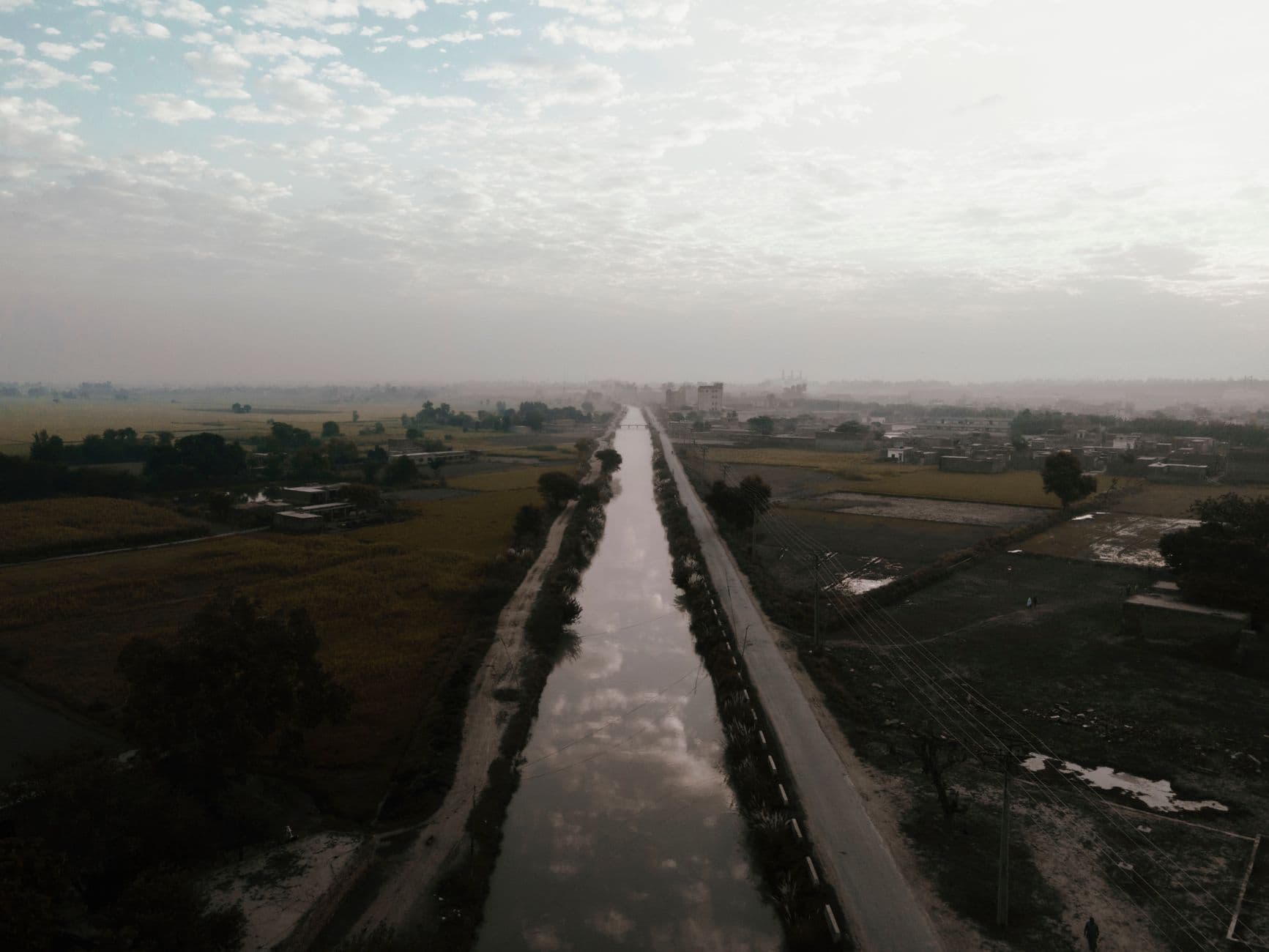
Photo by Aliyan Mughal / Pexels
The Indus River System Authority's Advisory Committee (IAC), chaired by Amjad Saeed, has approved an overall 22 percent water shortage for Punjab and Sindh for the Rabi season running from October 1, 2026 to March 31, 2027, ARY News reported, citing the committee's own figures. The approval is subject to periodic review as the season progresses.
Where the shortfall comes from
The committee's numbers show why the shortage was unavoidable. Total reservoir storage on September 30, 2026 stood at 9.343 million acre feet (MAF) — below the 12.014 MAF that had been anticipated, below the ten-year average of 9.938 MAF, and sharply below last year's 13.214 MAF on the same date. We reported in September that combined storage at Tarbela and Mangla had already fallen to its lowest level since 2021 as the season approached; IRSA's advisory committee had flagged a shortage of around 25 percent at that point, before settling on the lower, finalised figure of 22 percent.
Inflows tell a similar story. Actual Kharif 2026 inflows at the rim stations came in at 95.44 MAF — 8 percent below what had been anticipated, 7 percent below the ten-year average, and 22 percent below last year. Downstream flow past Kotri, the barrage nearest the Indus delta, totalled 10.40 MAF against an anticipated 13.05 MAF, a ten-year average of 15.43 MAF, and 30.85 MAF last year.
How the shortfall is being shared
For Rabi 2026-27 itself, the committee anticipates rim-station inflows of 21.268 MAF and has allocated provincial withdrawals of 29.183 MAF, slightly above the ten-year average of 28.73 MAF. During the Kharif period that just ended, provincial utilisation came in below each province's share under the 1991 Water Accord: Punjab used 11 percent of its share, Sindh 7 percent, Khyber Pakhtunkhwa 28 percent and Balochistan 58 percent. Punjab and Sindh also drew 0.077 MAF and 1.262 MAF respectively in flood supplies under Para 4 of the Accord during the late Kharif period.
Delayed hydropower projects add to the squeeze
The committee also flagged delays at two WAPDA power projects, the T4 Low Level Outlet and the T5 Hydropower Project, saying they were "substantially delayed" and urging early completion, since the holdup is contributing to shortages during the Kharif season. Separately, the IAC gave tentative approval to closing the Chashma Barrage for 21 days, from December 26, 2026 to January 14, 2027, to align with provincial canal closure programmes. That is a routine maintenance window, but one that will further constrain supply during the closure.
What the shortage means for wheat sowing
Rabi is Pakistan's wheat-growing season, and a 22 percent cut to planned provincial withdrawals lands directly on irrigation for a crop that is sown through November and harvested from April. Our climate desk has covered the broader squeeze on Pakistan's water system as reservoir levels have repeatedly undershot historical averages this year; this season's approved shortfall is the clearest sign yet that the gap between anticipated and actual water availability has become a recurring feature of planning, not a one-off dry year. The IAC's approval is provisional and subject to review, so the province-by-province allocation could still shift if storage or inflows change over the coming months.
Build Better Pakistan's Climate Desk is tracking IRSA's allocations through the Rabi season and will follow up as storage levels and provincial distribution are reviewed.
This article is part of our Climate & Environment coverage — Floods, water scarcity and building a more climate-resilient country.
Frequently Asked Questions
- How big is the water shortage approved for this Rabi season?
- The Indus River System Authority's Advisory Committee, chaired by Amjad Saeed, approved an overall 22 percent water shortage for Punjab and Sindh for Rabi 2026-27, which runs from October 1, 2026 to March 31, 2027, subject to periodic review by the IRSA Authority.
- How does this compare to earlier warnings and to last year?
- IRSA had bracketed the shortfall at around 25 percent in late September, before settling on 22 percent once the committee finalised its numbers. Total reservoir storage on September 30, 2026 stood at 9.343 million acre feet, compared with 13.214 MAF on the same date last year, a fall of roughly 29 percent.
Trending Now
- 01
Parliament Takes Up KP Emergency as PPP Backs It and JUI-F Calls It Unconstitutional
October 13, 2026
- 02
KSE-100 Sheds Nearly 2,000 Points as KP Emergency Rattles Investors
October 13, 2026
- 03
PTI's Own Secretary General Says He Doesn't Know Where Afridi Is
October 12, 2026
- 04
Pakistani Universities Climb to 56 in Global Rankings, Still Miss the Top 400
October 12, 2026
- 05
Petition Filed Against KP Emergency as Lahore Lawyers Plan Supreme Court Case
October 12, 2026
Weekly Briefing
The week's most important stories on Pakistan's biggest challenges, in your inbox.
Related Reading
Sindh Asks World Bank for $350 Million to Flood-Proof Karachi and the Indus Right Bank
Sindh's irrigation minister told a visiting World Bank delegation on October 8 that the province wants $350 million for a new Flood Resilience Project, four years after 2022's floods displaced 14.6 million people and cost the province an estimated $9.1 billion.
BBP Climate Desk · October 9, 2026 · 4 min
Three Weather Systems Collide Over Punjab, Triggering a Ravi River Flood Alert and 'Record-Breaking' Rain Warning
Punjab's disaster management authority warned of record-breaking rainfall through October 7 as a Mediterranean-fed western disturbance, an Arabian Sea low and a Bay of Bengal depression converge, prompting a Ravi River flood alert and a dam discharge increase to 37,000 cusecs.
BBP Climate Desk · October 7, 2026 · 3 min
Pakistan Presses UN for $300 Billion Climate Finance Deal, Tripled Adaptation Funds
At the UN General Assembly's Second Committee, Pakistan's deputy envoy pushed for a credible path to $300 billion a year in climate finance, tripled adaptation funding, and debt-system reform to address a $4 trillion annual SDG financing gap.
BBP Climate Desk · October 7, 2026 · 4 min