26 Million Out of School, 46 in 100 Finishing Grade 10: Planning Minister Calls It a National Emergency
Chairing the first meeting of URAAN Pakistan's new Human Capital and Skills Mission on October 7, Ahsan Iqbal put fresh numbers on a decade-old crisis and called for a ten-year, devolved push on education, health, nutrition and population.
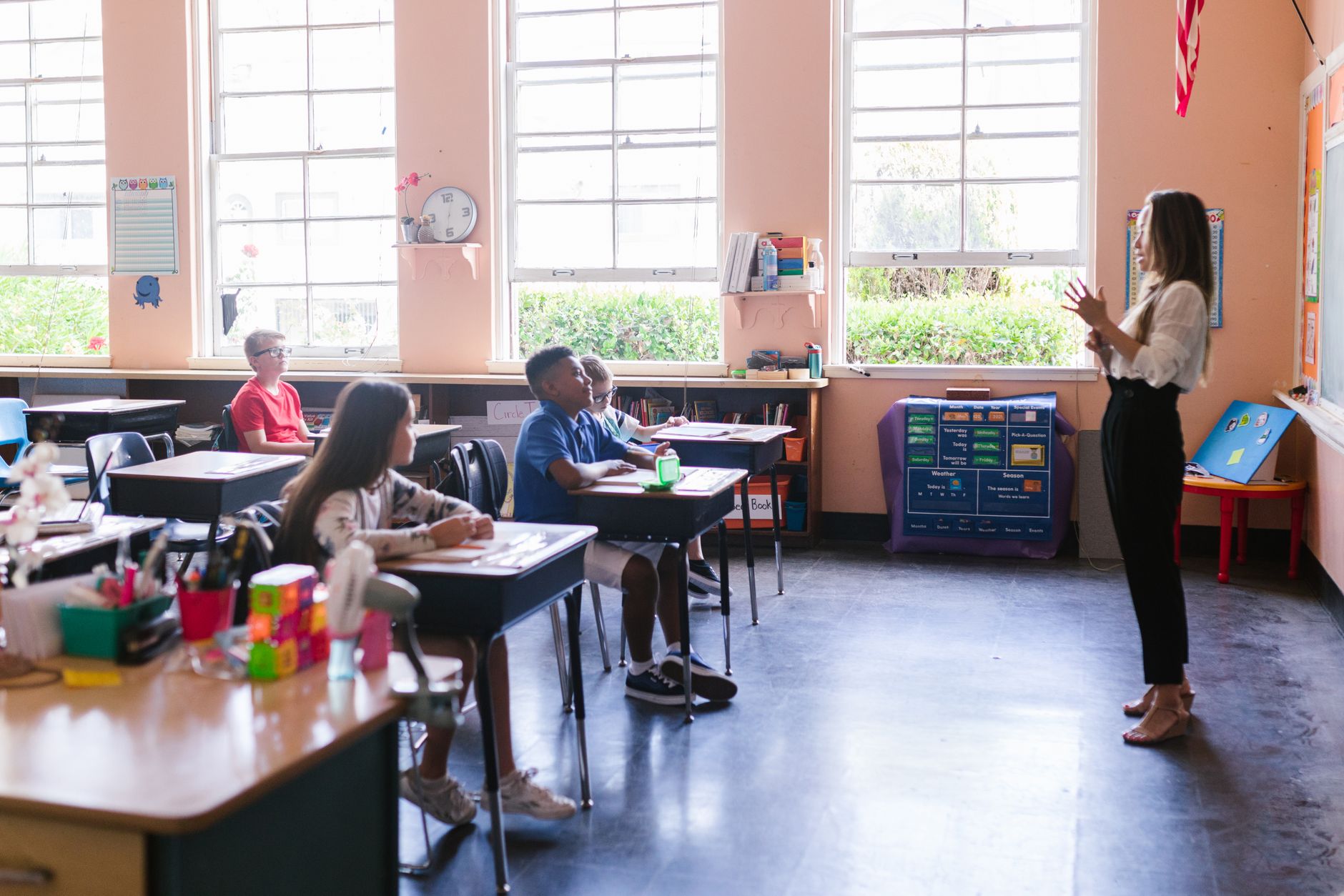
Photo by RDNE Stock project / Pexels
Pakistan's Federal Minister for Planning, Development and Special Initiatives, Ahsan Iqbal, chaired the first meeting of the Human Capital and Skills Mission on October 7, 2026, and used it to put a blunt frame on a set of numbers the country has circled for years: education, health, nutrition, clean water and population growth, he told the meeting, need to be treated as a national emergency, with at least a decade of sustained, coordinated effort before the indicators meaningfully move.
The numbers behind the "emergency" label
The briefing's figures are specific and, in places, worse than headline estimates typically cited. Pakistan's out-of-school children population was put at around 26 million — at the upper end of the roughly 20-26 million range this desk has covered previously. Of children who do enter Class 1 in public schools, only 46 in every 100 reach Class 10, a dropout curve that explains why enrolment figures alone understate the problem. On health, the meeting cited a stunting rate of 40.2% and maternal mortality of 186 deaths per 100,000 live births. On population, Iqbal flagged a 2.55% annual growth rate as a standalone constraint on every other target, with roughly 2 million young people entering the labour market each year that the economy has to find room for.
What the mission is targeting
The Human Capital and Skills Mission is one of 11 national economic missions organised under URAAN Pakistan, the government's framework for restructuring economic policy around a set of named priority areas. Its stated targets include cutting maternal mortality by 35%, cutting both stunting and under-five mortality by 18% each, raising the share of births attended by skilled health workers to 85%, lifting education spending to 4% of GDP, and improving the literacy rate by 10%. Iqbal also renewed an earlier commitment to train one million young people as "Ambassadors of Social Change," tasked with running community-level awareness campaigns on education, health, population management, sanitation and environmental protection.
The devolution argument
Iqbal's sharpest point was institutional rather than statistical: he argued that the 18th Amendment's devolution of social-sector responsibility to the provinces was meant to accelerate exactly this kind of improvement, and that the failure to push authority further down to the district level is what has actually limited progress since. That is a notable admission from a sitting planning minister — it locates part of the blame for stalled indicators in how federal and provincial governments have managed devolution, not only in funding levels, and it sets up district-level service delivery as the mission's operating theory of change rather than a new round of federal spending alone.
Why a tenth national plan needs to be judged differently this time
Pakistan has set ten-year and five-year social-sector targets before, and the gap between stated targets and delivered outcomes is the most predictable criticism this mission will face. What's different in this framing is the explicit acknowledgment that the timeline itself — a decade, not an election cycle — is the point: Iqbal's own language concedes that nothing on this list moves on a budget-year horizon. Whether the mission produces district-level accountability mechanisms that outlast the current government, rather than another nationally announced target sheet, is the detail that will determine whether the 26 million figure looks any different the next time a minister cites it.
Build Better Pakistan's Education Desk tracks Pakistan's human-capital and schooling indicators and will follow the Human Capital and Skills Mission's working groups as they take shape.
This article is part of our Education coverage — Access, quality and the out-of-school children crisis.
Frequently Asked Questions
- What did Ahsan Iqbal's Human Capital and Skills Mission meeting actually announce?
- At the first meeting of the mission on October 7, 2026, Federal Planning Minister Ahsan Iqbal called for education, health, nutrition, clean drinking water and population growth to be treated as a national emergency requiring at least a decade of sustained, coordinated effort. The mission is one of 11 national economic missions under the government's URAAN Pakistan framework, and its stated targets include cutting maternal mortality by 35%, cutting stunting and under-five mortality by 18% each, raising skilled birth attendance to 85%, lifting education spending to 4% of GDP, and improving literacy by 10%.
- What numbers did the briefing cite, and how do they compare with past estimates?
- The briefing put Pakistan's out-of-school children population at around 26 million, with only 46 of every 100 children who enter Class 1 in public schools reaching Class 10. It cited stunting at 40.2%, maternal mortality at 186 deaths per 100,000 live births, and population growth at 2.55% a year, with roughly 2 million young people entering the labour market annually. The 26 million figure sits at the upper end of estimates this desk has seen cited over the past year, which have ranged from roughly 20 million to 26 million depending on survey and methodology.
Related Reading

Punjab Launches Plan to Train 160,000 Teachers in AI, Days After Trimming Textbooks
A launch ceremony in Lahore brought together Punjab's School Education Department, PECTAA, PMIU-PESRP and UNICEF to kick off the AI Curriculum and Training Initiative, which aims to train 160,000 government school teachers through a four-tier cascade model and introduce AI as a subject from Class 1 to Class 12.
BBP Education Desk · October 1, 2026 · 4 min
HEC Warns Students: Unapproved Foreign Degree Partnerships Won't Be Recognised
The Higher Education Commission issued a public alert on September 27 telling students to verify that any foreign degree offered through a local Pakistani institution appears on HEC's approved Transnational Education partner list before enrolling or paying fees.
BBP Education Desk · September 27, 2026 · 4 min
37,708 Students Qualified for MBBS in Punjab's MDCAT 2026 — Public Colleges Have Room for a Fraction
The University of Health Sciences Lahore declared MDCAT 2026 results on September 24: 37,708 candidates qualified for MBBS out of 47,475 who sat the test, against roughly 3,376 public-sector MBBS seats in the province.
BBP Education Desk · September 25, 2026 · 3 min