Punjab Launches Plan to Train 160,000 Teachers in AI, Days After Trimming Textbooks
A launch ceremony in Lahore brought together Punjab's School Education Department, PECTAA, PMIU-PESRP and UNICEF to kick off the AI Curriculum and Training Initiative, which aims to train 160,000 government school teachers through a four-tier cascade model and introduce AI as a subject from Class 1 to Class 12.

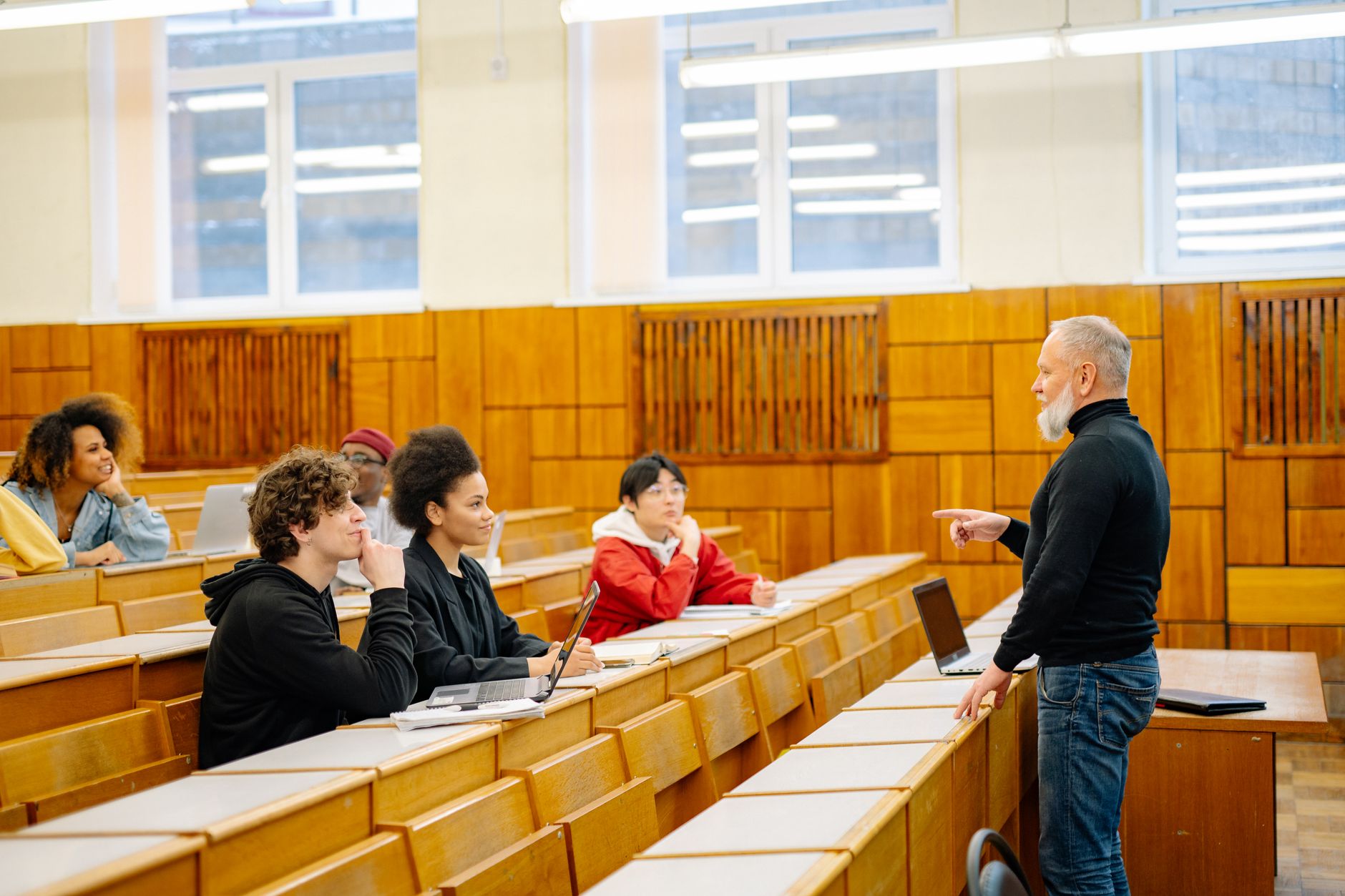
Photo by Gustavo Fring / Pexels
Punjab's School Education Department launched its AI Curriculum and Training Initiative at a ceremony in Lahore in late September 2026, setting a target of training 160,000 government school teachers in artificial intelligence and confirming plans to introduce AI as a subject from Class 1 through Class 12.
Who is running it, and how
The initiative brought together the Punjab Education, Curriculum, Training and Assessments Authority (PECTAA) — the body formed in 2024 from the merger of the former Punjab Curriculum and Textbook Board, the Quaid-i-Azam Academy for Educational Development, and the Punjab Examination Commission — alongside the Programme Monitoring and Implementation Unit of the Punjab Education Sector Reform Programme (PMIU-PESRP), UNICEF, and the provincial Office of AI. Ali Dar, the Chief Minister's Advisor on AI and Initiative, addressed the launch as chief guest and said the AI curriculum is meant to "prepare Punjab students for future technologies." PECTAA is structuring the teacher training as a four-tier cascade: 40 Lead Master Trainers will train 680 Master Trainers, who will then train teachers at the school level, backed by a learning management system offering self-paced online modules for teachers to work through on their own schedule.
The curriculum move it builds on
The training initiative follows directly from a curriculum overhaul Chief Minister Maryam Nawaz Sharif approved on September 24. That reform cut textbook volume by 25 percent across English, Mathematics, Urdu, Social Studies and Early Childhood Education, added QR-coded video lessons, and directed officials to separately prepare an AI curriculum for Class 1 through Class 12 — without, at the time, announcing a timeline or delivery mechanism for that AI track. The AI Curriculum and Training Initiative, launched roughly 48 hours later, answers the "how" half of that directive: a teacher-training pipeline sized to reach the hundreds of thousands of government-school teachers who would actually have to deliver an AI subject once it's written into the curriculum.
The gap between training teachers and training them well
Training 160,000 teachers through a cascade model — where a relatively small pool of 40 Lead Master Trainers filters down through 680 Master Trainers before reaching classroom teachers — is a common approach in large public education systems precisely because it is fast and cheap to run at scale. It is also a model with a well-documented failure point: each layer of the cascade is a chance for fidelity to the original training content to degrade before it reaches the teacher actually standing in front of students. Punjab's own recent experience is a caution here. Researchers studying the province's 2021 rollout of the Single National Curriculum found teachers struggling to interpret new material and plan lessons around it, a gap that followed from exactly the kind of rapid, top-down rollout this AI initiative is now replicating for a subject most teachers have no prior background in.
Where this sits in Punjab's broader education strain
A province-wide AI curriculum is arriving in a system where, by the government's own reasoning for the September 24 reform, the existing curriculum is already too dense for teachers to deliver well. It also lands alongside enduring, more basic constraints on Pakistani education that training initiatives like this one don't address: millions of children remain out of school nationally, and Pakistan spends roughly 2 percent of GDP on education against a commonly cited 4 percent benchmark. None of that makes an AI curriculum a bad idea on its own terms, but it does mean the initiative's eventual success will be measured less by how many teachers complete the cascade and more by whether a system already short on funding and classroom capacity can actually absorb a new, unfamiliar subject without the fidelity losses that have followed past rapid curriculum rollouts in the province.
What comes next
No date has been set for when AI instruction actually begins in classrooms, and officials have not said how the 160,000-teacher target will be phased or how training completion will be tracked at the school level. The province's existing curriculum reform is slated to reach the first cohort of students with the academic session beginning April 2027, which gives some sense of the timeline this training program may need to meet if an AI subject is to be ready alongside it.
Build Better Pakistan's Education Desk covers curriculum policy, teacher training and access to schooling across Pakistan.
This article is part of our Education coverage — Access, quality and the out-of-school children crisis.
Frequently Asked Questions
- How many teachers does Punjab plan to train, and how?
- Punjab's AI Curriculum and Training Initiative aims to train 160,000 government school teachers using a four-tier cascade model: 40 Lead Master Trainers train 680 Master Trainers, who in turn train teachers at the school level, with a learning management system also offering self-paced online modules. The initiative was launched by Ali Dar, the Punjab Chief Minister's Advisor on AI and Initiative, at a ceremony in Lahore in late September 2026.
- Is this the same as Punjab's new curriculum that cut textbooks by 25 percent?
- It's the follow-through on one piece of it. On September 24, 2026, Chief Minister Maryam Nawaz Sharif approved a revised curriculum cutting textbook volume by 25 percent and directed officials to separately prepare an AI curriculum spanning Class 1 to Class 12. The AI Curriculum and Training Initiative, launched days later, is the teacher-training program meant to deliver that AI curriculum once it reaches classrooms.
Related Reading
HEC Warns Students: Unapproved Foreign Degree Partnerships Won't Be Recognised
The Higher Education Commission issued a public alert on September 27 telling students to verify that any foreign degree offered through a local Pakistani institution appears on HEC's approved Transnational Education partner list before enrolling or paying fees.
BBP Education Desk · September 27, 2026 · 4 min
37,708 Students Qualified for MBBS in Punjab's MDCAT 2026 — Public Colleges Have Room for a Fraction
The University of Health Sciences Lahore declared MDCAT 2026 results on September 24: 37,708 candidates qualified for MBBS out of 47,475 who sat the test, against roughly 3,376 public-sector MBBS seats in the province.
BBP Education Desk · September 25, 2026 · 3 min

Punjab Approves New School Curriculum, Cuts Textbook Load by 25%
Punjab Chief Minister Maryam Nawaz Sharif approved a revised curriculum on September 24 that trims textbook volume by 25 percent and adds QR-coded video lessons, starting with Early Childhood Education through Grade 5 for the academic session beginning April 2027.
BBP Education Desk · September 24, 2026 · 3 min