HRCP Report: Nearly 3 in 4 Pakistani Prisoners Are Still Awaiting Trial
A new Human Rights Commission of Pakistan policy paper finds under-trial detainees made up 73.41% of the national prison population in 2024, up from 66% in 2017, with Punjab's jails running at 190.73% of designed capacity. HRCP says building more prisons won't fix a problem rooted in bail and the courts.
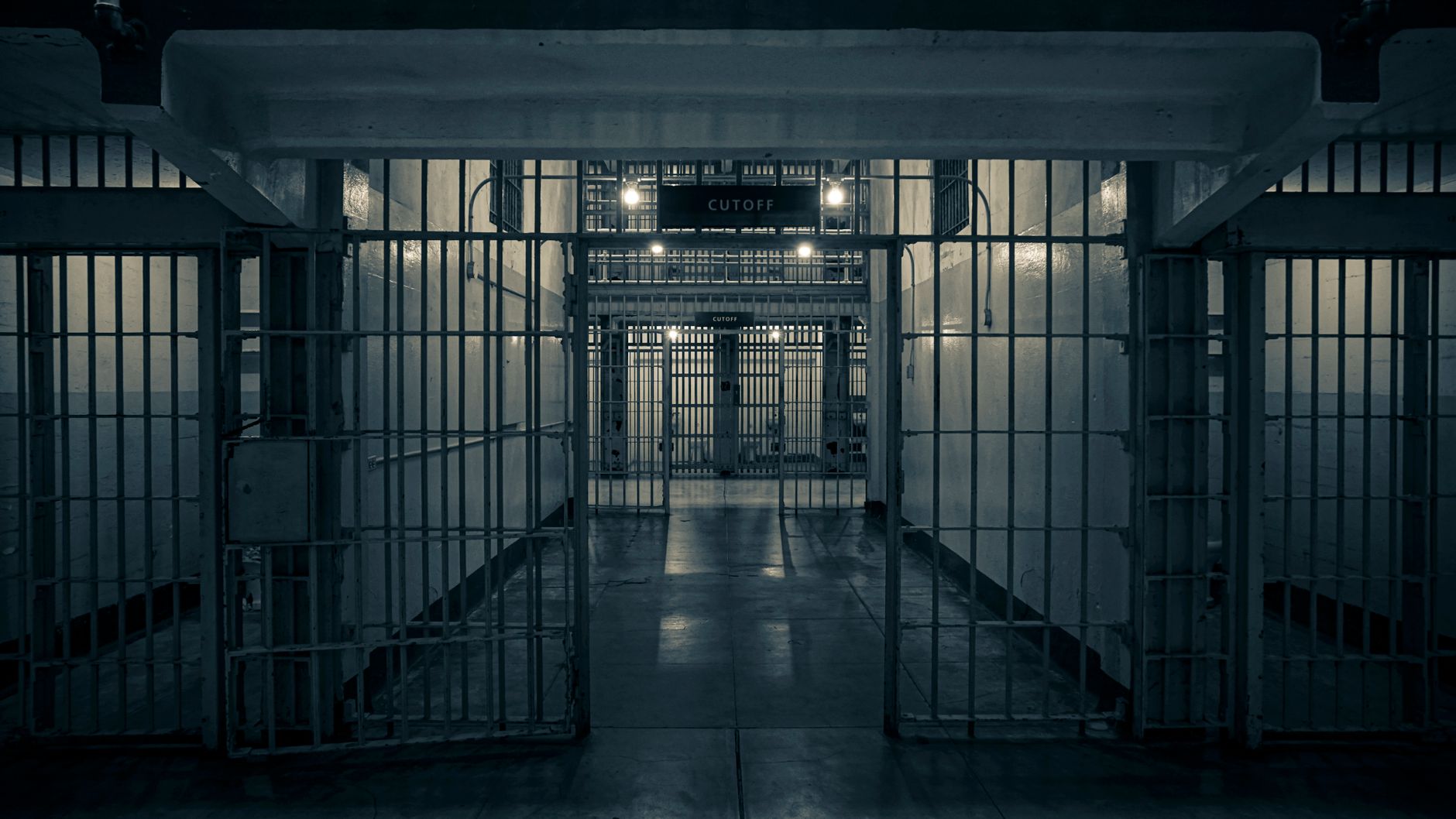
Photo by Xiaoyi / Pexels
Nearly three out of every four people in a Pakistani prison have not been convicted of a crime. That is the headline finding of "Beyond the Prison Wall: Reducing Overcrowding in Pakistan's Prisons," a policy paper released this month by the Human Rights Commission of Pakistan (HRCP), which puts the under-trial share of the national prison population at 73.41% in 2024 — up from 66% in 2017.
A system built for 64,000, holding nearly double that
The paper's capacity numbers are what make the under-trial figure land as a crisis rather than a statistic. HRCP found that prisons across the country operated at an average of 152.2% of their official capacity in July-August 2024, with individual facilities running far higher than the national average. Separate reporting this year put the national sanctioned capacity at roughly 64,000 against an actual population approaching 110,000 — meaning the system is holding close to 1.7 times what it was built for.
Punjab, the report's most acute case, offers the clearest illustration. Official figures cited in the paper show 74,773 prisoners held across the province's 45 prisons in September 2026, against a designated capacity of 39,204 — an occupancy rate of 190.73%. Of those, 54,932 were under-trial prisoners, meaning fewer than a fifth of Punjab's prison population has actually been convicted of anything. Sindh's 23 jails tell a similar story at smaller scale: a combined capacity of roughly 14,000 is holding around 25,000 inmates, of whom only about 4,000 have been convicted.
The bottleneck is the courts, not the cells
HRCP's central argument is that this is not a construction problem. Pakistan's courts already carry a backlog running into the millions of pending cases, and the report traces prison overcrowding directly to that same bottleneck: slow investigations, prolonged prosecutions and bail mechanisms that in practice keep people locked up by default rather than at liberty pending trial. Build more prisons without fixing any of that, the paper argues, and the new capacity simply fills with more people waiting on the same slow courts — the per-facility ratio improves on paper for a while, then the under-trial math reasserts itself.
That argument lines up with the trend data. The under-trial share has risen steadily since 2017 even as Pakistan's prison population has grown, which HRCP reads as evidence that the system has been adding bodies faster than it has been resolving cases — not a sign that any one government added an unusual number of prisoners in an unusual year, but a structural drift that several administrations have now presided over without reversing.
What reform would actually require
The paper's prescriptions follow from its diagnosis: faster case disposal, more consistent use of bail for non-violent and minor offences, and better tracking of how long individual detainees have actually been waiting, rather than treating "under-trial" as a single undifferentiated category that includes people a week into a case alongside people years into one. None of that is cheap or quick relative to pouring concrete for new barracks, which is precisely HRCP's point: a crowded prison is often the most visible symptom of a justice system that is failing to move cases, not an argument for a bigger prison system.
Why the number keeps climbing regardless of who's in government
Overcrowding of this kind rarely makes for a single-villain story, which may be part of why it persists. No single minister, court or police department owns the pipeline from arrest to verdict, so a detainee's months or years inside have no single office to blame and no single office positioned to fix it unilaterally. HRCP's own historical comparison — 66% under-trial in 2017, 73.41% in 2024 — spans multiple governments and multiple reform announcements, which is its own quiet argument that until bail practice and court throughput change together, the share of Pakistan's prison population that has never been convicted of anything will likely keep climbing before it falls.
Build Better Pakistan's Justice Desk covers courts, policing and the state of the rule of law, and will track whether HRCP's recommendations get any legislative traction.
This article is part of our Rights & Justice coverage — Access to justice, courts and civil rights.
Frequently Asked Questions
- What share of Pakistan's prisoners have not been convicted of anything?
- 73.41%, according to the Human Rights Commission of Pakistan's policy paper 'Beyond the Prison Wall: Reducing Overcrowding in Pakistan's Prisons,' using 2024 national data. That is up from 66% in 2017. In Punjab specifically, official figures cited in the report show 54,932 of 74,773 prisoners held in September 2026 were under trial rather than convicted.
- Why does HRCP say building more prisons won't solve overcrowding?
- Because the bottleneck isn't capacity, it's throughput. The report found prisons nationwide ran at an average of 152.2% of official capacity in July-August 2024, with Punjab's jails this September at 190.73% of their designed capacity. HRCP attributes this to ineffective bail mechanisms, prolonged court proceedings and over-reliance on pre-trial detention, not an absolute shortage of cells, so adding capacity without fixing case throughput would just refill the new cells with more under-trial detainees.
Related Reading
An Islamabad Court Just Indicted This Lawyer Couple for a Third Time in a Year
An anti-terrorism court indicted human rights lawyers Imaan Mazari and Hadi Ali Chattha in a 2024 security-breach case tied to an international cricket team's visit, over defence objections that they hadn't received case documents or met their counsel — the latest case in a year-long sequence that has already included a 17-year PECA sentence and a same-day re-arrest after Supreme Court bail.
BBP Rights Desk · October 8, 2026 · 4 min

UN Experts Say Pakistan Still Hasn't Responded to Their Warning on Forced Conversion of Minority Girls
Three UN special rapporteurs told a Human Rights Council side event on October 2 that new legislation won't fix forced religious conversion and child marriage of minority girls in Pakistan without enforcement — and a follow-up piece on October 5 says Islamabad still hasn't formally responded.
BBP Rights Desk · October 7, 2026 · 4 min
A Resigned Judge Just Called Out the Federal Constitutional Court by Name. Here's Why.
The Federal Constitutional Court's September 29 ruling that undesirable conduct alone isn't sexual harassment drew sharp criticism from lawyers, and on October 4 retired Justice Syed Mansoor Ali Shah — who quit the Supreme Court in protest when the FCC was created — used a Dawn op-ed to tie the verdict to the court's own legitimacy.
BBP Rights Desk · October 7, 2026 · 5 min