Weekly Inflation Jumps to 11.97% as Wheat Flour Leads Price Rises
The Pakistan Bureau of Statistics' Sensitive Price Indicator rose 0.57% in the week ended October 8, pushing annual short-term inflation to 11.97% from 11.53% the week before, with wheat flour and other food items driving most of the increase.
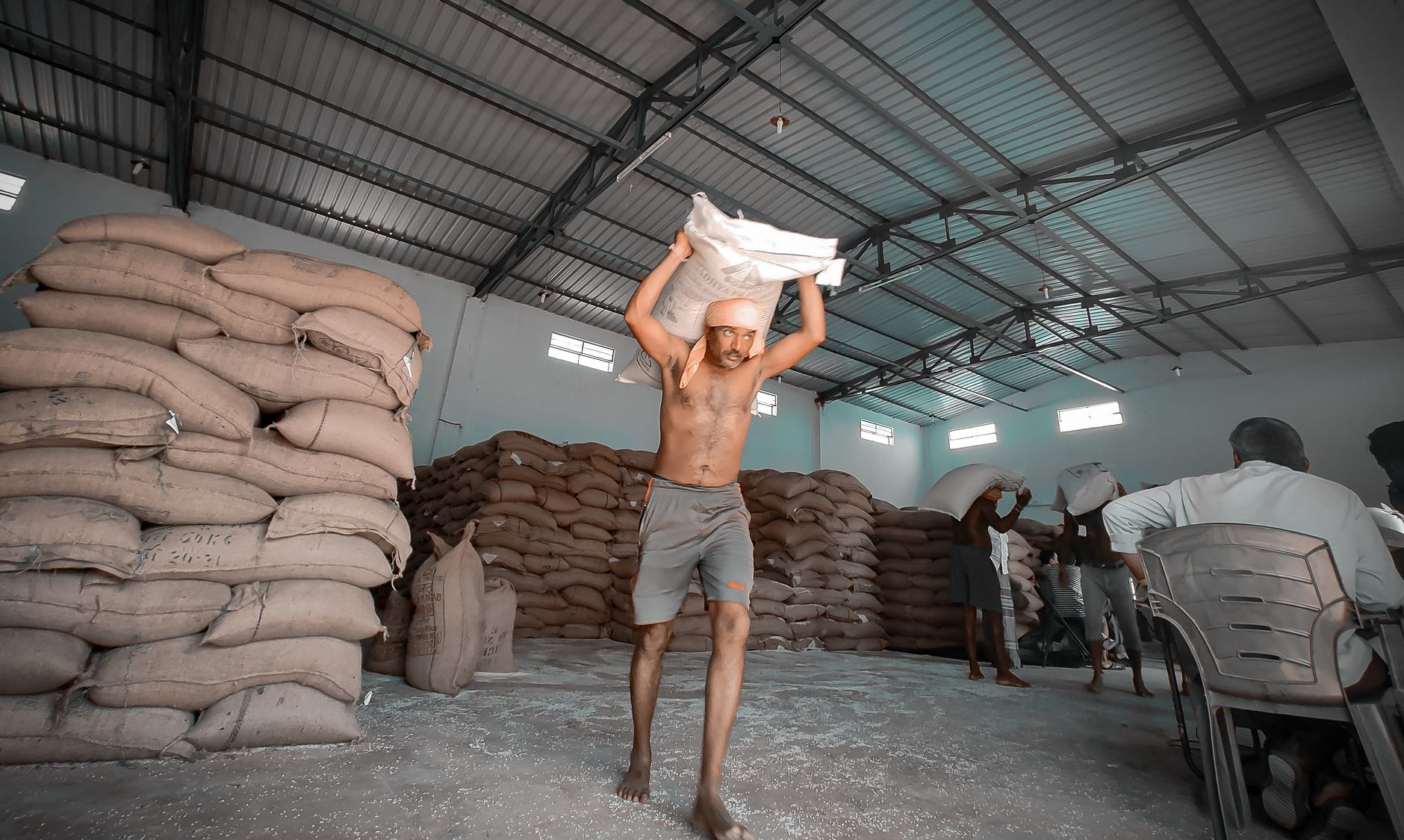
Photo by Manoz Gowda / Pexels
Pakistan's weekly Sensitive Price Indicator (SPI) rose 0.57% in the week ended October 8, 2026, the Pakistan Bureau of Statistics (PBS) reported on October 9, pushing annual short-term inflation on that measure to 11.97% — up from 11.53% the week before. Wheat flour led the increase, reversing weeks of easing in that single item's price trend.
What moved, and by how much
The SPI, which tracks prices of 51 essential items bought mainly by lower- and middle-income households, climbed to 372.58 points (base 2015-16=100) from 370.46 the previous week. PBS said the rise reflected price fluctuations in both food and non-food items, with wheat flour the standout mover. Of the 51 items in the basket, 20 (39.22%) became more expensive, 6 (11.76%) got cheaper, and 25 (49.02%) were unchanged.
The increase wasn't evenly felt. PBS breaks the SPI out by income bracket as well as reporting the national figure, and the lowest bracket — households earning up to Rs17,732 a month — saw its own sub-index rise 0.52% to 356.56 points from 354.73. The four higher brackets (Rs17,733–22,888, Rs22,889–29,517, Rs29,518–44,175, and above Rs44,175) rose 0.54%, 0.53%, 0.57% and 0.60% respectively, meaning this week's increase landed across the income spectrum rather than concentrating at either end.
A reversal from the week before
The previous week's reading, for the seven days ended October 1, told a different story: SPI rose just 0.21%, with chicken the main driver, adding more to the index on its own than the week's entire net increase. That week, several staples actually got cheaper — diesel fell 3.43%, bananas 1.52%, sugar 1.05%, potatoes 0.96% and petrol 0.65% — which is part of why annual SPI inflation that week sat lower, at 11.53%. Wheat flour's jump to the top of this week's list is the more consequential shift, since flour is a staple households can't easily substitute away from the way they might skip bananas or potatoes for a week.
How this fits the bigger inflation picture
An 11.97% annual SPI reading sits well above Pakistan's monthly Consumer Price Index, which eased to 10.3% year-on-year in September. SPI and CPI measure different baskets on different schedules — SPI is narrower, weekly, and weighted toward frequently purchased essentials — but SPI's faster release makes it the earliest public signal of where the monthly CPI figure is likely headed next. Separately, wholesale inflation as measured by the Wholesale Price Index has been running even hotter, up 13.3% year-on-year according to data presented to the National Price Monitoring Committee, underscoring that the pressure building in the supply chain hasn't fully worked its way through to retail prices yet.
The reading also complicates the State Bank of Pakistan's rate-setting calculus. The central bank has already flagged an inflation rebound as a reason to proceed cautiously on further rate cuts after holding its policy rate steady through September. A weekly indicator accelerating on the back of a staple as basic as wheat flour is the kind of data point that makes an early cut less likely, not more.
Why wheat flour is the number to watch
Wheat flour's year-on-year inflation rate has moved dramatically through 2026 — from roughly 77% in mid-August to about 45% by late August and down to around 33% by mid-September — so a week in which it leads the SPI's weekly movers again is a reversal worth tracking rather than dismissing as noise. Flour prices are sensitive to wheat procurement policy, provincial stock releases and hoarding, all of which are harder for households to route around than a short-term rise in the price of bananas or tomatoes.
What to watch next
The next SPI release, due in a week, will show whether wheat flour's climb was a one-week blip tied to local supply conditions or the start of a steadier rise. With annual SPI inflation now at its highest point in several weeks and wholesale prices climbing even faster, the direction of the next two or three readings will matter more than this one in isolation for judging whether Pakistan's broader disinflation trend through 2026 has actually stalled.
Build Better Pakistan's Economy Desk tracks the Pakistan Bureau of Statistics' weekly price data and its effect on household budgets.
This article is part of our Economy coverage — Inflation, growth, trade and the everyday cost of living across Pakistan.
Frequently Asked Questions
- How much did prices rise in the week ended October 8, 2026?
- The Pakistan Bureau of Statistics' Sensitive Price Indicator (SPI) rose 0.57% week-on-week to 372.58 points, up from 370.46 the previous week. On a year-on-year basis, short-term inflation reached 11.97%, up from 11.53% in the week ended October 1. Of the 51 items PBS tracks, 20 (39.22%) rose in price, 6 (11.76%) fell, and 25 (49.02%) held steady.
- What drove this week's increase?
- PBS attributed the rise to a mix of food and non-food items, with wheat flour the single largest driver. By income group, the SPI for the lowest consumption bracket (up to Rs17,732 a month) rose 0.52% to 356.56 points, while the four higher brackets rose between 0.53% and 0.60%. The week before, chicken had been the main driver of a smaller 0.21% increase, while diesel, bananas, sugar, potatoes and petrol all got cheaper.
Related Reading

PSX Opened Higher on the IMF Deal. It Closed Down 1,138 Points on Oil.
The KSE-100 rose nearly 400 points at Thursday's open on optimism over Pakistan's IMF staff-level agreement, then reversed to close down 1,138.50 points as a record spike in Strait of Hormuz tanker attacks pushed Brent crude sharply higher.
BBP Markets Desk · October 8, 2026 · 3 min

Pakistan and the IMF Finally Reach a Staff-Level Deal — $1.21 Billion Still Needs the Board's Sign-Off
After a mission that ran from September 23 to October 7 in Karachi and Islamabad, the IMF and Pakistan reached a staff-level agreement on the fourth EFF review and third RSF review, clearing the way for roughly $1.21 billion once the Fund's Executive Board approves it — the deal this desk watched take shape through the MEFP draft handed over on October 6.
BBP Economy Desk · October 8, 2026 · 4 min

Pakistan and Bahrain Target $1 Billion in Trade, Admit They're Behind Schedule
Pakistan and Bahrain held the third session of their Joint Ministerial Commission in Islamabad on October 8, agreeing to a new trade and investment working group while acknowledging their $1 billion trade target is running late.
BBP Economy Desk · October 8, 2026 · 3 min