Pakistan Now Holds 48% of Its Region's Extreme Poor, World Bank Says
A new World Bank economic update finds Pakistan accounts for 48% of the extreme poor across the Middle East, North Africa, Afghanistan and Pakistan region, after its poverty rate climbed 6.4 percentage points between 2018-19 and 2024-25.
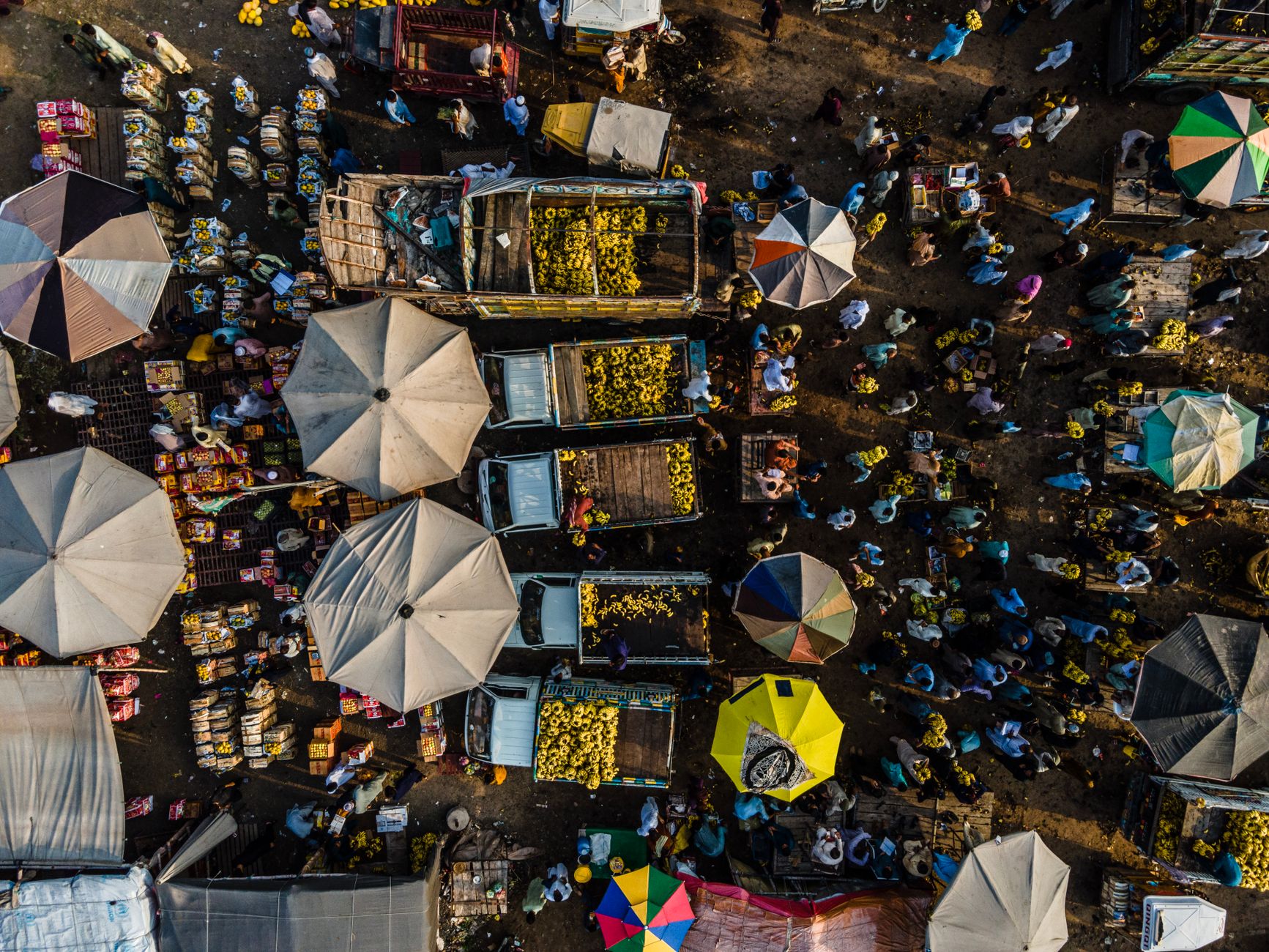
Photo by Ghufran Visuals / Pexels
Pakistan now accounts for 48% of the extreme poor across its entire World Bank-defined region, according to an economic update the Bank published this week — a figure that makes it the single largest driver of a poverty increase the Bank describes as unique in the world.
The numbers behind the headline
The report, titled "From Divide to Opportunity: AI, Jobs, and Growth," covers what the World Bank now calls the MENAAP region — the Middle East, North Africa, Afghanistan and Pakistan, a grouping the Bank created by moving Pakistan out of the South Asia region it used to sit in. Within that region, Pakistan holds roughly 48% of everyone living on less than $3 a day, the Bank's extreme-poverty threshold. Afghanistan, Syria and Yemen together account for another 47%, meaning four countries — three of them shaped by war or insurgency — hold nearly all of the region's extreme poor between them.
The underlying trend is what makes Pakistan's share so large. Between 2018-19 and 2024-25, the share of Pakistanis living under the $3-a-day line rose by 6.4 percentage points. At the higher $4.20-a-day line — a threshold more commonly used for lower-middle-income countries — the increase was 3.2 percentage points, and the Bank now puts nearly half of Pakistan's population below that line altogether.
Why the Bank says this happened
The report does not treat the increase as a single event but as the compounding effect of several years of shocks: the Covid-19 pandemic, the catastrophic 2022 floods, and then a macroeconomic crisis defined by double-digit inflation and a sharply weaker rupee. That sequencing lines up with this desk's own reporting on Pakistan's food security, where the FAO found more than 60% of Pakistanis cannot afford a healthy diet — a separate data set pointing at the same underlying erosion of household purchasing power.
Regionally, the Bank says MENAAP is the only part of the world where poverty remains above its pre-pandemic level and is still climbing: 14.3% of the region's population lived under $3 a day in 2024, against a global rate of 10.4%, while 26.9% lived under $4.20 a day against a global rate of 18.9%. Pakistan's deterioration is large enough, on its own, to explain much of that regional gap.
The jobs story the Bank pairs with it
The same report is not entirely bleak on Pakistan. It credits the country with emerging as one of the world's top five suppliers of artificial-intelligence-related digital services, spanning more than 2,700 distinct skill areas — a notable claim for an economy more commonly associated with textiles and remittances than tech exports. That finding sits awkwardly next to Gallup data this desk covered in September showing graduate unemployment running well above the national average, suggesting the AI-services growth the Bank highlights has not yet translated into broad-based job creation for the people most exposed to the poverty increase.
The Bank's growth and inflation forecasts for the current fiscal year — 3.8% GDP growth and 8.2% inflation — sit close to the government's own projections, and close to the numbers at the center of Pakistan's ongoing IMF negotiations, where the Fund and Islamabad are still arguing over whose inflation forecast is right.
Why the reclassification matters
Moving Pakistan out of the South Asia bracket and into a grouping with Afghanistan, Syria and Yemen is itself a signal about how the World Bank now assesses the country's trajectory — less a comparison with India or Bangladesh, and more a comparison with states working through conflict or near-conflict levels of fragility. Whether that reclassification sticks will depend on whether Pakistan's growth and job numbers start moving in a direction the poverty figures haven't yet shown.
Build Better Pakistan's Economy Desk covers Pakistan's economy, from IMF negotiations to the household-level data that shows what those negotiations are actually about.
This article is part of our Economy coverage — Inflation, growth, trade and the everyday cost of living across Pakistan.
Frequently Asked Questions
- What share of the region's extreme poor does Pakistan account for?
- The World Bank's October 2026 MENAAP Economic Update found Pakistan holds about 48% of the people living on less than $3 a day across the Middle East, North Africa, Afghanistan and Pakistan (MENAAP) region. Afghanistan, Syria and Yemen together account for another 47%, so those four countries make up roughly 95% of the region's extreme poor.
- How much has poverty in Pakistan actually increased?
- The report found Pakistan's poverty rate at the $3-a-day line rose by 6.4 percentage points between 2018-19 and 2024-25, while the rate at the higher $4.20-a-day line rose by 3.2 percentage points over the same period. The Bank attributes the rise to the Covid-19 pandemic, the 2022 floods, and a macroeconomic crisis marked by high inflation and currency depreciation.
Related Reading
Nearly 40% of Faisalabad's Power Looms Have Shut Down, Leaving 100,000 Jobless
Industry figures put the toll of Pakistan's power-loom crisis at nearly 40% of units in Faisalabad and adjoining towns shut and more than 100,000 workers out of work, as owners blame cheaper under-invoiced Chinese yarn and grey cloth alongside rising utility costs.
BBP Economy Desk · October 7, 2026 · 4 min
State Firms' Net Return to Treasury Falls 91% Even as Profits Hold Up, Finance Ministry Report Shows
The Finance Ministry's biannual state-owned enterprise report, released under an IMF condition, shows the net fiscal flow from SOEs to the state fell 91% to Rs35 billion in July-December 2025, even as aggregate SOE profit fell a comparatively modest 7% to Rs423.3 billion, after government support jumped 31% to Rs804 billion.
BBP Economy Desk · October 6, 2026 · 3 min

Pakistan's Services Exports Jump 28.9% as IT and Freelancers Outrun Goods Trade
Pakistan Bureau of Statistics data show services exports rose 28.9% to $1.81 billion in the first two months of FY27, with IT and telecom services up 17.36% to $811 million and freelance exports up 44% to $352 million, even as goods exports kept running a wider trade deficit.
BBP Economy Desk · October 6, 2026 · 3 min