Pakistan State Oil Signs Petroleum Supply Deal With Oman as It Diversifies Away From Hormuz
Pakistan State Oil signed a sale-purchase agreement with Oman's OQ Trading on October 8 to import petroleum products, a deal five years in the making that Islamabad has accelerated as the Strait of Hormuz remains an unreliable supply route during the US-Iran war.
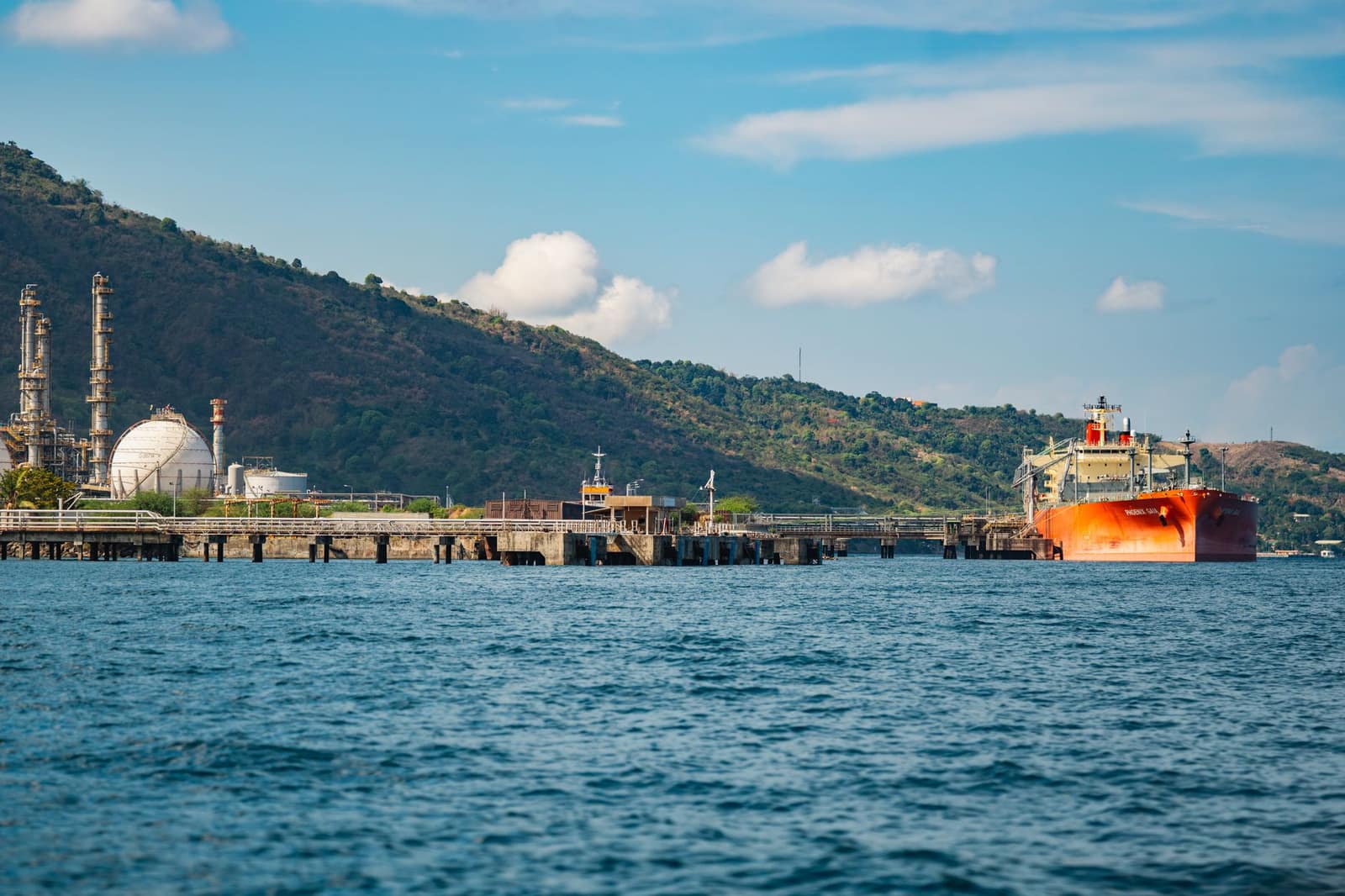
Photo by Nothing Ahead / Pexels
Pakistan State Oil (PSO) signed a sale-purchase agreement with Oman's OQ Trading Limited (OQT) on October 8, formalising a petroleum import deal that had been stuck since 2021. PSO disclosed the signing to its shareholders in a stock exchange filing the following week, after the federal cabinet and the PSO board cleared it.
A deal five years in the making, finished now
The agreement sits under a government-to-government energy cooperation framework that Pakistan and Oman signed back in May 2018, but the commercial terms between PSO and OQT had never been finalised. Pakistan's Economic Coordination Committee approved the sale-purchase agreement in August, and the signing on October 8 was the step that turns that approval into an active supply contract. A PSO official, who was not authorised to speak publicly on the matter, said the company "engaged with OQT for finalising a draft SPA for the supply of petroleum products."
What the deal does not say
PSO's disclosure and the cabinet approval do not specify the volumes, pricing formula or duration of the agreement. Muhammad Saad Ali, head of research at Lucky Investments Limited, described the arrangement as mainly precautionary: "a diversification so that there is a backup, in case war escalates." Pakistan's Petroleum Minister Ali Pervaiz Malik and a ministry spokesperson did not respond to requests for further detail on commercial terms, including whether Oman would extend the kind of discount Kuwait Petroleum has offered Pakistan in the past.
Why Hormuz keeps forcing this
PSO's standing import contract runs through Kuwait Petroleum, a route that analysts say depends heavily on transit through the Strait of Hormuz. That strait has been intermittently disrupted since the US-Iran war escalated this year, driving the oil-price volatility that has fed directly into Pakistan's fuel pricing and forcing Islamabad to conserve petroleum stocks rather than rely on a single, uninterrupted supply line.
The pressure has not been limited to oil. Qatar, Pakistan's main LNG supplier, declared force majeure on its contracts after Iranian strikes damaged its Ras Laffan export facility, and Pakistan has had to negotiate individual tanker crossings directly with Iran just to get contracted gas cargoes through. The Oman deal extends that same diversification logic to crude and refined products.
Where this fits in a longer scramble
Pakistan has spent much of the past several months lining up alternative routes and suppliers to insulate itself from a strait it has no control over. PARCO has arranged crude cargoes from Abu Dhabi National Oil Company through the port of Fujairah, which sits outside Hormuz, and Islamabad has separately asked Saudi Arabia to prioritise supplies routed through Yanbu on the Red Sea. The continued US naval build-up in the region, including a third carrier strike group deployed near Hormuz, has done little to settle the question of how reliably commercial tankers can transit the strait.
None of these individual deals, including the one with Oman, fully replaces the volumes Pakistan has historically moved through Hormuz. What they add up to, PSO's own framing suggests, is a hedge: multiple smaller supply lines that can keep fuel moving even if the main one through the strait is cut again, as it was during the market shock from Iran's tanker attacks in September.
Build Better Pakistan's Energy Desk is tracking Pakistan's fuel and gas supply diversification and will update this piece once commercial terms of the Oman agreement are disclosed.
This article is part of our Energy coverage — Circular debt, load-shedding and the push toward a reliable power grid.
Frequently Asked Questions
- What did Pakistan sign with Oman, and when?
- Pakistan State Oil (PSO) signed a sale-purchase agreement with OQ Trading Limited, the Omani government's international trading arm, on October 8, 2026, to import petroleum products. The deal follows approval from Pakistan's Economic Coordination Committee in August and sign-off from the PSO board and federal cabinet.
- Why is Pakistan turning to Oman for fuel now?
- The US-Iran war has disrupted shipping through the Strait of Hormuz, the route PSO's main supplier, Kuwait Petroleum, relies on. Pakistani officials are treating the Oman agreement as a way to diversify suppliers and build a backup in case Hormuz transit worsens, rather than a replacement for existing contracts.
Trending Now
- 01
IRSA Approves 22% Water Shortage for Punjab and Sindh This Rabi Season
October 13, 2026
- 02
Parliament Takes Up KP Emergency as PPP Backs It and JUI-F Calls It Unconstitutional
October 13, 2026
- 03
KSE-100 Sheds Nearly 2,000 Points as KP Emergency Rattles Investors
October 13, 2026
- 04
PTI's Own Secretary General Says He Doesn't Know Where Afridi Is
October 12, 2026
- 05
Pakistani Universities Climb to 56 in Global Rankings, Still Miss the Top 400
October 12, 2026
Weekly Briefing
The week's most important stories on Pakistan's biggest challenges, in your inbox.
Related Reading
FPCCI Asks Nepra to Reject Rs268bn in Disputed Power Tariff Claims
The Federation of Pakistan Chambers of Commerce and Industry has asked Nepra to reject Rs268 billion in charges that ten former Wapda distribution companies want added to 2027 electricity bills, arguing much of it is retrospective, disputed or already disallowed.
BBP Energy Desk · October 12, 2026 · 4 min
Petrol Costlier Than Diesel for the First Time, After Six Straight Daily Hikes
OGRA's daily pricing mechanism has pushed petrol up on six consecutive revisions since October 2, to Rs398.96 a litre effective October 9, while diesel mostly fell over the same stretch — flipping the usual price order between the two fuels for the first time since the system began.
BBP Energy Desk · October 9, 2026 · 4 min
NEPRA Approves Rs1.1086 Fuel Charge for October Bills, Below What CPPA-G Sought
The power regulator has cleared a Rs1.1086-per-unit fuel cost adjustment for August generation, to appear on October bills — well short of the Rs1.7267 the Central Power Purchasing Agency had requested, after NEPRA recalculated the actual fuel cost lower.
BBP Energy Desk · October 8, 2026 · 3 min